Why Do Cats Loaf?
Why cats sit in the 'loaf' position with their paws tucked under: comfort, trust, keeping warm or staying alert, and the hunched loaf that can mean a cat is unwell, as veterinary behaviorists explain.
 AI illustration
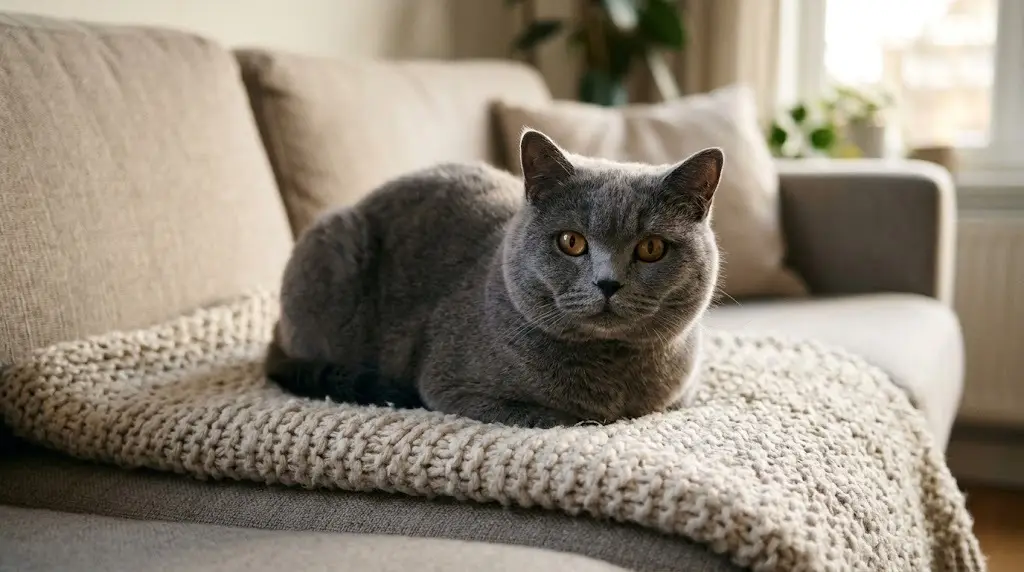
The short answer: a cat sits in a “loaf”, with all four paws and the tail tucked under its body, most often because it is relaxed and comfortable. Veterinary behaviorist Bonnie Beaver of Texas A&M compares it to a person sitting in a reclining chair, while noting that nobody can measure a cat’s happiness (PetMD). A loaf can also mean a cat is cold or wary, and a hunched loaf can be a sign it is not feeling well.
The Usual Reasons
Two board-certified veterinary behaviorists, Dr. Beaver and Dr. Wailani Sung, give PetMD these reasons:
- Comfort. The classic loaf is shown by cats at ease in their surroundings, and laid-back cats tend to loaf more than busy or anxious ones.
- Trust. A cat that chooses to loaf close to you, at your feet or next to you on the couch, is showing that it feels secure with you.
- Warmth. A cat’s feet and lower legs have little fat covering and get cold faster than the rest of the body; tucking them under protects them from the cold.
- Staying alert. The position tucks the legs and vital organs away while the cat rests, and lets it move faster than if it were lying on its side, which is why some cats loaf at the vet.
When a Loaf Can Mean Something Is Wrong
Watch the details. Dr. Sung describes a cat loafing with its face planted down or its body hunched as possibly very tired or unwell, and an ill cat may barely respond when you speak to it or pet it. Dr. Beaver adds that any sudden change in behavior should raise concern: a cat that suddenly loafs much more than before may have a fever. Other signs of a sick or injured cat she lists:
- Changes in its usual personality or routine
- Sudden aggression
- More sleeping or hiding
- Reluctance to climb stairs or jump onto favorite perches
- Changes in litter box habits
If you see these, or a change in how your cat loafs, book a visit with your vet.
Related reading: why cats knead with their paws and why does my cat bite me.