Why Does My Cat Bite Me?
Why cats bite: play aggression, biting during petting, fear, pain and redirected aggression, the warning signs, what Cornell and the Merck Veterinary Manual say helps, and the CDC steps if a bite breaks the skin. Not veterinary or medical advice.
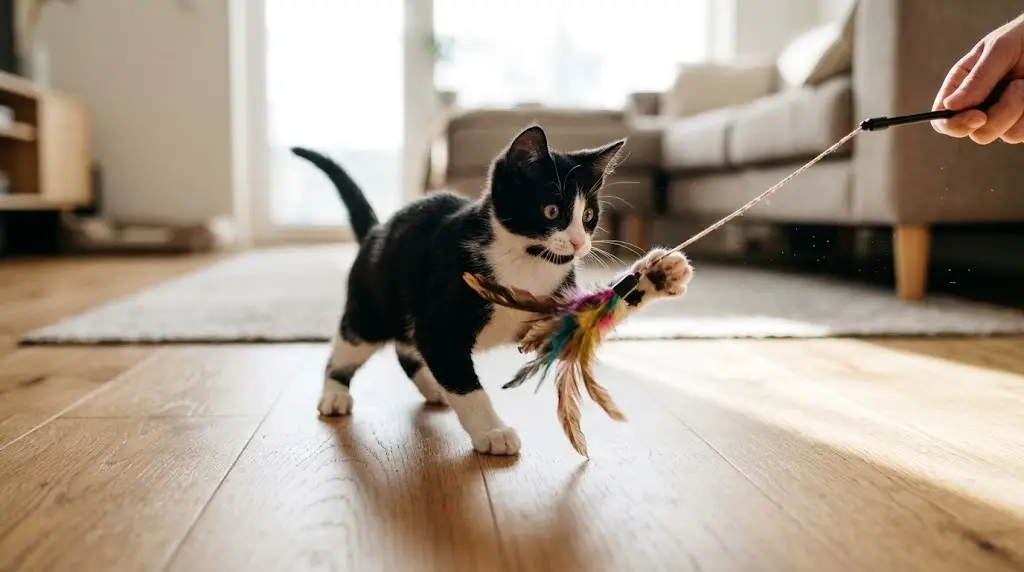 AI illustration
This is a reading guide to what veterinary and public health sources say about cat bites. Pain and illness can make cats bite, so biting that is new or sudden is a reason to see your vet. A bite that breaks your skin is a reason to follow the CDC steps at the end of this page.
The short answer: most cats that bite their people are playing too rough or saying “enough”. The Merck Veterinary Manual lists the usual reasons a cat bites a person as fear, play and predatory instinct. Some cats bite during petting because they do not enjoy the contact, or to stop people touching them while they rest or eat. Pain is on the list too, which is why vets rule out medical causes first.
The Common Types
| Type | What it looks like | What sources say about it |
|---|---|---|
| Play aggression | Stalking, ambushing ankles from under the bed, biting and scratching in play | Most common in young cats and kittens raised without littermates, or with too little chance to play. Littermates teach a kitten it is biting too hard by stopping the game or hitting back (Cornell) |
| Petting-induced | A sudden bite after a few moments of stroking | Possibly overstimulation, or the cat trying to control when petting ends. Handling, bathing, grooming and nail trims can trigger it too (Cornell) |
| Fear | Hissing, flattened ears, tucked tail, then a bite when cornered | Fearful cats bite when they cannot escape, and learn that biting works (Merck) |
| Pain | Biting when touched or moved | A defensive reaction. Some illnesses also cause aggression (Merck) |
| Redirected | The cat sees a cat outside, gets aroused and attacks whoever is nearby | Not accidental: the cat turns on the nearest person or cat because it can’t reach the target (Merck) |
The Warning Signs
Cornell describes the same signs before play aggression and petting-induced bites: dilated pupils, a lashing tail and ears pinned back. When you see them, stop the petting or the game and let the cat move away.
What Helps
For play aggression, from Cornell:
- Look for a pattern in when and where the attacks happen. Then get there first with a play session, or block the hiding spot the cat pounces from.
- Put a bell on a breakaway collar so you hear the cat coming.
- Use wand toys that keep your hands away from teeth and claws.
- If a game turns rough, walk away and ignore the cat. It learns that rough play ends the play.
- Never punish the cat physically, or even touch it, mid-attack. That can make it afraid of people, or read as more play.
For petting-induced biting, Cornell suggests letting the cat start the contact. Avoid restraint and picking it up while it eats. Reward short, light strokes that pass without trouble with a treat, then slowly increase them.
For every type, Merck’s advice is to give the cat outlets for hunting play: food served in small portions or in food toys, and chase, pounce and bite games with toys you dangle or pull. Avoid punishment, which can make your cat afraid of you. Start early, since the earlier a treatment plan starts, the better its chances, and your vet can help build one.
If a Bite Breaks the Skin
The CDC says to wash the wound with warm soapy water straight away. It notes that about 20-80% of reported cat bites and scratches become infected. It advises seeing a doctor if any of these apply:
- You don’t know whether the cat is vaccinated against rabies.
- The cat seems sick.
- The wound is serious, or becomes red, painful, warm or swollen.
- Your last tetanus shot was more than 5 years ago.
The CDC also advises supervising children around cats and avoiding rough play with kittens. That leads to fewer bites as they grow up.
Related reading: why do cats loaf? and why cats knead with their paws.