Why Do Cats Spray?
Why cats spray urine: what spraying is and how it differs from peeing outside the litter box, territory, other cats, frustration and anxiety, how much neutering helps, and the steps Cornell and the Merck Veterinary Manual suggest, starting with a vet check. A reading guide, not veterinary advice.
 AI illustration
This is a reading guide to what veterinary sources say about spraying. Many medical problems make cats urinate outside the box, so a cat that starts soiling the house needs a vet check first. A cat that strains in the litter box and passes little or no urine may have a urinary blockage, which the Cornell Feline Health Center calls an absolute emergency: go to a vet right away.
The short answer: spraying is scent marking. A cat that sprays leaves small amounts of urine around an area. The Cornell Feline Health Center explains that this announces its presence, sets or keeps territorial boundaries, or advertises that it is ready to mate. It is normal cat behavior, in the same family as rubbing its cheeks on your leg. Indoors it usually points to a threat to the cat’s territory, frustration or anxiety. It is most common in unneutered males.
Spraying or Peeing Outside the Box?
The two look alike on the carpet but are different problems with different fixes. From Cornell and the Merck Veterinary Manual:
| Spraying (marking) | Peeing outside the box | |
|---|---|---|
| Posture | Standing, tail raised and quivering | Squatting |
| Where | Vertical surfaces: walls, curtains, doors, the backs of chairs | Horizontal surfaces: carpet, rugs, beds, clothes |
| Amount | Small amounts, in several consistent spots | A full bladder |
| Usual reasons | Territory, other cats, frustration, anxiety | Medical problems, or something wrong with the litter, the box or its location |
If you are not sure which it is, or which cat is doing it, Cornell suggests watching or setting up a camera. Your vet can also give one cat a harmless dye by mouth that shows up in its urine.
Who Sprays, and Why
- Hormones. Spraying cats are usually unneutered males, and to a lesser extent unspayed females. Cornell notes that 10% of neutered males and 5% of neutered females still spray. Merck says neutering reduces or stops spraying in about 90% of cats.
- Many cats. In homes with more than seven cats, Cornell says one or more of them is likely to spray. Fights between cats in the same home are a common trigger.
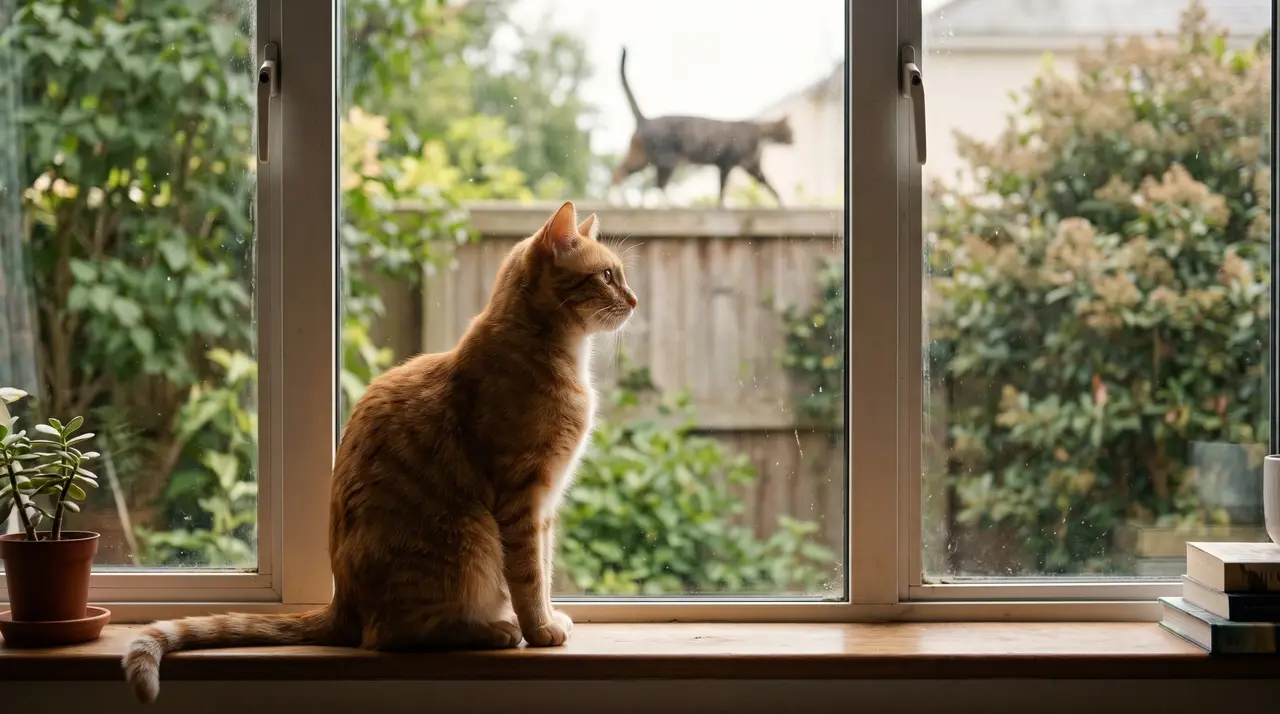
- Outside cats. A new cat in the house, or cats outside the windows, can be read as a threat to the cat’s territory.
- Frustration and anxiety. Cornell gives a new diet as one example. Merck lists spraying among the possible responses of a fearful cat.
What Helps
- A vet check first. Merck says vets always rule out medical problems first, usually with blood and urine tests.
- Neuter or spay an intact cat.
- Remove the trigger. Close blinds or shades so the cat cannot watch outdoor cats. A motion-activated sprinkler in the yard, as Cornell suggests, keeps visiting cats away.
- Separate feuding cats, then reintroduce them slowly. Provide as many litter boxes as there are cats, plus one.
- Meet everyday needs. Merck’s list of a cat’s needs: hunting play, climbing, perching, scratching, and food served in small portions or in food toys.
- Clean thoroughly. Cats return to marked spots, so neutralize the odor rather than just covering it. Cornell advises avoiding cleaners with ammonia or vinegar, which smell like urine. See our pet odor remover guide.
- No punishment. Merck warns that it makes cats afraid of you and can make the problem worse.
Cornell notes that anti-anxiety medicine is more likely to help with spraying than with other house soiling. It works only alongside changes at home, and a cat on it long-term needs monitoring by a vet. For persistent cases, ask about a veterinary behaviorist.
Related reading: cat litter box hygiene.