Bourke's Parakeet (Neopsephotus bourkii)
The Bourke's Parakeet (Neopsephotus bourkii) is a small, gentle, and exceptionally quiet Australian parakeet that is one of the best birds for apartments and peaceful homes.
🗓️ Last reviewed: September 2026
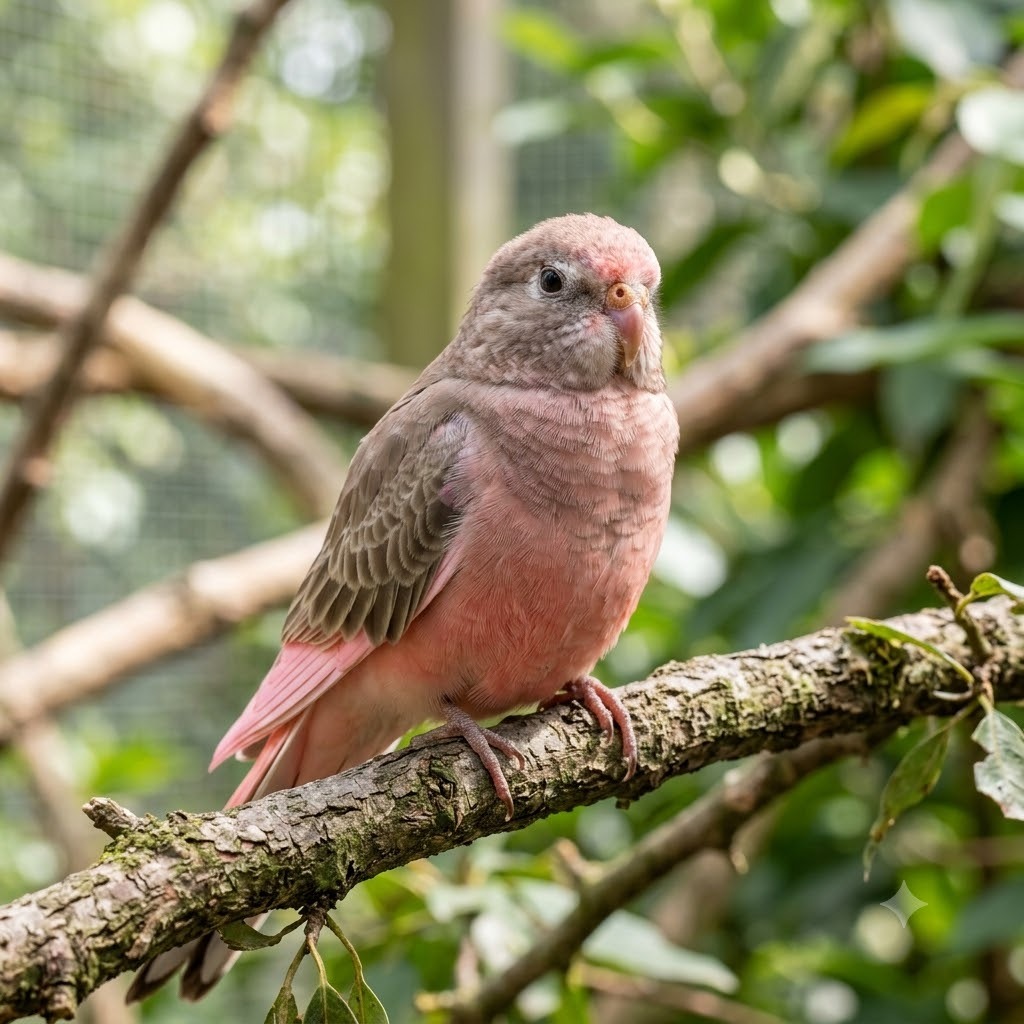
Overview
The Bourke's Parakeet (Neopsephotus bourkii) is a small, gentle, and exceptionally quiet Australian parakeet that is one of the best birds for apartments and peaceful homes. Soft brown with a delicate pink belly, it is calm, undemanding, and unusually placid for a parakeet, with a soft chirping voice rather than the harsh calls of many parrots. It is most active at dawn and dusk, and it suits keepers who want a serene cage or aviary bird rather than a loud, demanding companion.
Natural History & Origin
Bourke's parakeets are native to the dry interior of Australia, where they live in arid and semi-arid scrubland and acacia country, often near water. They forage on the ground for small seeds and are naturally crepuscular, feeding most actively in the cooler hours around dawn and dusk. They have been kept and bred in aviculture for many years, producing several colour mutations from the soft wild-type brown.
Appearance
Adults weigh 40-49 g, length around 19-23 cm including the tail.
Colour varieties: the wild type is soft earthy brown above with a pink lower breast and belly, blue rump, and a touch of blue on the wings. Captive mutations are very popular, especially the rosy or pink form, in which much of the body is a soft rose-pink. Other mutations include rubino, lutino, cream, and fallow. Males usually show a blue band above the beak that females tend to lack.
Temperament & Noise
Calm, gentle, and peaceful. Bourke's parakeets are among the quietest of all parakeets - their soft chirps and warbles are gentle and very apartment-friendly, with none of the screeching of larger parrots. They are placid and rarely aggressive, and they become noticeably more active and vocal at dawn and dusk.
Hand-raised Bourke's parakeets can become tame and trusting, though many are kept as gentle aviary birds that prefer to perch near their people rather than be handled extensively. They are calm by nature but can be flighty if startled, so unhurried movements keep them relaxed.
Housing & Flight
Minimum cage: a flight cage of about 90 cm or more in width for a pair - width matters more than height, as these parakeets fly horizontally and also forage on the ground. An aviary is ideal.
Provide:
- Several perches placed to leave open flight paths, plus open floor space for foraging.
- A cuttlebone and grit for calcium and digestion.
- A shallow bathing dish, which they enjoy.
- Calm, peaceful companions and gentle cover; avoid housing with pushy or much larger birds.
Diet
- Quality small parakeet or budgie seed mix as a base, including millets and canary seed.
- Some pellets or soft food to broaden nutrition.
- Daily fresh greens in small amounts, plus sprouted seed.
- Cuttlebone and fine grit for calcium and digestion.
- Fresh water daily, plus a bathing dish.
Avoid: avocado (toxic to all birds), chocolate, caffeine, alcohol, onion, salt.
Health & Lifespan
10-15 years (some live longer with excellent care).
Common concerns:
- Egg binding in females, especially with frequent laying.
- Worms and other internal parasites - ground-foraging birds are prone to these.
- Injury from panic (night fright) - startled birds may flush and hit cage bars in the dark.
- Respiratory infections - sensitive to fumes (Teflon, aerosols, smoking).
- Obesity from an all-seed diet with too little flight.
- Nutritional deficiencies from an all-seed diet.
Find an avian or exotics vet experienced with parakeets before acquisition.
Training & Enrichment
Bourke's parakeets are not as readily trained as larger parrots - though some individuals pick up simple whistles - but they appreciate a calm, enriched environment. Enrichment comes from a spacious flight, ground space for natural foraging, bathing opportunities, the company of a mate, and a quiet, secure setting. Because they are most active at dawn and dusk, a small night light can help prevent panic flushing in the dark.
Pros & Cons
Pros:
- Small, gentle, and peaceful.
- Exceptionally quiet - excellent for apartments.
- Easy to feed and undemanding.
- Soft, pleasant chirping voice.
Cons:
- Not primarily a hands-on handling pet.
- Flighty and prone to night fright.
- Females prone to egg binding.
- Best kept in pairs, needing more space.
Best Suited For
- First-time bird owners wanting calm.
- Apartment dwellers needing a very quiet bird.
- Keepers who enjoy gentle birds to observe.
Not suited for households with non-stick cookware in active use (Teflon fumes can kill birds quickly), smokers in the same room, cold or drafty homes, or anyone wanting a loud, intensely interactive companion.
🐾 Everyday gear for birds
Links go to Amazon or a partner brand's own store and may earn us a commission at no extra cost to you. As an Amazon Associate we earn from qualifying purchases. We link gear types, not sponsors' picks: you choose the exact product.
Bourke's Parakeet (Neopsephotus bourkii) - frequently asked questions
Are Bourke's parakeets loud?
No. They are among the quietest of all parakeets - their soft chirps and warbles are gentle and very apartment-friendly.
Should I get one or two?
A pair is happiest. They can live singly with daily company, but they thrive with a mate or in a peaceful group.
How long do they live?
10-15 years on average, sometimes longer with excellent care.
Can they be handled?
Some hand-raised birds become tame and trusting, but many Bourke's are kept as gentle aviary birds that prefer perching near their people to being handled. They are gentle, not demanding.
Why are they most active at dawn and dusk?
They are naturally crepuscular - in the wild they feed in the cooler hours around sunrise and sunset, and they keep this rhythm in captivity.
🧠 Test yourself: guess the bird
Three clues from our quiz bank, each about another of our birds. Can you name them?
Clue 1.Famed for extreme intelligence, loud screams, and intense bonding, members of this group can outlive their owners and pluck feathers when bored.
It's the Cockatoo - read the full profile →
Clue 2.Capable of mimicking human speech, this nomadic seed-eater forms vast flocks in the arid outback and breeds after rain.
It's the Budgerigar (Budgie) - read the full profile →
Clue 3.Among the tiniest parrots kept as pets, this short-tailed bird is bold and feisty despite its affectionate name.
It's the Lovebird - read the full profile →
Social Needs
Social and best kept at least in pairs; a bonded pair is content and shows lovely natural behaviour. They can be kept singly with daily company, but they are happier with a mate or in a peaceful group.
Bourke's parakeets are gentle and easily intimidated, so house them only with calm species of similar size - in a roomy aviary they mix well with other grass parakeets, finches, and doves - never with assertive birds that will bully them.