Crested Pigeon
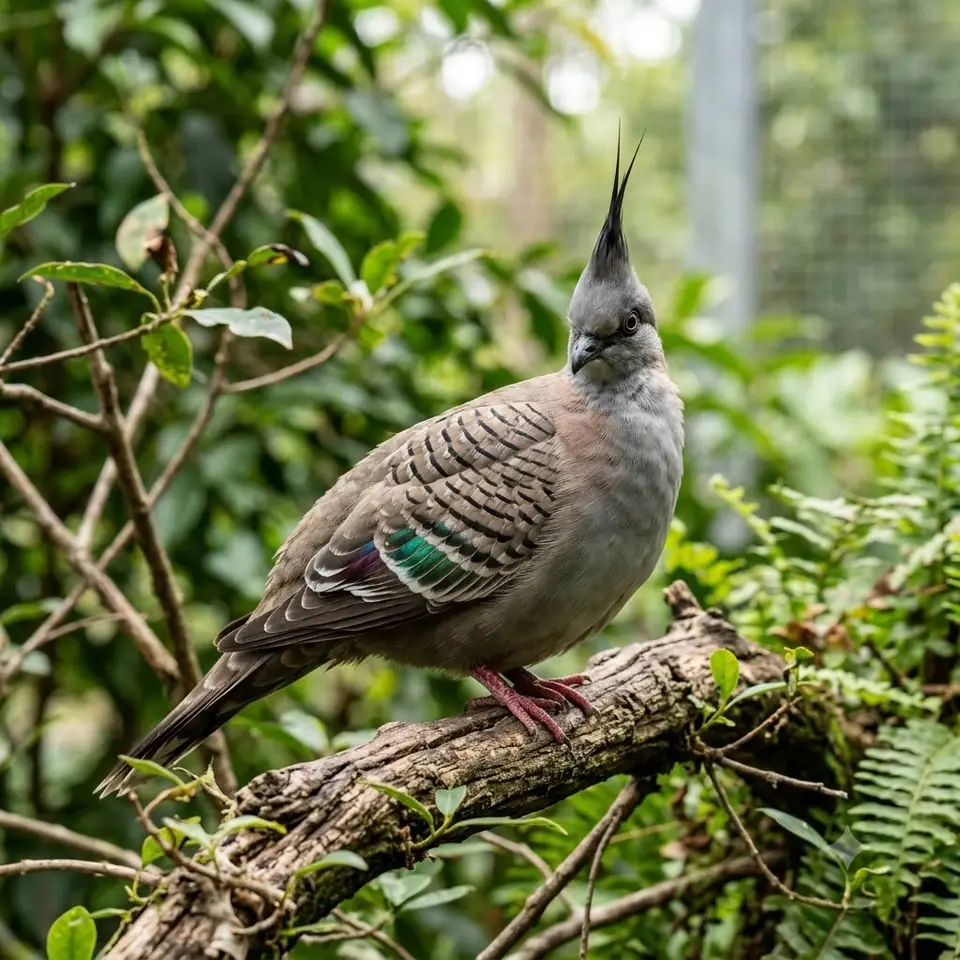
The Crested pigeon wears a slender pointed crest and a wing-patch that shimmers bronze and green, making it one of the most elegant aviary pigeons - and one of the hardiest.
Last reviewed: July 2026
 AI illustration
 Overview
The Crested pigeon wears a slender pointed crest and a wing-patch that shimmers bronze and green, making it one of the most elegant aviary pigeons - and one of the hardiest. Calm, undemanding and long-lived, it's a fine choice for a mixed aviary, adding grace and a distinctive whistling wingbeat as it flies.
Natural History & Origin
An elegant crested Australian native (Ocyphaps lophotes), kept in aviculture as a hardy, attractive aviary bird.
Appearance
Medium (150-250 g), grey-brown with a fine upright black crest, pink-grey underparts and iridescent bronze-green wing patches; slim and graceful.
Temperament & Noise
Calm and peaceful but not a handling bird - a serene aviary species best admired for its looks and gentle manner. Soft cooing, plus a characteristic whistling of the wings in flight.
Housing & Flight
A roomy planted aviary suits them best, with perches, ground space and cover; hardier and more weather-tolerant than tropical doves, though still kept dry and sheltered in cold snaps. Peaceful with other calm aviary birds.
Diet
A pigeon/dove seed and grain mix, greens, grit and calcium; fresh water for drinking and bathing. Undemanding and easy to feed.
Health & Lifespan
Average lifespan is 12-15 years. Hardy and long-lived (12-15 years) with basic aviary care; robust and largely trouble-free beyond routine canker/worm attention. A dependable species.
Training & Enrichment
Not hand-tame or trainable - kept for beauty and gentle presence. Enrichment is aviary space, planting, ground foraging and a mate.
Pros & Cons
Pros
- Elegant crest and iridescent wings
- Hardy and weather-tolerant
- Long-lived and easy to keep
- Peaceful mixed-aviary bird
Cons
- Not a handleable or tame pet
- Needs aviary space to look its best
- Admired rather than interacted with
- Best kept in pairs/groups
Best Suited For
- Mixed-aviary keepers
- People wanting an elegant hardy dove
- Australian-bird enthusiasts
- Watchers rather than handlers
Everyday gear for birds
Links go to Amazon or a partner brand's own store and may earn us a commission at no extra cost to you. As an Amazon Associate we earn from qualifying purchases. An Amazon link leads to a type of gear and you choose the exact product; a card that names a store leads to that partner's own shop.
Crested Pigeon - frequently asked questions
What makes the whistling sound when it flies?
Specially modified wing feathers produce a distinctive whistle on each wingbeat - a natural alarm and signal, and a charming feature of the species in an aviary.
Is it hardy in cool climates?
More so than tropical doves - it's a robust Australian native, though it still needs dry, sheltered housing and protection during genuine cold snaps.
Can it be tamed?
Not really. It's a calm but hands-off aviary bird kept for its elegance and gentle manner rather than for handling or tricks.
Test yourself: guess the bird
Three clues from our quiz bank, each about another of our birds. Can you name them?
Clue 1.Selective breeding turned this little parrot into blues, whites, and a larger 'English' show type, though wild ones are always green.
It's the Budgerigar (Budgie) - read the full profile →
Clue 2.Highly social and prone to boredom, this long-lived ash-feathered parrot can pluck out its own plumage if left without mental stimulation.
It's the African Grey Parrot - read the full profile →
Clue 3.This small, stocky African parrot is named for the strong pair bond mates form, sitting closely side by side.
It's the Lovebird - read the full profile →
Social Needs
Social and peaceful - keep as a pair or in a mixed aviary; they coexist calmly with doves, quail and finches and add elegant movement to the space.