Button Quail (King Quail)
Button quail are thumb-sized, round little quail that scurry along the aviary floor beneath finches and doves, cleaning up dropped seed.
Last reviewed: October 2026
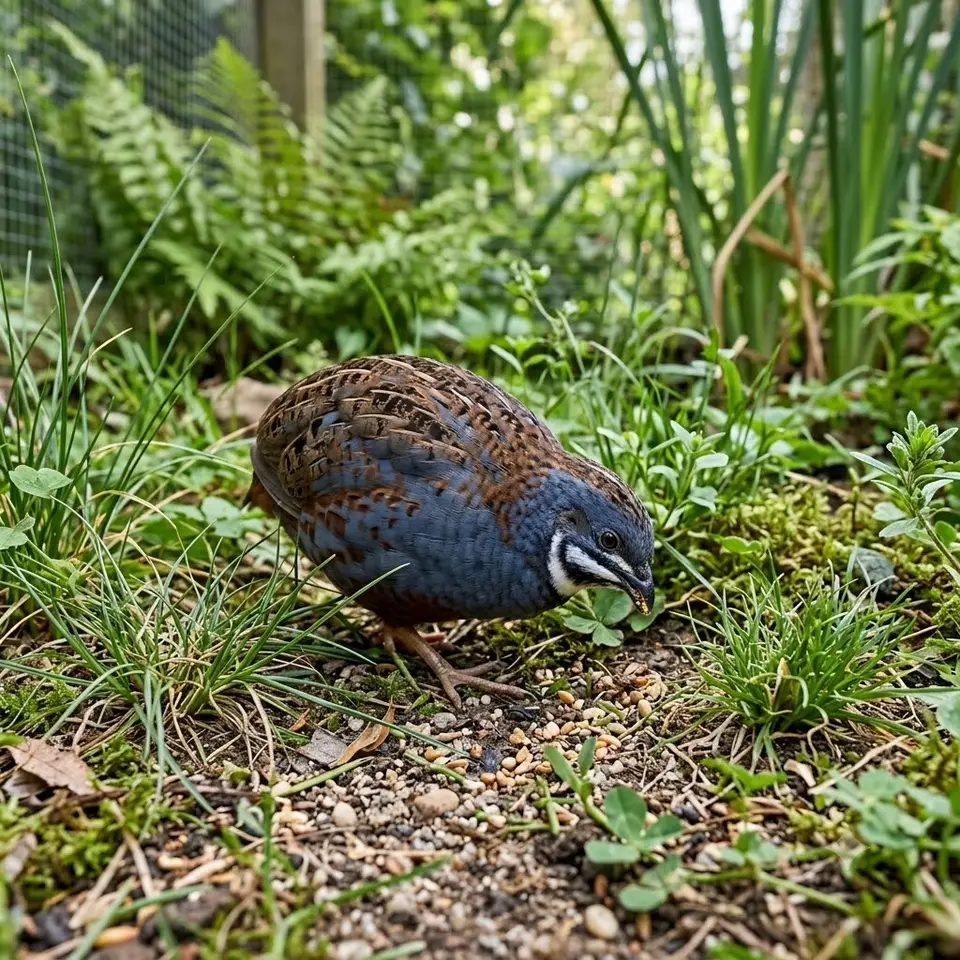 AI illustration
 Overview
Button quail are thumb-sized, round little quail that scurry along the aviary floor beneath finches and doves, cleaning up dropped seed. Peaceful, quiet and undemanding, they're a delightful companion to other small birds and a fun species in their own right.
Natural History & Origin
The tiny Asian blue-breasted or king quail (Synoicus chinensis), the smallest true quail, long kept as an aviary floor bird.
Appearance
Tiny (only 40-70 g), rounded and short-tailed; wild-type males are slate-blue with a black-and-white throat and chestnut belly, and many colour mutations (silver, white, cinnamon) exist. Hens are browner.
Temperament & Noise
Peaceful and busy, they are floor birds that dislike being held and startle upward when frightened (a padded cage top prevents head injuries). Soft crowing and peeping, low noise.
Housing & Flight
A cage or aviary with plenty of FLOOR space and low height, dense with cover (plants, grass tufts, hides) so they feel secure; a soft or low ceiling stops 'boinking' injuries. They're the classic clean-up crew beneath finches and doves.
Diet
A fine game-bird or finch mix plus higher protein (egg food, soft insects) than seed-eaters need; grit, greens, calcium and shallow water they can't drown in. They forage constantly on the floor.
Health & Lifespan
Average lifespan is 3-5 years. Short-lived (3-5 years) but hardy if kept warm, dry and with cover; the big risks are startle injuries (padded ceiling), egg-binding in over-laying hens, and cold. Provide dust-bathing and calcium.
Training & Enrichment
Not tameable in the parrot sense; the joy is watching their busy foraging and courtship. Enrichment is ground cover, a dust bath, live-food treats and hiding places.
Pros & Cons
Pros
- Tiny, peaceful aviary floor bird
- Cleans up dropped seed under other birds
- Quiet and undemanding
- Fun courtship and foraging to watch
Cons
- Startles upward - injury risk without padded top
- Not a handleable pet
- Males fight; keep as pairs
- Short-lived; cold-sensitive
Best Suited For
- Finch and dove aviary keepers
- People wanting ground-level activity
- Small-space aviculture
- Watchers rather than handlers
Everyday gear for quail
Links go to Amazon or a partner brand's own store and may earn us a commission at no extra cost to you. As an Amazon Associate we earn from qualifying purchases. An Amazon link leads to a type of gear and you choose the exact product; a card that names a store leads to that partner's own shop.
Button Quail (King Quail) - frequently asked questions
Why do people keep button quail with finches?
They occupy the aviary floor and eat dropped seed, so they add life and cleanup below perching birds without competing - a classic community-aviary pairing.
Why does my quail fly straight up and bump the ceiling?
A startle reflex called 'boinking' - always pad the cage top with soft material and provide floor cover to reduce panic and prevent head injuries.
Can I keep several together?
One male with one or two hens works; multiple males fight. A single pair is the calm, reliable setup.
Test yourself: guess the bird
Three clues from our quiz bank, each about another of our birds. Can you name them?
Clue 1.Highly social and prone to boredom, this long-lived ash-feathered parrot can pluck out its own plumage if left without mental stimulation.
It's the African Grey Parrot - read the full profile →
Clue 2.Hardy enough to form feral city colonies in cold climates, this small talkative parrot constructs apartment-like twig nests.
It's the Quaker (Monk) Parakeet - read the full profile →
Clue 3.A dust-producing companion bird from the outback, it raises or lowers its crest to signal mood and often whistles learned tunes.
It's the Cockatiel - read the full profile →
Social Needs
Best kept as a single pair - males can fight, and one cock with one or two hens is the peaceful formula. They coexist well with finches and doves above them but keep to the ground.