Diamond Dove
The Diamond dove is the smallest commonly kept dove - a delicate, sparrow-sized Australian bird spangled with white 'diamond' spots, prized for its soft cooing and peaceful aviary manners.
Last reviewed: September 2026
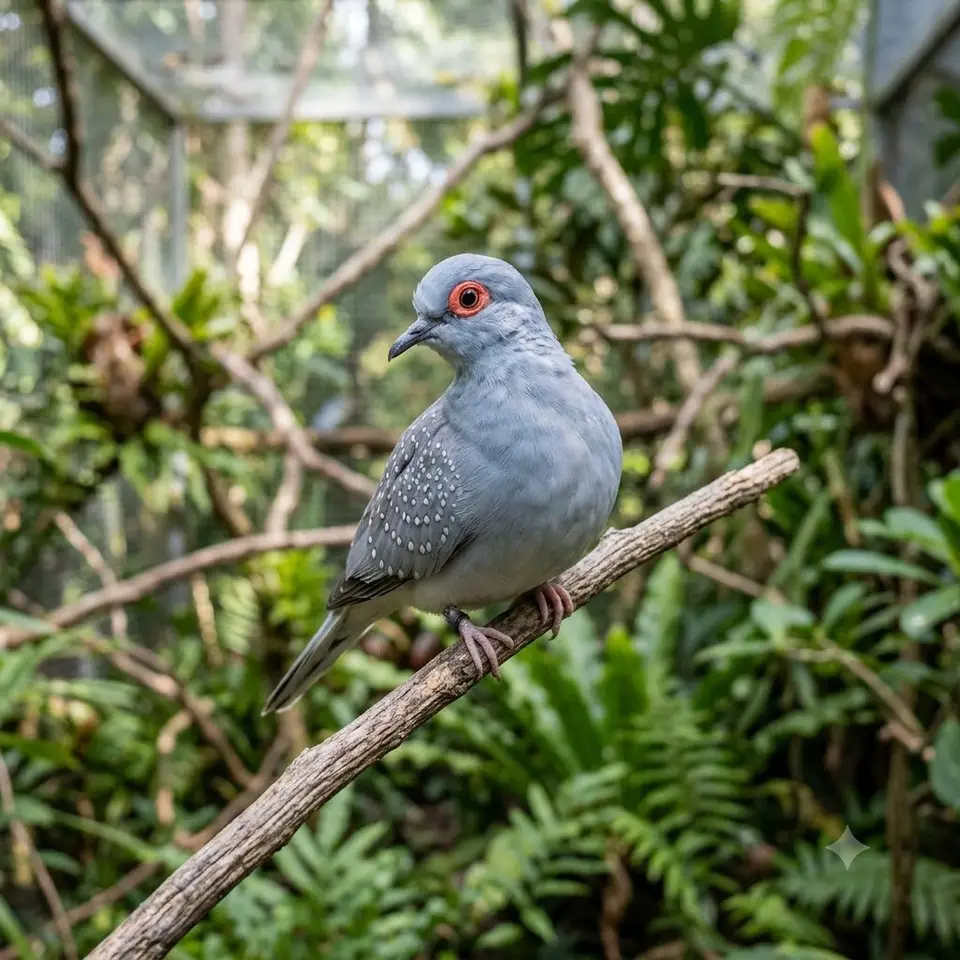 AI illustration
 Overview
The Diamond dove is the smallest commonly kept dove - a delicate, sparrow-sized Australian bird spangled with white 'diamond' spots, prized for its soft cooing and peaceful aviary manners. It is gentle, quiet and easy, though too small and flighty to be a hands-on cuddle bird; it's a bird to admire and listen to.
Natural History & Origin
Australia's tiny native dove (Geopelia cuneata), now widely bred in captivity as a gentle aviary and cage bird.
Appearance
Tiny (about 23-32 g), blue-grey with white-spotted wings, a red eye-ring and a long slim tail; silver, cinnamon and white mutations are common.
Temperament & Noise
Gentle and peaceful but flighty - Diamonds tolerate rather than seek handling, and are best enjoyed as a serene aviary or planted-cage bird. Their cooing is soft and pleasant.
Housing & Flight
A long flight cage or planted aviary suits them - they fly fast and low and need horizontal space, plus fine twigs and a platform for their flimsy nests. They mix peacefully with finches and other small doves.
Diet
A fine finch/small-dove seed mix, soaked seed, egg food when breeding, grit, greens and calcium; fresh water for drinking and frequent bathing.
Health & Lifespan
Average lifespan is 10-12 years. Hardy little birds (10-12 years) if kept warm and draft-free; sensitive to cold and to egg-binding when over-breeding. Provide calcium and limit clutches.
Training & Enrichment
Not trick or hand-tame birds - enjoyment comes from their display, cooing and gentle presence. Enrichment is a mate, planting to shelter in, and space to fly.
Pros & Cons
Pros
- Tiny, peaceful and beautifully spotted
- Soft, soothing coo
- Excellent community-aviary bird
- Easy, inexpensive to keep
Cons
- Too small/flighty to handle
- Cold-sensitive
- Over-breeds if not managed
- Admired, not cuddled
Best Suited For
- Planted-aviary and finch keepers
- People wanting gentle birdsong ambience
- Small-space aviculture
- Mixed peaceful community setups
Everyday gear for birds
Links go to Amazon or a partner brand's own store and may earn us a commission at no extra cost to you. As an Amazon Associate we earn from qualifying purchases. An Amazon link leads to a type of gear and you choose the exact product; a card that names a store leads to that partner's own shop.
Diamond Dove - frequently asked questions
Can Diamond doves be tamed to the hand?
Only loosely - they're small and flighty and prefer to be watched rather than held. For a hands-on dove, a Ringneck is the better choice.
Do they get on with finches?
Yes - they're classic peaceful community-aviary birds and mix well with finches, canaries and other small, calm species.
Are they hardy outdoors?
Only in mild climates or a sheltered, heated aviary - they come from warm Australia and are sensitive to cold and damp.
Test yourself: guess the bird
Three clues from our quiz bank, each about another of our birds. Can you name them?
Clue 1.Hailing from the rainforests of central Africa, this ash-colored parrot can mimic human speech and household sounds with uncanny accuracy.
It's the African Grey Parrot - read the full profile →
Clue 2.These small seed-eating songbirds, such as the zebra and society varieties, are kept for their cheerful chirping rather than handling.
It's the Finch (Zebra & Society) - read the full profile →
Clue 3.Sold in bright peach-faced and masked varieties, this little hookbill can become nippy without daily attention.
It's the Lovebird - read the full profile →
Social Needs
Very social and best in pairs or small groups; a bonded pair coos and displays charmingly. They are peaceful community-aviary birds with finches and canaries.