Why Your Dog Keeps Shaking Its Head
Why dogs keep shaking their heads: outer ear inflammation and its causes, middle ear infection, the ear-flap blood blister shaking can cause, and why home remedies make it worse, from the Merck Veterinary Manual. A reading guide, not veterinary advice.
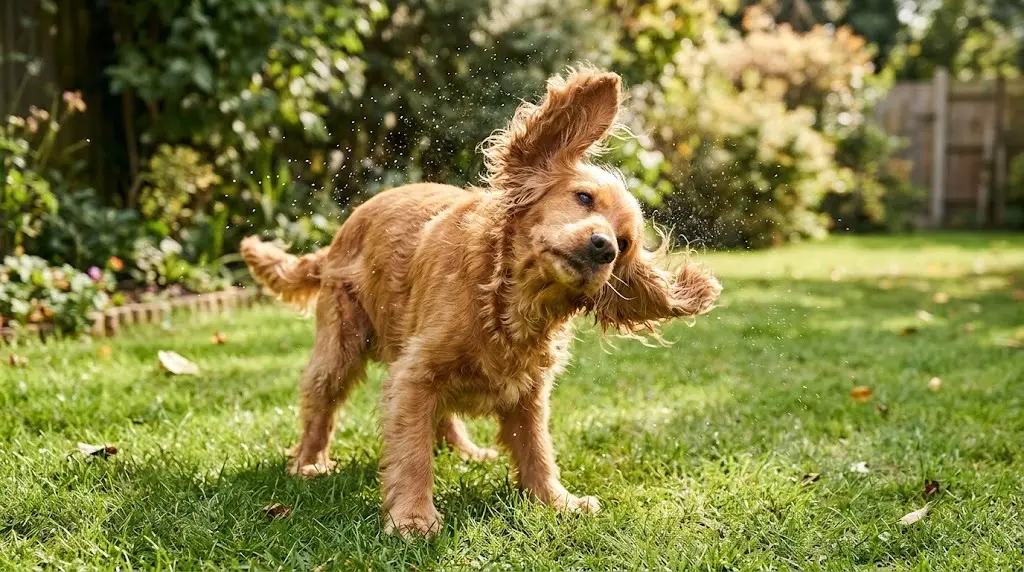 AI illustration
This is a reading guide to what veterinary references say about head shaking and ear disease. Have a vet look in the ear before you put anything in it. A head tilt, loss of balance, a drooping face or flicking eyes alongside ear trouble needs a vet promptly.
The short answer: a dog that keeps shaking its head usually has a sore or itchy ear. The most common ear canal disorder in dogs is otitis externa, inflammation of the lining of the ear canal. The Merck Veterinary Manual lists its signs as head shaking, a foul smell, redness, swelling, scratching, discharge and scaly skin. It can affect one ear or both, and come on suddenly or go on for a long time.
What Inflames the Ear
Merck names these direct causes:
- Allergies. Environmental allergens such as dust mites, pollen and mold, and food allergies, often cause red, itchy ears that can lead to infection in the canal (Merck). Itchy paws often come with it; see why dogs lick their paws.
- Parasites, such as ear mites.
- Bacteria or yeast. Healthy ears carry small numbers of harmless microbes that can overgrow when the ear environment changes.
- Something stuck in the canal.
- A middle ear infection.
- Ear shape. The shape of the ear flap or canal makes some dogs more prone.
Merck’s key point: unless every cause is found and treated, the inflammation often comes back.
What the Vet Does
The vet looks down the canal with an otoscope to find foreign objects, debris, parasites and a damaged eardrum. A painful or blocked ear may need sedation. A swab of the discharge under the microscope shows within minutes whether bacteria, yeast or mites are present. Merck notes that a dark discharge often points to yeast or parasites, though bacteria can cause it too. For long-standing cases, or when only one side is affected, allergy tests, biopsies or X-rays may follow.
Treatment usually means a thorough cleaning first, often under anesthesia for a painful ear, because wax and discharge inactivate ear drops. Then come drops chosen by the vet, which usually combine antibiotic, antifungal and anti-inflammatory medicine. Dogs with infections usually need rechecks until the ear is clear, often over 2 to 4 weeks. Long-term cases can take months.
Skip the Home Remedies
Merck warns against irritating home remedies such as vinegar mixtures. They can make swelling and discharge worse and raise the risk of infection. Even products that are safe in healthy ears can irritate inflamed ones. Don’t use cotton swabs, which push debris deeper. Our guide to dog ear cleaners covers cleaning a healthy ear the way Merck describes.
When It Is More Than the Outer Ear
- Middle ear infection (otitis media). The signs overlap with otitis externa: head shaking, scratching, rubbing the ear on the floor, turning the head to the sore side. Merck says it is found in over half of dogs with recurring outer ear inflammation. When it reaches the inner ear, it can cause a head tilt, loss of balance, trouble walking and uncontrolled eye movements. It is usually treated with weeks of antibiotics (Merck).
- Aural hematoma. Hard shaking or scratching can break a small blood vessel in the ear flap, which then fills with blood like a soft water balloon. It is usually treated surgically, along with whatever caused the shaking. Left alone, it can heal into a thickened, wrinkled “cauliflower ear” (Merck).
Keeping Ears Healthy
Merck suggests regular checks for changes: a warmer ear, a change in skin color, or sudden moisture. Keep water out of the ears when bathing, and use the drying agent your vet recommends for dogs that swim a lot. Get changes seen promptly rather than waiting.