Why Do Dogs Pant?
Why dogs pant: cooling without sweat, excitement and stress, the signs of heat stroke and the first aid the Merck Veterinary Manual gives, which dogs overheat most easily, and panting that can point to illness such as Cushing disease. A reading guide, not veterinary advice.
 AI illustration
This is a reading guide to what veterinary references say about panting. Heat stroke is an emergency: if your dog has been in the heat and pants hard with any of the signs below, move it out of the heat, start cooling it and take it to a vet now.
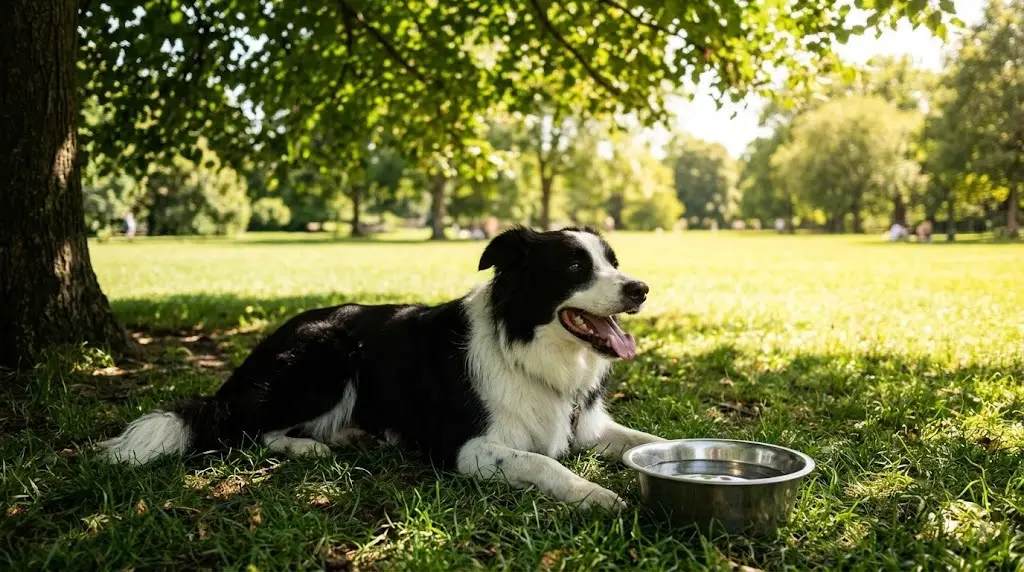
The short answer: panting is how a dog cools down. Dogs can’t sweat like people, so they pant. They take quick breaths to release heat, and pause now and then for deeper ones (Merck Veterinary Manual). Merck also notes that dogs are better at keeping warm than at cooling down, which is why hot weather is risky for them. Dogs also pant when excited or anxious. Panting becomes a worry when it comes with signs of heat stroke, or when a dog pants hard with no heat, exercise or excitement to explain it.
Normal Panting
- After exercise or on a warm day. This is cooling at work. For comparison, Merck gives a resting breathing rate of 18 to 34 breaths a minute for a healthy dog.
- Excitement. Greetings, play and car rides can all set a dog panting.
- Stress and anxiety. The ASPCA lists panting among the signs of stress, with dilated pupils, yawning, drooling, trembling and pacing. A dog with separation anxiety may start to pace, pant and whine as its owner gets ready to leave (ASPCA).
Heat Stroke
Merck’s emergency guide lists the signs: hot skin, vomiting, drooling, rapid panting, distress, uncoordinated movement, collapse or unconsciousness (Merck). A dog’s normal rectal temperature is about 101.5 to 102 °F (38.6 to 38.9 °C).
First aid, per Merck:
- Move the dog out of the heat.
- Cool the head and body with cool water, ice packs or wet towels, especially on the belly. A fan helps too. Cool the dog gradually: hose it down with cool, not cold, water, and never put it into cold water.
- Offer small amounts of water once its temperature starts to come down.
- Take it to the vet straight away, calling ahead if you can.
Who is most at risk. Merck’s summer safety article names young, elderly and overweight animals as particularly at risk. So are dogs with short muzzles that don’t breathe well in the heat, and dogs with thick or dark coats that trap warm air (Merck). Merck’s emergency guide adds that short-nosed breeds, such as the French Bulldog and Pug, can overheat from stress or excitement even on cool days.
The car. On an 85 °F (29 °C) day, the inside of a parked car can pass 100 °F (38 °C) in 10 minutes and 120 °F (49 °C) in 35 minutes, Merck says. A cracked window or a shady spot does not make it safe, and in many places leaving a pet in a hot car is illegal.
Panting That Can Mean Illness
Heavy panting at rest, with no heat or excitement to explain it, is worth a vet visit. Breathing problems are one possible reason, and there are others. For example, Merck lists panting among the common signs of Cushing disease, alongside more thirst and urination, a bigger appetite, heat intolerance, a “potbelly”, thin skin and hair loss. It mostly affects middle-aged and older dogs, and the Dachshund, Boxer, Beagle, Boston Terrier and Miniature Poodle are at higher risk (Merck).
When to See the Vet
- Now: any sign of heat stroke, or a dog that pants hard and also collapses, staggers or vomits.
- Soon: heavy panting at rest, panting with drinking more than usual, or any change from what is normal for your dog.
Our guide to when to go to an emergency vet covers the signs that should not wait for an appointment. Related: why does my dog drink so much water?