Society Finch (Lonchura striata domestica)
The Society Finch (Lonchura striata domestica), also called the Bengalese finch, is one of the easiest, hardiest, and most social of all pet finches.
🗓️ Last reviewed: September 2026
Overview
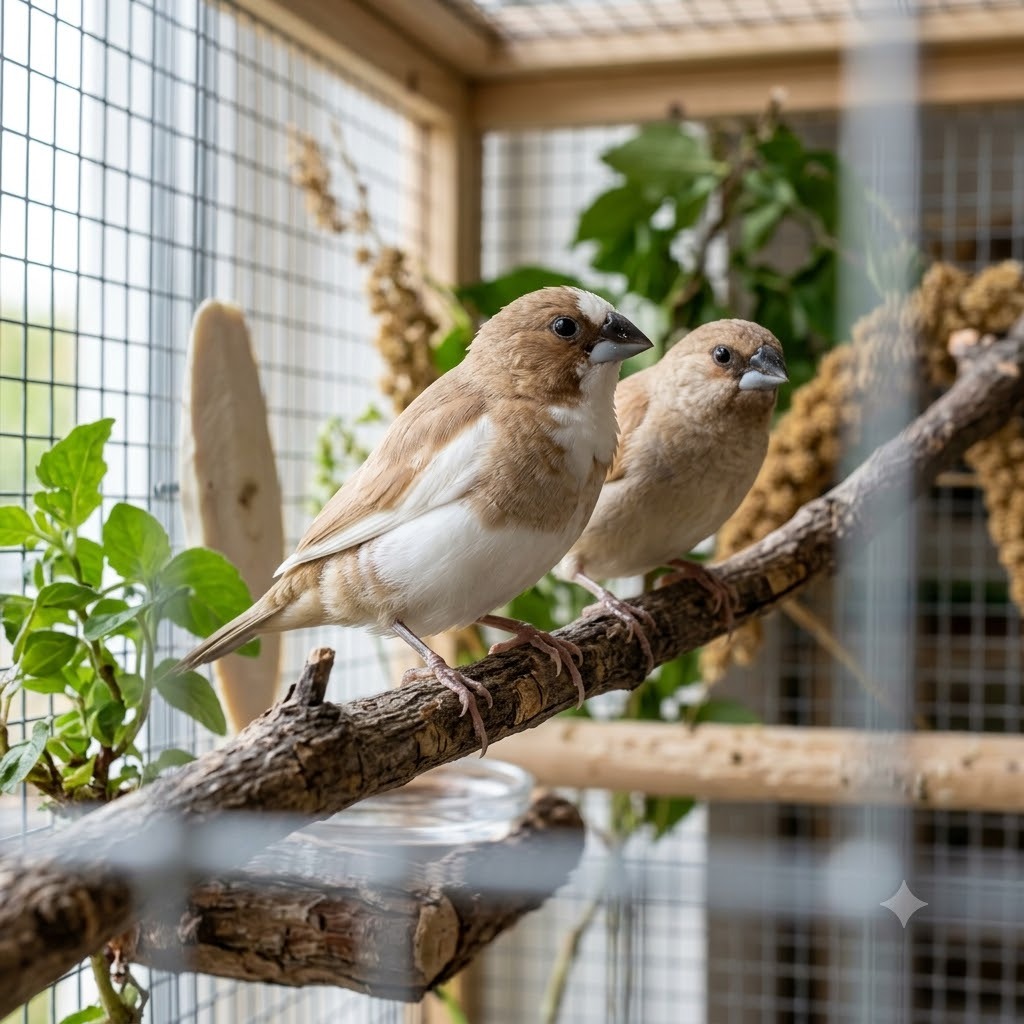
The Society Finch (Lonchura striata domestica), also called the Bengalese finch, is one of the easiest, hardiest, and most social of all pet finches. It exists only in domestication, the product of centuries of breeding, and has no wild form. Sociable, peaceful, and undemanding, it is a hands-off watching bird rather than a handling pet, content to chatter softly and bustle about a flight cage with its own kind. For a first-time finch keeper who wants a calm, forgiving, and genuinely social little bird, few species are a better choice.
Natural History & Origin
The society finch does not exist in the wild. It was developed in Asia over several hundred years, most likely from the white-rumped munia (Lonchura striata) and related munias, and refined in China and Japan as a domestic cage bird long before reaching the West. Because it has been bred purely in captivity for so many generations, it is exceptionally settled around people and in cages. It is also one of the steadiest and most willing breeders in aviculture, which is why it became famous as a foster parent for the eggs and chicks of other, more delicate finch species.
Appearance
Adults weigh around 14-18 g, length around 10-12 cm.
Colour varieties: society finches come in pied patterns of brown (chocolate), fawn, and white in endless combinations, so almost every bird is patterned differently. Self (solid) brown and fawn birds exist alongside heavily pied and near-white forms, and crested varieties are also bred. The sexes look alike, which is why they are usually told apart by the male's soft song rather than by colour.
Temperament & Noise
Extremely peaceful, social, and busy. Society finches are among the most placid finches kept, rarely squabbling and happy to roost huddled together. Their voice is a soft, pleasant chattering with a quiet wheezy song from the males - gentle and undemanding, with none of the volume of parrots, making them very apartment-friendly.
They are a watching bird, not a taming bird. Society finches are not handled, tamed, or trained like a parrot, and trying to hold them only causes stress. The reward is in observing their constant, sociable activity.
Housing & Flight
Minimum cage: a horizontal flight cage of about 75-90 cm or more in width for a pair or small group - width matters far more than height, because finches fly side to side rather than climb. Bar spacing must be narrow (about 1 cm) so they cannot get their heads stuck. A larger flight or aviary is ideal for a group.
Provide:
- Several perches of varying thickness placed to leave open flight paths across the cage.
- A cuttlebone and fine grit for calcium and digestion.
- A shallow bathing dish, which finches use enthusiastically.
- Calm, peaceful companions of their own or similar gentle species; a covered roosting spot for security.
Diet
- Quality finch seed mix as a base, including a variety of millets and canary seed.
- Egg food offered regularly for protein, especially when birds are active or breeding.
- Daily fresh greens in small amounts, plus sprouted seed.
- Cuttlebone and fine grit for calcium and digestion.
- Fresh water daily, plus a bathing dish.
Avoid: avocado (toxic to all birds), chocolate, caffeine, alcohol, onion, salt.
Health & Lifespan
5-8 years (some live a little longer with excellent care).
Common concerns:
- Scaly face and leg mites - a treatable mite causing crusty deposits on the beak and legs.
- Air sac mites - a respiratory parasite that causes wheezing and clicking.
- Egg binding in hens, especially with frequent laying.
- Overgrown nails and beak - check nails occasionally and trim when needed; an overgrown beak is a job for the avian vet.
- Respiratory infections - sensitive to fumes (non-stick cookware, aerosols, smoking).
- Nutritional deficiencies from an all-seed diet with no egg food or greens.
Find an avian or exotics vet experienced with small birds before acquisition, and have any unwell finch seen promptly, as small birds hide illness until it is advanced.
Training & Enrichment
Society finches are not trained in the way parrots are, but they thrive in a calm, enriched environment. Enrichment comes from a spacious horizontal flight, the company of their own kind, varied perches and foraging opportunities, daily bathing, and a quiet, secure setting. Their natural sociability does the rest - a busy, chattering group is a contented one.
Pros & Cons
Pros:
- One of the hardiest and most forgiving finches.
- Extremely peaceful and intensely social.
- Quiet, soft chatter - excellent for apartments.
- Easy to feed and a superb beginner bird.
Cons:
- Not a hands-on handling or taming pet.
- Must be kept in pairs or groups, never alone.
- Needs a wide horizontal flight cage.
- Will breed readily unless kept same-sex.
Best Suited For
- First-time bird owners wanting an easy, hardy finch.
- Apartment dwellers needing a quiet bird.
- Keepers who enjoy watching sociable birds rather than handling them.
Not suited for households with non-stick cookware in active use (fumes can kill birds quickly), smokers in the same room, anyone wanting a single bird, or anyone wanting an interactive, trainable, hands-on companion.
🐾 Everyday gear for birds
Links go to Amazon or a partner brand's own store and may earn us a commission at no extra cost to you. As an Amazon Associate we earn from qualifying purchases. We link gear types, not sponsors' picks: you choose the exact product.
Society Finch (Lonchura striata domestica) - frequently asked questions
Are society finches loud?
No. Their voice is a soft, pleasant chatter with a quiet wheezy song from the males - among the most apartment-friendly of pet birds.
Should I get one or two?
Never just one. Society finches are intensely social and must be kept at least in a same-sex pair, and are happiest in a small group.
How long do they live?
About 5-8 years on average, sometimes a little longer with excellent care.
Can they be handled?
No - they are a watching bird, not a taming pet. Handling stresses them. Enjoy their busy, sociable activity instead.
Why are they called foster parents?
Society finches are such reliable, willing breeders that keepers have long used them to hatch and raise the eggs and chicks of more delicate finch species.
🧠 Test yourself: guess the bird
Three clues from our quiz bank, each about another of our birds. Can you name them?
Clue 1.This noisy white or dark parrot family is defined by a showy, movable head crest and a powerful curved bill.
It's the Cockatoo - read the full profile →
Clue 2.This small grey Australian parrot, the smallest member of its crested family, sports orange cheek patches and a jaunty head crest.
It's the Cockatiel - read the full profile →
Clue 3.Hardy enough to form feral city colonies in cold climates, this small talkative parrot constructs apartment-like twig nests.
It's the Quaker (Monk) Parakeet - read the full profile →
Social Needs
Highly social and never to be kept alone - the clue is in the name. Society finches must live at least in a same-sex pair and are happiest in a small group, where they roost huddled together and bustle about contentedly. Same-sex pairs or groups avoid the constant breeding that pairs will otherwise attempt.
They are gentle and mix peacefully with their own kind and other calm finches of similar size, but should never be crowded or housed with assertive birds that will bully them.