Why Dogs Get the Zoomies
Sudden bursts of tearing around the house or garden, often after a bath, in the evening or after being let off the lead, are a normal way for many dogs to burn off energy. When they tend to happen, how to keep them safe, and the few signs that are worth a call to your vet.
 AI illustration
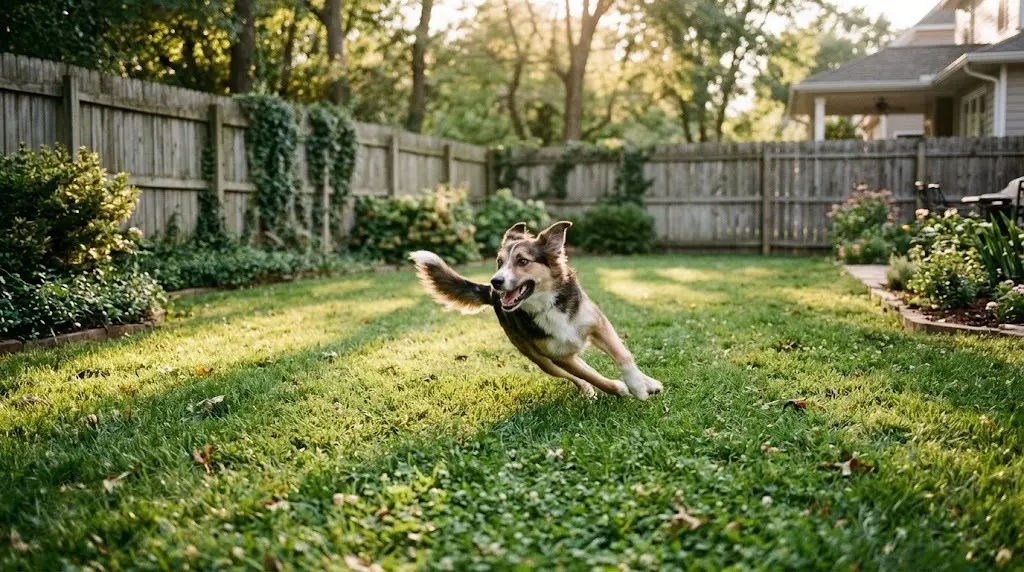
The zoomies are short, sudden bursts of wild running, spinning and play-bowing that many dogs have from time to time, and in a healthy dog they are a normal way of letting off pent-up energy or excitement. The formal name you will sometimes see is frenetic random activity periods, or FRAPs. A dog having the zoomies usually looks delighted: ears back, a loose “play face”, tail tucked or flying, racing in loops and then flopping down as suddenly as it started. Your job is mostly to keep the space safe and let it run its course.
What the zoomies look like
Each dog has its own version, but a typical burst includes:
- Fast laps around the room, the sofa or the garden, often in a circle or figure of eight.
- Sharp turns and sudden stops, sometimes with a play bow before taking off again.
- A tucked rear end, where the dog runs low with its back legs pulled under.
- A quick finish. Most bursts end on their own, and the dog then settles, pants and often lies down.
Puppies and young dogs tend to have them more often than older dogs, but adult and senior dogs get them too.
When they tend to happen
The zoomies often show up at predictable moments, which gives you clues about what sets them off for your own dog.
- After a bath or grooming. Many dogs race around the house straight after a bath. It may be relief at being done, an attempt to dry off, or just a release of the stress of being held still.
- In the evening. A burst of energy before bed is common, especially in puppies and dogs that have spent the day resting.
- After being let out of a crate or off the lead. Freedom after a stretch of being confined or controlled can tip a dog into a run.
- When excited. Visitors arriving, a family member coming home, or a good play session can all overflow into laps around the room.
- After going to the toilet. Some dogs sprint off after doing their business outside, which may be part of the same burst of relief and excitement.
Not every dog follows these patterns, and the exact reason for a single burst is usually impossible to pin down. Watching when your dog’s zoomies happen tells you more than any general explanation.
Keeping a zooming dog safe
The running itself is not a problem; the surroundings can be.
- Watch the floor. Wooden, tiled and laminate floors are slippery, and a dog skidding into furniture or doors can hurt itself. Rugs and runners give grip, and moving a zooming dog onto carpet or grass is safer.
- Clear the obstacles. Stairs, glass doors, coffee tables with sharp corners and anything breakable are worth moving or blocking off in the room where your dog tends to run.
- Keep it away from roads and water. A dog that gets the zoomies off the lead can bolt without paying attention to where it is going. Let it run in a fenced space, and keep the lead on near roads, cliffs or open water.
- Do not chase. Running after a zooming dog usually turns it into a game of chase and makes the burst longer. If you need it to stop, run a few steps away from your dog and call it, or toss a toy in a safe direction.
- Let it wind down. Once the burst is over, give your dog a calm space and some water.
Can you reduce the zoomies?
You do not need to stop them, and for many dogs a few bursts a week are part of normal life. If they happen often enough to be a nuisance, or always in a dangerous place, it helps to look at the dog’s day as a whole:
- More exercise and play earlier in the day can leave less energy for a sudden evening release.
- Mental work such as sniffing games, puzzle feeders and short training sessions can tire a dog out too.
- Predictable routines around baths, crate time and visitors can soften the burst afterwards. A short walk or play session after a long period in the crate, for example, gives the energy an outlet before it bursts out indoors.
Puppies especially need a balance of activity, rest and gentle exposure to new things. Our puppy socialisation timeline covers how that fits together in the first months.
When to check with your vet
In a dog that is otherwise healthy, playful zoomies are no cause for worry. Talk to your vet if:
- the running seems frantic or distressed rather than playful, or your dog cannot be interrupted;
- bursts start suddenly in an older dog that never had them before, or come with confusion, pacing at night or other changes in behaviour (our guide to dog dementia covers changes worth noticing in senior dogs);
- your dog limps, yelps or seems stiff after a burst;
- the “zooming” looks more like scooting, spinning after the tail or chewing at its rear, which can point to itching or discomfort.
Your vet can rule out pain and medical causes, and refer you to a qualified behaviourist if the pattern looks like anxiety. If your dog follows you closely around the house as well, our article on why dogs follow you everywhere looks at that side of dog behaviour.
Recommended Gear on Amazon
- Non-slip rug pads and runners - browse current options and reviews on Amazon.
- Dog puzzle feeders - browse current options and reviews on Amazon.
- Snuffle mats - browse current options and reviews on Amazon.
As an Amazon Associate, we earn from qualifying purchases - at no extra cost to you. This helps us keep producing free, in-depth guides.