Why Do Dogs Get Hiccups?
Why dogs and puppies get hiccups, what happens in the body, what may help, and when hiccups are a reason to see the vet, from the American Kennel Club.
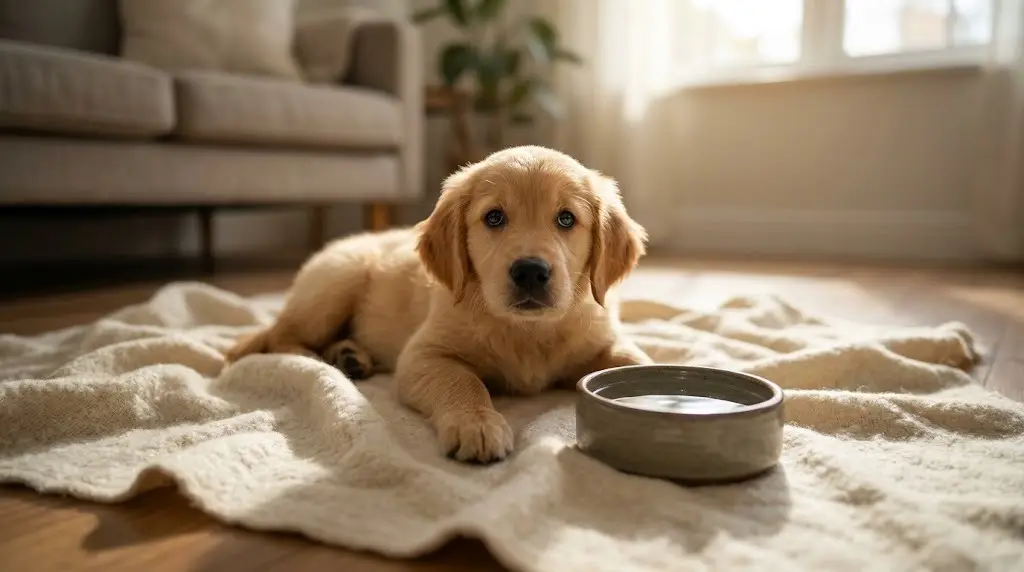 AI illustration
This is a reading guide to what the American Kennel Club says about hiccups. Hiccups that last for hours, or that come with wheezing or difficult breathing, are a reason to call your vet.
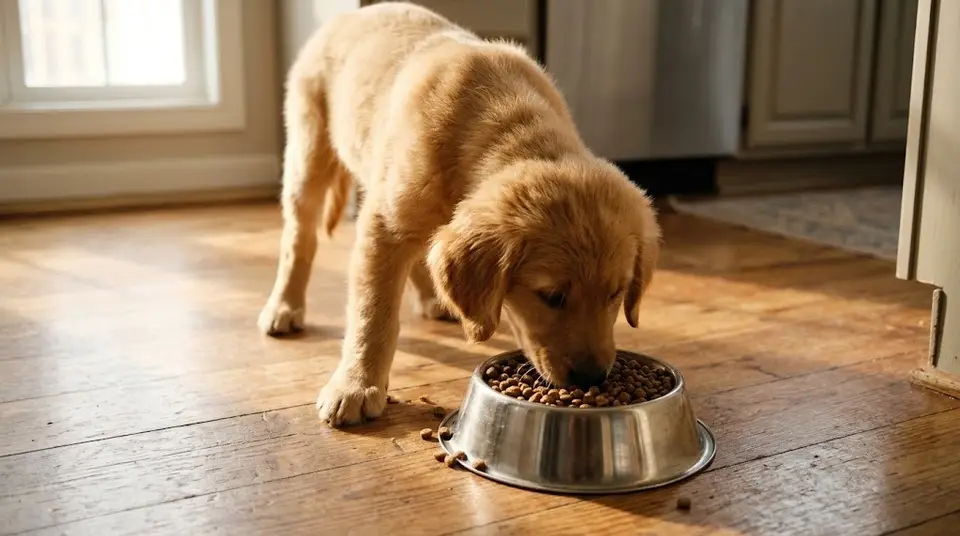
The short answer: hiccups are normal in dogs, just as in people. A spasm of the diaphragm, the muscle under the lungs, makes the opening between the vocal cords snap shut, which makes the “hic”. Puppies get them most, sometimes after eating or drinking too fast, when tired, very excited or cold, and hiccups usually go away on their own (American Kennel Club).
Why Puppies Hiccup More
Nobody knows exactly why mammals hiccup, the AKC notes. One theory is that hiccups help relieve gas or an upset stomach. Another is that they are left over from life in the womb, where hiccups have been documented in many mammals and may be a way of practicing the breathing muscles; that would explain why puppies hiccup far more than adult dogs, and why most hiccup less, or not at all, as they grow.
What May Help
Do not try to scare your dog or pull its tongue: these folk remedies are likely to bother the dog more than the hiccups. The AKC suggests:
- Calm the breathing. Getting your dog to lie on its back for a belly rub may help its breathing settle.
- Offer water, and let it drink calmly and slowly.
- Slow down meals. Hiccups can follow eating too fast; smaller portions or a slow-feeder bowl help.
When to See the Vet
The AKC advises a vet visit if hiccups last more than a few hours, if they turn into a wheezing sound, or if they cause irregular or difficult breathing: long-lasting hiccups can be a sign of a more serious problem.
Related reading: why your dog keeps sneezing, which also covers reverse sneezing.