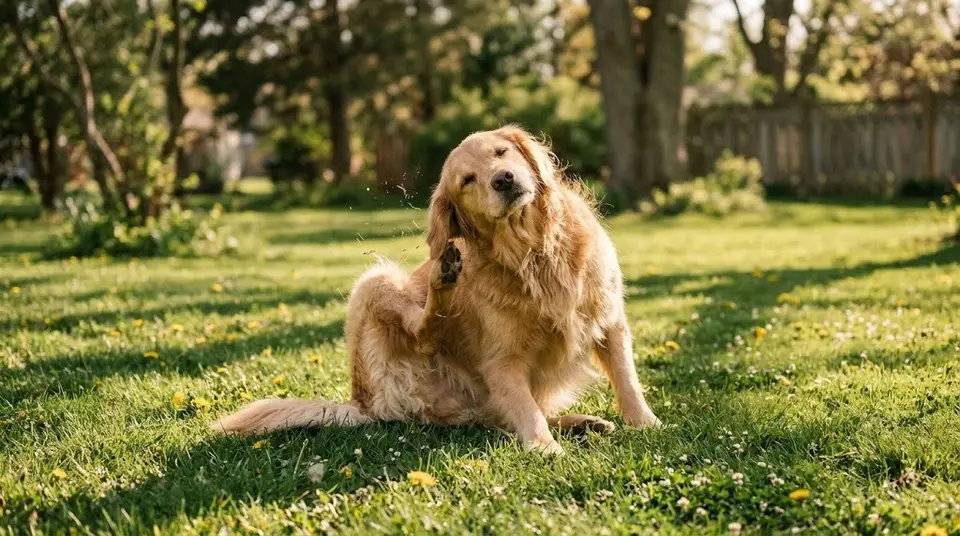
Why Your Dog Keeps Sneezing
Why dogs keep sneezing: viruses, allergies, irritants, something stuck in the nose, nasal mites and tooth abscesses, what reverse sneezing is, and the nose signs that need a vet, from the Merck Veterinary Manual. Not veterinary advice.
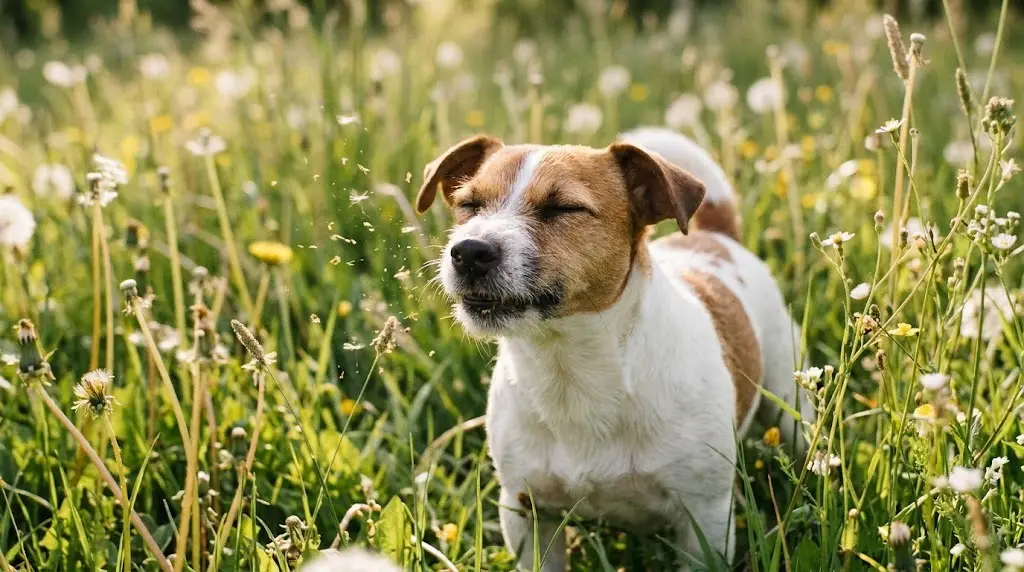 AI illustration
This is a reading guide to what veterinary references say about sneezing in dogs. Sneezing that keeps coming back, a runny or bloody nose, or a dog that seems unwell needs a vet.
The short answer: a sneeze is the nose clearing itself, and an odd one means nothing. Sneezing that keeps on usually means the lining of the nose is inflamed, which vets call rhinitis. The Merck Veterinary Manual says a viral infection is the most common cause of sudden rhinitis in dogs. Allergies, smoke and irritant gases, and something lodged in the nose come next.
The Usual Causes
Merck lists these causes:
| Cause | What points to it |
|---|---|
| Viral infection: canine distemper, adenovirus types 1 and 2, parainfluenza | Sudden onset; bacteria often move in afterwards. These viruses are among the vaccines in our dog vaccines guide |
| Allergy | Seasonal with pollen, or all year with house dust and molds |
| Smoke or irritant gases | Sudden sneezing after exposure |
| Something stuck in the nose | Pawing at the face and discharge from one nostril |
| Nasal mites | Sneezing, reverse sneezing, nosebleeds, facial itching, head shaking |
| A tooth-root abscess | An infected upper tooth root can spread up into the nose and sinuses |
| Long-term causes: chronic inflammation, fungal infection, tumors | Discharge that starts on one side and spreads to both, or starts as mucus and later contains blood |
Merck notes that sneezing is seen most in sudden rhinitis and tends to come and go in long-standing cases. Watery eyes and conjunctivitis often come with it. Nasal mites have their own page in Merck. It notes that they appear to spread between dogs by contact, and that there is no evidence they pose a risk to people.
Reverse Sneezing
A reverse sneeze sounds worse than it is. Instead of blowing air out, the dog pulls it in with short, rapid, snorting breaths through the nose. Merck calls it an aspiration reflex, an attempt to clear the nose. It is one of the signs listed for both rhinitis and nasal mites. A dog that has the odd episode and is otherwise well is usually fine. Frequent episodes, or episodes with nasal discharge, nosebleeds or noisy breathing, are a reason to see the vet.
What to Tell the Vet
The details help narrow it down:
- One side or both? Discharge from one nostril, especially with pawing at the face, suggests something stuck.
- What the discharge looks like. Clear, thick and cloudy, or bloody.
- When it started and whether it comes with the seasons.
- Contact with other dogs, recent boarding or a dog park, and the dog’s vaccination record.
- Smoke, sprays or dust at home.
Diagnosis can take an examination, X-rays or CT, a look inside the nose with a scope (rhinoscopy), cultures and sometimes a biopsy, Merck says. Antibiotics help only when there is a bacterial infection, not with viruses.
When to See the Vet
- Sneezing that keeps coming back or does not settle within a few days.
- Bloody discharge, or discharge from one side only.
- Sudden violent sneezing and pawing at the nose after time outdoors.
- A dog that is tired, off its food or breathing with effort.
For cats, see why your cat keeps sneezing.