Best Kitten Food: What to Compare
What kittens need from their food according to the Merck Veterinary Manual and the Cornell Feline Health Center - a growth or all-life-stages AAFCO statement, three to four meals a day, kitten food until about 9-12 months - and three kitten foods compared on what their makers publish.
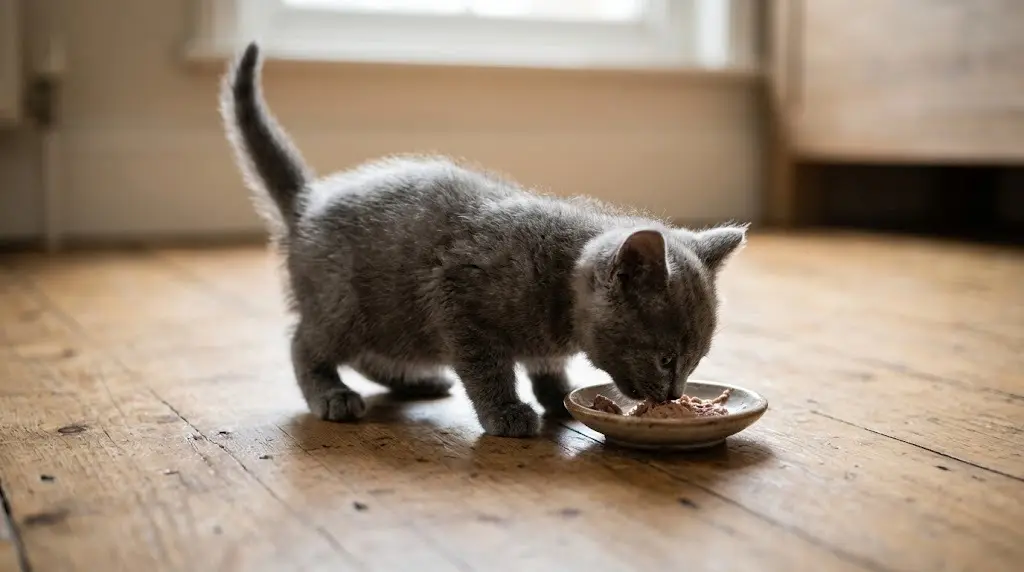 AI illustration
This is a reading guide to published feline nutrition advice and to what makers state on their own pages. Your vet can tell you what suits your kitten. Merck advises taking a cat that refuses food for more than a day to the vet right away, and a kitten that stops eating should not wait.
The short answer: feed a food made for growth. Kittens need extra calories, fat, protein, vitamins and minerals for their rapid growth. The Merck Veterinary Manual advises specially formulated kitten food, fed three to four times a day under four months of age. Fewer meals follow as the kitten grows. It stays on kitten food until adulthood, at about 9 to 12 months.
What to Look For
- The life stage on the label. In the United States, the nutritional adequacy statement shows which life stage a food is complete and balanced for, Merck explains. For a kitten that means growth, or all life stages, which covers growth too.
- Meat among the first ingredients. The Cornell Feline Health Center suggests meat, meat byproducts or seafood among the first few ingredients.
- Wet, dry or both. Canned food is at least 75% water, Cornell notes, which makes it a good source of water. Some cats like canned, some dry, some a mix.
- Meals, not a full bowl all day. Cornell says kittens usually do best on three meals a day until six months old. Merck advises against leaving food out all the time, because it can lead to overeating.
Three Kitten Foods Compared
| Food | Form | First ingredient | Life stage on the label | Protein | Energy | Links |
|---|---|---|---|---|---|---|
| Hill’s Science Diet Kitten, Chicken Recipe | Dry | Chicken | Feeding tests: growing kittens, and pregnant or nursing cats | Hill’s gives dry matter: 38.5% (fat 23.1%) | 553 kcal per cup | See on Amazon · Maker’s page |
| Royal Canin Kitten | Dry | Chicken by-product meal | Formulated to meet: growth | 34.0% min, as sold (fat 16.0% min; moisture 7.5% max) | 367 kcal per cup | See on Amazon · Maker’s page |
| Royal Canin Kitten Thin Slices in Gravy | Wet | Water for processing, then chicken | Formulated to meet: growth | 10.5% min, as sold (moisture 80.2% max) | 76 kcal per can | See on Amazon · Maker’s page |
How we put this together. Three kitten foods from two makers, compared on what each maker states on its own product page, checked on 26 October 2026. We wanted a Purina kitten food in the table as well, but its product page refused our request that day, so it is not here. Hill’s states its protein on a dry-matter basis, without water, and Royal Canin states its protein for the food as sold, so the figures do not line up directly. We have not fed these foods, and a label cannot tell you how a particular kitten will do. Hill’s notes that its kitten food is not recommended for long-term feeding to adult cats unless they have higher than normal energy needs. There are no prices here: the Amazon links search for the exact food, and we may earn a commission if you buy through them.
Feeding Notes
- When to switch to adult food: Merck puts adulthood at about 9 to 12 months. Make the change gradually.
- Treats: Cornell’s rule of thumb is no more than 10 to 15% of daily calories.
- No milk, no raw meat. Merck says milk can upset a cat’s stomach and raw meat is not safe for cats.
- Never dog food as a regular diet. Merck notes that cats and dogs have very different nutritional needs.
- Water: clean, fresh water at all times, Cornell says.
Related Reading
- Best cat food: what to compare
- Cat vaccines, including the kitten series
- Why your cat keeps sneezing