Cockapoo
The Cockapoo is the original 'poo' cross (bred in America since the 1960s, decades before the doodle boom) blending the Cocker Spaniel's merry affection with Poodle brains in a compact, curly, famously cheerful package.
Last reviewed: October 2026
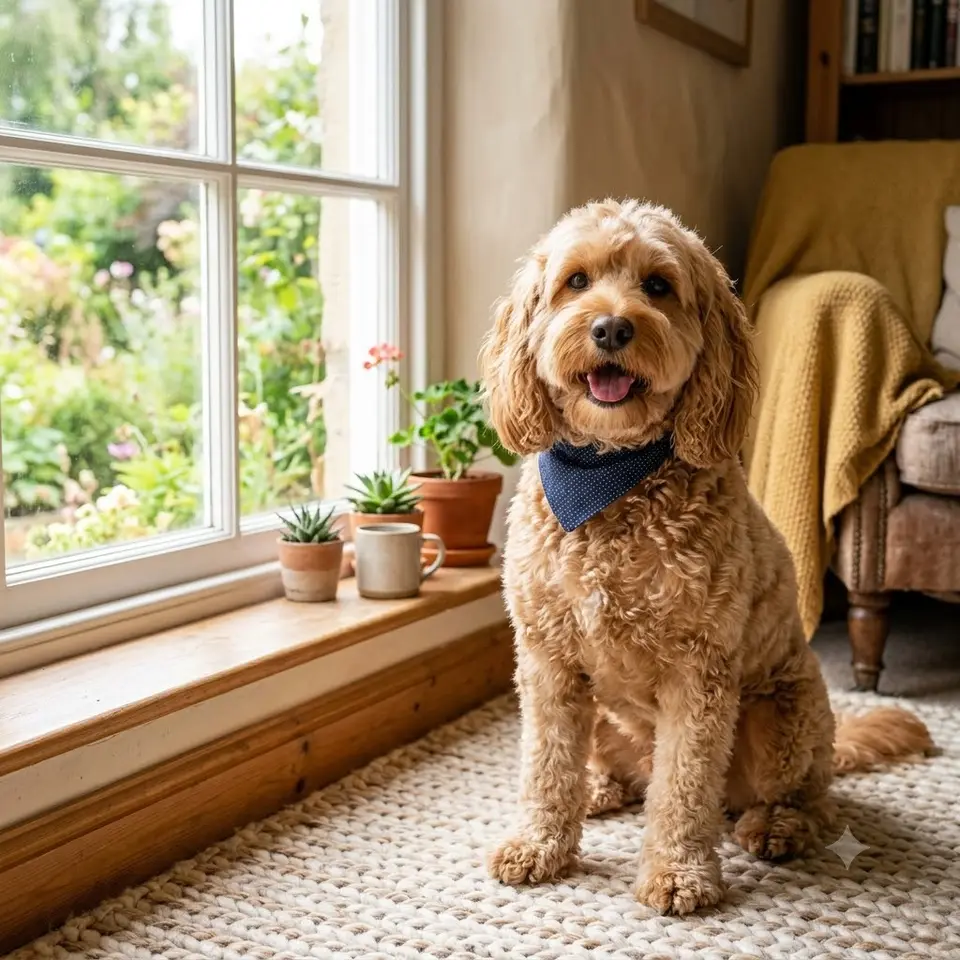 AI illustration
Overview
The Cockapoo is the original 'poo' cross (bred in America since the 1960s, decades before the doodle boom) blending the Cocker Spaniel's merry affection with Poodle brains in a compact, curly, famously cheerful package. Adaptable and easy to live with, it remains one of the most sensible small crosses.
A designer cross: the Cockapoo is a Cocker Spaniel × Poodle mix, not a standardised breed - individuals vary more than purebreds, in coat, size and temperament alike. No study has measured how long this cross lives; for the parent breeds the AKC lists 10-14 years (Cocker Spaniel) and 10-18 years (Poodle).
History & Origins
Emerged in the USA in the 1960s as a companion cross, making it the elder statesman of designer dogs with far more generations of history than most.
Wikipedia, citing Fogle's Encyclopedia of the Dog, says Cocker Spaniels and Poodles have been crossed on purpose in the United States since the 1960s, and PetMD dates the first Cockapoo to the same decade. In the UK the cross is now among the most common dogs: in VetCompass records of dogs under veterinary care in 2019, the Cockapoo was the third most frequent breed among dogs aged under one year (14,321 dogs, 6.2%).
Appearance
6-12 kg depending on Toy vs Miniature Poodle parentage; a soft wavy-to-curly coat in gold, cream, chocolate, black and parti, with the Cocker's melting expression under a teddy fringe. Typical size: Small-medium, 6-12 kg. Coat: Soft waves to curls, low-shed (varies).
Two different Cocker Spaniels can be the parent. The Royal Kennel Club (UK) standard gives the (English) Cocker Spaniel 39-41 cm for dogs and 38-39 cm for bitches and about 13-14.5 kg, with a flat, silky coat "never curly"; the American Cocker Spaniel is smaller, 37-39 cm for dogs and 34-37 cm for bitches. Toy Poodles stand under 28 cm and Miniatures between 28 and 38 cm in the same standards, so the Poodle variety sets much of a Cockapoo's size.
Temperament & Character
Merry is the historic Cocker word and it fits: bright, bouncy, hugely people-oriented and typically excellent with children and other pets. They want to be WITH you - alone-time is their weak spot.
A 2026 Royal Veterinary College study compared C-BARQ behaviour scores of Cockapoos with Cocker Spaniels and Poodles. Cockapoos differed in 16 of 24 comparisons and scored worse in all 16, the most of the three Poodle crosses studied.
Care
Moderate exercise (a couple of good walks plus play), and the usual curly-coat contract: brush every other day, clip every 6-8 weeks, and obsessive ear care - Cocker ears plus Poodle hair is the classic infection recipe.
Health & Lifespan
No study has measured the Cockapoo's lifespan; the AKC numbers in the overview are for its parent breeds.
The 2024 Royal Veterinary College survey of Poodle crosses gives the most direct data. Compared with Cocker Spaniels, Cockapoos had higher odds of pruritus (itching, odds ratio 2.67), ear infection (otitis externa, 2.13) and vomiting, and lower odds of lameness and eye disorders; they had higher odds of pruritus than both parent breeds. Against Poodles, Cockapoos had lower odds of patellar luxation and dental disease. Separate VetCompass studies of UK primary-care records list the Cockapoo among breeds with raised odds of anal sac disorders (2013 data) and acute diarrhoea (2019 data, odds ratio 1.36). Both parents also appear on Cornell University's list of breeds commonly affected by intervertebral disc disease, as Cocker Spaniels and as Toy and Miniature Poodles.
On the AKC pages, the American Spaniel Club's recommended tests for the Cocker Spaniel are hip and eye evaluations, and the Miniature and Toy Poodle clubs list patella and eye evaluations and a PRA-prcd DNA test. We describe the research and do not advise; ask your vet what it means for your dog.
Feeding & Nutrition
Small-dog quality food, measured; they're food-motivated and prone to podge in later years.
Pros & Cons
Pros
- Cheerful, gentle, kid-friendly
- Compact and adaptable
- Decades of established breeding
Cons
- Ears need lifelong vigilance
- Hates being left alone
- Coat still needs real grooming
- Quality varies: vet the breeder
Best Suited For
- Families and singles alike
- First-time owners
- Apartments with daily walks
- Households with someone usually home
Sources
- Wikipedia, Cockapoo: history, citing Fogle, The Encyclopedia of the Dog: en.wikipedia.org
- PetMD, Cockapoo: first Cockapoo in the 1960s: petmd.com
- O'Neill et al., PLOS ONE 2023: dog breeds in the UK in 2019 (VetCompass): doi.org
- Bryson et al., PLOS ONE 2026: undesirable behaviours in Poodle crosses and their parent breeds: doi.org
- Royal Kennel Club, Cocker Spaniel breed standard: size, weight and coat: royalkennelclub.com
- Royal Kennel Club, American Cocker Spaniel breed standard: size: royalkennelclub.com
- Royal Kennel Club, Poodle (Toy) and Poodle (Miniature) breed standards: royalkennelclub.com
- Bryson et al., PLOS ONE 2024: health of Cockapoo, Labradoodle and Cavapoo compared with their parent breeds: doi.org
- O'Neill et al., Veterinary Record 2021: anal sac disorders in UK dogs: doi.org
- O'Neill et al., PLOS ONE 2025: acute diarrhoea in UK dogs: doi.org
- Cornell Riney Canine Health Center: intervertebral disc disease, commonly affected breeds: vet.cornell.edu
- AKC, Cocker Spaniel: recommended tests: akc.org
- AKC, Poodle (Miniature): recommended tests: akc.org
- AKC, Poodle (Toy): recommended tests: akc.org
Sources opened and checked on 16 October 2026.
Everyday gear for dogs
Links go to Amazon or a partner brand's own store and may earn us a commission at no extra cost to you. As an Amazon Associate we earn from qualifying purchases. An Amazon link leads to a type of gear and you choose the exact product; a card that names a store leads to that partner's own shop.
Cockapoo puppy growth chart
A typical growth curve for a medium breed like the Cockapoo, estimated from its adult weight of 6-12 kg. Puppies vary with sex, genetics and diet, so treat this as a guide - for your own puppy, use the puppy weight predictor.
| Age | Typical weight | % of adult |
|---|---|---|
| 2 mo | 1.6-3.2 kg | 27% |
| 3 mo | 2.4-4.8 kg | 40% |
| 4 mo | 3-6 kg | 50% |
| 6 mo | 4.1-8.2 kg | 68% |
| 9 mo | 5.1-10.2 kg | 85% |
| 12 mo | 5.8-11.6 kg | 97% |
| Adult | 6-12 kg | 100% |
Cockapoo - frequently asked questions
English or American Cocker parent - does it matter?
Slightly: English-line Cockapoos trend calmer, American-line a touch smaller and glamour-coated. Both make classic Cockapoos; the individual breeder matters more.
How much exercise do they need?
Modest but real: 45-60 minutes across the day plus play. They match their household's pace better than most crosses.
Why the ear obsession?
Heavy, hairy drop ears trap moisture - weekly checks and cleaning prevent the chronic infections that plague neglected Cockapoo ears.
Test yourself: guess the dog
Three clues from our quiz bank, each about another of our dogs. Can you name them?
Clue 1.This large, gentle Swiss farm dog has a striking tricolor coat of black, white, and rust, and was bred to pull carts and drive cattle in the Alps.
It's the Bernese Mountain Dog - read the full profile →
Clue 2.This massive, sweet-tempered working dog has webbed feet and a water-resistant coat suited for swimming rescues.
It's the Newfoundland - read the full profile →
Clue 3.Developed by English gamekeepers to pin poachers without mauling them, this giant tan or brindle guardian has a black mask.
It's the Bullmastiff - read the full profile →
Adoptable Cockapoos near you
Real dogs of this breed (and close mixes) waiting in shelters and rescues right now, live from Petfinder. We have no affiliation and earn nothing - if someone catches your eye, the link goes straight to their shelter. New to adopting? Start with our adoption guide.
Widget not loading (some ad-blockers hide it)? Search directly on petfinder.com.