Why Dogs Shed More in Fall
Autumn shedding is a real, predictable seasonal event driven by daylight, not temperature. Here is what normal fall coat turnover looks like, how long it lasts, and the few patterns that are worth a vet conversation instead.
Please read this first. Coat and skin changes sit close to genuinely medical territory. Hormonal disease, parasites, allergies, nutritional problems and stress can all produce hair loss that looks similar to seasonal shedding from the outside. This article is a reading guide to help you understand what ordinary autumn shedding looks like and which patterns are worth investigating. It is not veterinary advice, and we do not give any. Your own vet is the right place for anything about your specific dog.
The short answer: dogs normally shed in early spring and early autumn, and the Merck Veterinary Manual puts it down to changes in the amount of sunlight and in temperature. Day length usually gets most of the credit, which fits what owners see: an indoor dog in a heated flat still blows coat in late September, and a dog living under artificial light most of the year often sheds moderately all the time instead of in two big waves.
Autumn shedding is the swap from a lighter summer coat to a denser winter one. Spring shedding is usually the bigger, messier of the two, because the dog is dumping a whole winter undercoat. Autumn is typically shorter and less dramatic, but it catches people out because it arrives while the weather is still mild.
What normal autumn shedding actually looks like
For most double-coated dogs, the autumn wave is a few weeks of noticeably heavier loss that then tapers off. You will typically see:
- Soft, pale undercoat coming out in clumps or tufts, especially around the hips, ruff and back of the thighs
- More hair on a brush than on the floor, if you are grooming regularly
- The coat looking slightly dull or uneven mid-shed, then filling in denser
- No change in the dog’s behaviour, appetite or energy
What you should not see is bare skin. Seasonal shedding thins the coat, it does not create patches. Loose hair should pull away easily during brushing rather than come out when you stroke the dog lightly, and the skin underneath should look like normal skin, not red, flaky, greasy, crusted or darkened.
Breed matters more than most owners expect. Northern and working double coats such as huskies, malamutes, German shepherds and Australian shepherds have a dramatic, obvious blow. Labradors and other short double coats shed heavily but less visibly, in fine hair rather than tufts. Single-coated breeds like poodles, bichons and many terriers barely have a seasonal cycle at all, because their hair grows continuously rather than in synchronised waves. If a poodle suddenly starts shedding heavily in October, that is not a season, and it is worth a conversation with your vet. Our coat type guide is a useful starting point for working out which category your dog falls into.
Why the timing shifts from year to year
Owners often notice the wave arriving earlier or later than last year. Three things move it:
Daylight exposure. A dog that spends long stretches outdoors gets a sharper light signal and tends to shed on a tighter, more predictable schedule. A dog that lives mostly indoors under evening lamps gets a blurred signal and often sheds lower-grade hair year round with only a mild autumn peak.
Latitude. The further from the equator, the sharper the seasonal light swing, and the more pronounced the two waves. A dog in Scandinavia or northern Canada tends to blow coat more distinctly than one in southern Spain or Florida.
Coat maturity. Puppies do not have a proper adult coat yet. The transition from puppy fluff to adult coat happens during the first year, at an age that depends on the breed, and it can look alarming. It is not the same event as seasonal shedding, and it happens once.
Neutering also changes coat behaviour in some breeds, sometimes producing a softer, denser, more continuously shedding coat. Groomers describe this often; it is not a sign of illness, and the degree varies a lot between individuals.
Managing the mess without fighting the biology
You cannot stop seasonal shedding, and attempts to suppress it usually make the coat worse. What you can do is get the dead hair out on your terms rather than the sofa’s.
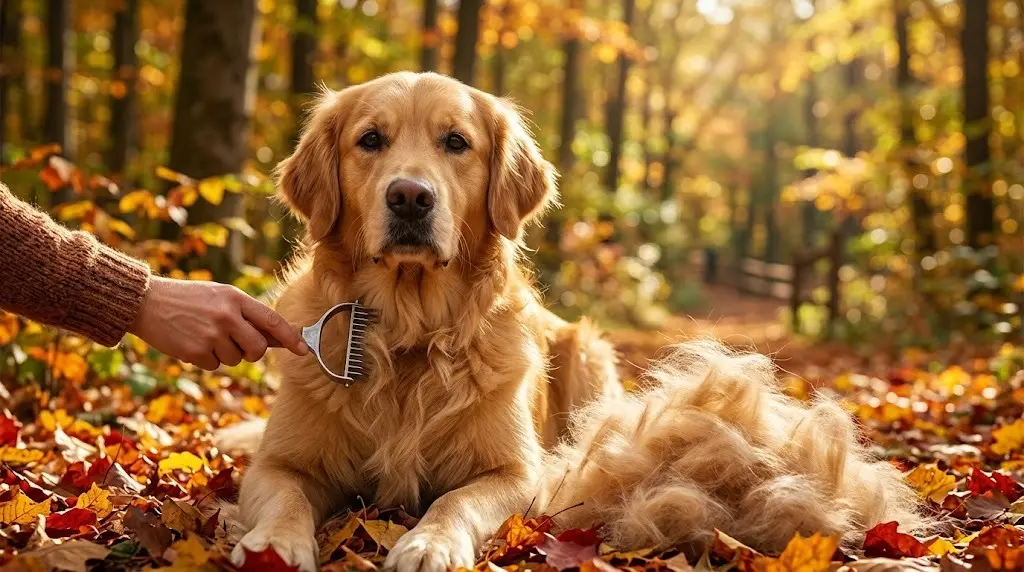
Brushing frequency matters more than tool choice. During the wave, most double-coated dogs benefit from a short session every day or two rather than one long weekly battle. Short daily sessions also mean you notice skin changes early. Work in the direction of hair growth, in sections, and stop before the dog gets fed up rather than pushing to finish.
Bathing loosens dead undercoat, and a thorough dry afterwards releases a surprising amount of it. Wet undercoat that is left to air dry in a dense coat tends to mat instead. Whatever you use, rinse completely, because product residue trapped against the skin is a common cause of the itchy, flaky look that gets mistaken for a shedding problem.
Do not shave a double coat to reduce shedding. The guard hairs and undercoat serve different functions, they regrow at different rates, and clipping frequently leaves the coat patchy and less able to insulate in either direction. It also does not reduce the amount of hair shed, only its length.
General condition shows in the coat. If you are unsure whether your dog is drinking enough while the weather changes, our water intake calculator gives a rough baseline to compare against.
Patterns that are worth a vet conversation
The point of knowing what normal looks like is recognising what is not. Take the following to your vet rather than filing it under season:
- Symmetrical hair loss on both flanks or the tail. Even, mirrored patterns are a classic flag for hormonal causes and are not how seasonal shedding behaves.
- Bare or thinning patches with visible skin, particularly if the skin is red, thickened, dark or scaly.
- Itching, licking or chewing that dominates the dog’s day. Shedding itself is not itchy.
- Shedding alongside any systemic change: drinking or urinating more, weight change, lethargy, appetite change, a pot-bellied appearance.
- A coat that does not grow back after the wave passes, or shedding that never ends.
- Sudden heavy shedding in a single-coated breed, or shedding well outside the usual season.
Stress shedding is also real and often surprises people. Dogs frequently release a burst of hair during a vet visit, a house move or a stay in kennels. It is short-lived and self-resolving, unlike anything on the list above. If your dog is showing other signs alongside a coat change and you are unsure how urgent it is, our guide on when to go to the emergency vet covers how to think about triage, and senior dogs in particular deserve a lower threshold for checking things out, as covered in the senior dog checklist.
The practical takeaway
Autumn shedding is a seasonal, time-limited, whole-coat event that leaves the skin intact and the dog feeling normal. It usually lasts a few weeks, it is heavier in double-coated and northern breeds, and it responds to consistent brushing rather than to any product. Anything symmetrical, patchy, itchy, permanent or accompanied by a change in how your dog feels is a different story, and that story belongs with your vet rather than with a brush.
Recommended Gear on Amazon
- Deshedding brush - browse current options and reviews on Amazon.
- Grooming glove - browse current options and reviews on Amazon.
- Vacuum for pet hair - browse current options and reviews on Amazon.
As an Amazon Associate, we earn from qualifying purchases - at no extra cost to you. This helps us keep producing free, in-depth guides.