Pink Toe Tarantula
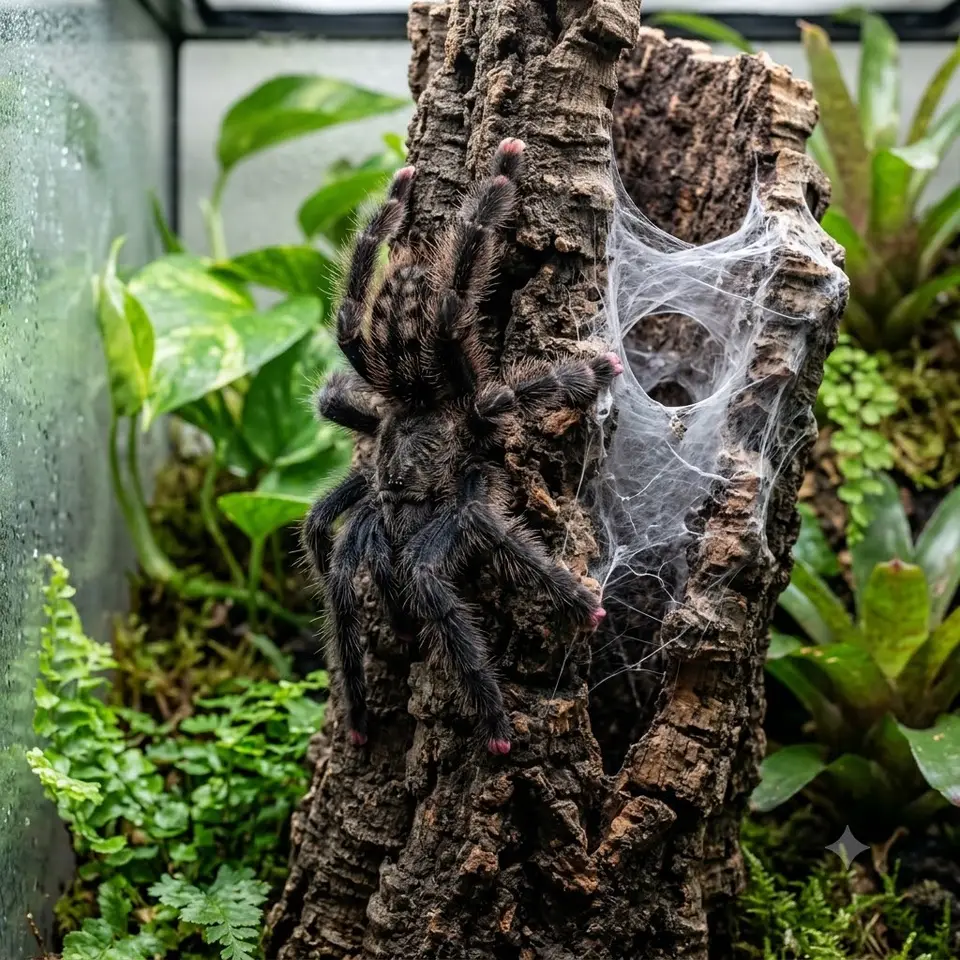
The Pink Toe Tarantula is the hobby's classic tree spider - a fuzzy black arboreal with pastel-pink toe tips that lives in a silk tent and moves with balletic, deliberate grace.
Updated: October 2026
Group guide: Tarantula
 AI illustration
 Overview
The Pink Toe Tarantula is the hobby's classic tree spider - a fuzzy black arboreal with pastel-pink toe tips that lives in a silk tent and moves with balletic, deliberate grace. Average lifespan is 10-12 years for females, and it's widely considered the best first arboreal. (Avicularia avicularia.)
Origin & Habitat
Rainforest canopy from Brazil through the Guianas to Trinidad - an arboreal species that lives in silk tube-tents high on tree trunks and bromeliads.
Appearance
Legspan 11-13 cm with a compact body. Dark velvety body and legs finished with distinctive pink 'toes'; mature males flush metallic green-black.
Temperament & Handling
Gentle and reluctant to bite - its defenses are jumping away, a startling projectile poop (really), and speed. More fragile than ground species; handling risks a deadly fall for the spider.
Enclosure
Vertical is everything: 30 cm tall minimum, with cork bark slabs, branches and broad-leaf fake plants forming a canopy corner where it builds its tube web near the top.
Heating, Humidity, Lighting
24-28°C with moderate humidity (65-75%) BUT strong cross-ventilation - the old 'humid and sealed' advice killed a generation of Avicularia. Mist lightly 2-3× weekly; never let the air go stagnant.
Diet
Flying and climbing prey are taken best: crickets placed on the bark, occasional roaches. Weekly feedings; it hunts at the web mouth in the evening.
Health & Lifespan
The one sensitive point is airflow - stuffy humid air causes fatal 'SADS'-style declines. With mesh panels and light misting they're robust. Females live 10-12 years, males 2-3.
Pros & Cons
Pros
- Ideal first arboreal: gentle and beautiful
- Fascinating tube-web architecture
- Compact vertical enclosure fits anywhere
Cons
- Needs the humidity-with-airflow balance right
- Too quick and fragile for handling
- Shorter-lived than terrestrial giants
Everyday gear for exotic pets
Links go to Amazon or a partner brand's own store and may earn us a commission at no extra cost to you. As an Amazon Associate we earn from qualifying purchases. An Amazon link leads to a type of gear and you choose the exact product; a card that names a store leads to that partner's own shop.
Pink Toe Tarantula - frequently asked questions
Why 'ventilation over humidity'?
Stagnant damp air is the species' main killer. Aim for a ventilated enclosure misted lightly and drying out between mistings - never a sealed wet box.
Can two live together?
Avicularia tolerate cohabitation better than most tarantulas, but cannibalism still happens - separate housing is the safe standard.
Where should the hide be?
It builds its own - a silk tube at the top, usually against cork bark. Provide the canopy corner and it does the rest.
Test yourself: guess the exotic pet
Three clues from our quiz bank, each about another of our exotic pets. Can you name them?
Clue 1.Sold cheaply at beach shops, this pet has one oversized claw used to seal the entrance of its home.
It's the Hermit Crab - read the full profile →
Clue 2.This large, hairy spider can flick irritating hairs from its abdomen as a defense and grows by shedding its entire exoskeleton.
It's the Tarantula - read the full profile →
Clue 3.This large wingless insect, popular as a hardy pet, forces air through breathing holes to make a loud hiss.
It's the Madagascar Hissing Cockroach - read the full profile →