Orchid Mantis
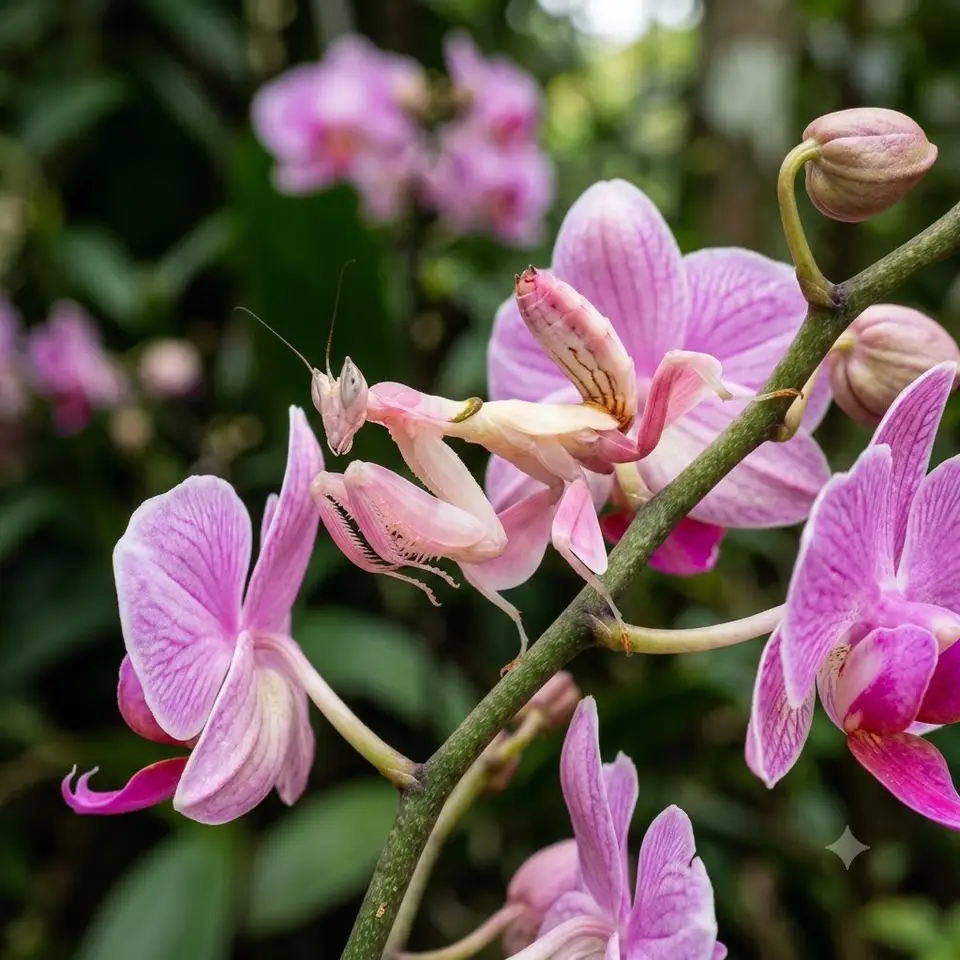
The Orchid Mantis is nature's most beautiful ambush: a mantis shaped and colored like an orchid flower, petal-shaped legs and all, that lures pollinating insects to their doom.
Last reviewed: September 2026
 AI illustration
 Overview
The Orchid Mantis is nature's most beautiful ambush: a mantis shaped and colored like an orchid flower, petal-shaped legs and all, that lures pollinating insects to their doom. Average lifespan is 6-12 months, with females far outliving the tiny males. (Hymenopus coronatus.)
Origin & Habitat
Rainforests of Malaysia and Indonesia, where it ambushes pollinators on flowering shrubs disguised as an orchid blossom.
Appearance
Females reach 6-7 cm, males barely 2.5 cm. White to pink with petal-like lobes on the walking legs; can shift hue between white and pink over days depending on background and light.
Temperament & Handling
A serene perch-hunter that sways like a flower in the breeze. Completely harmless to people and calm on a hand, though constant handling stresses it - short sessions only.
Enclosure
A ventilated 20 × 20 × 30 cm vertical enclosure (3× body length tall for molting) with flowering-style perches, twigs and a mesh ceiling to hang from.
Heating, Humidity, Lighting
24-28°C daytime with 60-80% humidity - mist daily for droplets it drinks from perches. Good airflow prevents the fungal issues that damp, stale air invites.
Diet
Flying prey is its trigger: fruit flies for nymphs, then house flies, blue bottles and small moths. Many refuse crickets - keep the menu airborne. Feed every 1-2 days.
Health & Lifespan
Fragile mainly around molts - it must hang undisturbed with room to shed; failed molts are the main cause of loss. Females live to a year; males mature, mate and fade within months.
Pros & Cons
Pros
- Arguably the most beautiful insect in the world
- Fascinating flower-mimic hunting
- Small, quiet, brief but intense project
Cons
- Under a year of life for most
- Needs flying prey cultures
- Molt failures unforgiving of bad humidity
Everyday gear for exotic pets
Links go to Amazon or a partner brand's own store and may earn us a commission at no extra cost to you. As an Amazon Associate we earn from qualifying purchases. An Amazon link leads to a type of gear and you choose the exact product; a card that names a store leads to that partner's own shop.
Orchid Mantis - frequently asked questions
Why is mine turning pink (or white)?
The species can shift its hue somewhat over days, often around molts and in response to surroundings and light - a normal color change, not illness.
Can males and females be kept together?
Only for supervised breeding attempts by experienced keepers - mantids readily eat smaller cage mates, and males are much smaller.
Why won't it eat crickets?
Orchid mantises are pollinator specialists keyed on flying prey. Culture flies; most individuals ignore ground insects.
Test yourself: guess the exotic pet
Three clues from our quiz bank, each about another of our exotic pets. Can you name them?
Clue 1.Kept as a low-maintenance pet abroad, this slow nocturnal animal needs calcium to build its huge spiral shell.
It's the Giant African Land Snail - read the full profile →
Clue 2.This large wingless insect, popular as a hardy pet, forces air through breathing holes to make a loud hiss.
It's the Madagascar Hissing Cockroach - read the full profile →
Clue 3.Social by nature, these scavengers form lines to swap shells and breathe through gills needing humid air.
It's the Hermit Crab - read the full profile →