Ghost Mantis
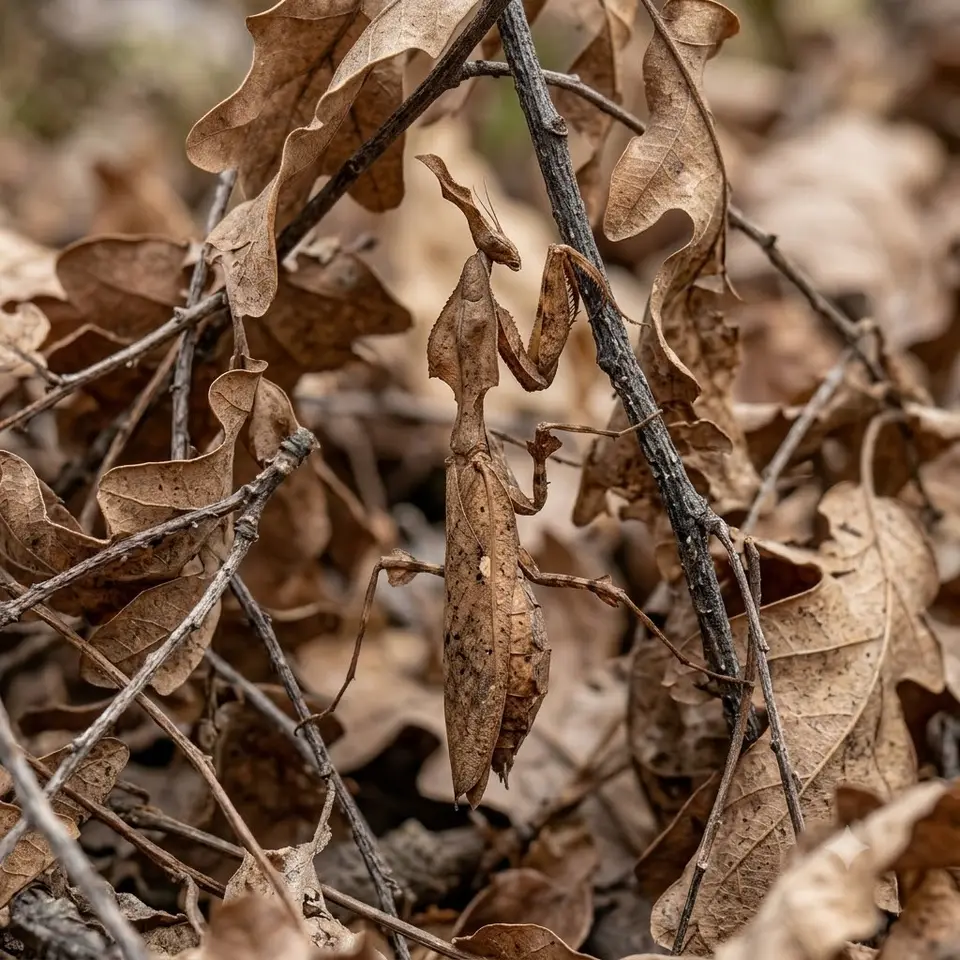
The Ghost Mantis is a dead leaf come to life - a small, ornately ragged mantis whose twisted crown and leaf-vein wings make it vanish among dry foliage.
Last reviewed: October 2026
 AI illustration
 Overview
The Ghost Mantis is a dead leaf come to life - a small, ornately ragged mantis whose twisted crown and leaf-vein wings make it vanish among dry foliage. Average lifespan is 8-12 months, and it's one of the few mantids calm enough to keep communally. (Phyllocrania paradoxa.)
Origin & Habitat
Dry forests and scrub across Madagascar and mainland Africa, hanging among dead foliage it perfectly imitates.
Appearance
4-5 cm, in shades of dried-leaf brown, tan and mossy green. A twisted head crest, leaf-lobed legs and vein-etched wings complete the disguise; color darkens or lightens across molts with humidity and background.
Temperament & Handling
Exceptionally placid for a mantis - a sit-and-wait ambusher that rarely stalks. Its calm makes group keeping possible (same size, well-fed, spacious cage), a rarity in the mantis world.
Enclosure
20 × 20 × 30 cm vertical with a mesh top and plenty of dry twigs and leaf-like decor to hang among. For a small group, double the space and perches.
Heating, Humidity, Lighting
22-28°C, humidity 60-70%; mist every other day for drinking. Tolerates drier spells better than rainforest species - it is a dry-forest leaf, after all.
Diet
Fruit flies for nymphs, small house flies and blue bottles for adults, every 1-2 days. A modest appetite fits its ambush lifestyle - don't panic over skipped meals near molts.
Health & Lifespan
Hardy for a mantis; the usual molt-space and humidity rules apply. Females live around a year, males somewhat less - typical mantis brevity.
Pros & Cons
Pros
- Unreal dead-leaf camouflage
- One of the only communal pet mantids
- Forgiving, low-demand care
Cons
- Short mantis lifespan
- So camouflaged you may struggle to find it
- Small: less imposing than giant species
Everyday gear for exotic pets
Links go to Amazon or a partner brand's own store and may earn us a commission at no extra cost to you. As an Amazon Associate we earn from qualifying purchases. An Amazon link leads to a type of gear and you choose the exact product; a card that names a store leads to that partner's own shop.
Ghost Mantis - frequently asked questions
Can I really keep several together?
Yes, with rules: equal sizes, constant food, and generous space and perches. Underfed or crowded ghosts will still turn on each other.
Why did its color change after molting?
Humidity, light and background shift each molt's shade between browns and greens - normal and part of the leaf disguise.
Male or female - how to tell?
Count the abdominal segments from below: adult females show six, males eight. Males are also slimmer, with longer antennae.
Test yourself: guess the exotic pet
Three clues from our quiz bank, each about another of our exotic pets. Can you name them?
Clue 1.This twig-mimicking insect is a master of camouflage and can sometimes regrow a lost leg when it molts.
It's the Stick Insect (Phasmid) - read the full profile →
Clue 2.Kept as a low-maintenance pet abroad, this slow nocturnal animal needs calcium to build its huge spiral shell.
It's the Giant African Land Snail - read the full profile →
Clue 3.From a single island nation, this glossy brown roach gives live birth and males sport bumpy 'horns.'
It's the Madagascar Hissing Cockroach - read the full profile →