Brazilian Black Tarantula
The Brazilian Black Tarantula is a velvet-black, exceptionally calm giant that many keepers rate among the best tarantulas to keep.
Last reviewed: October 2026
Group guide: Tarantula
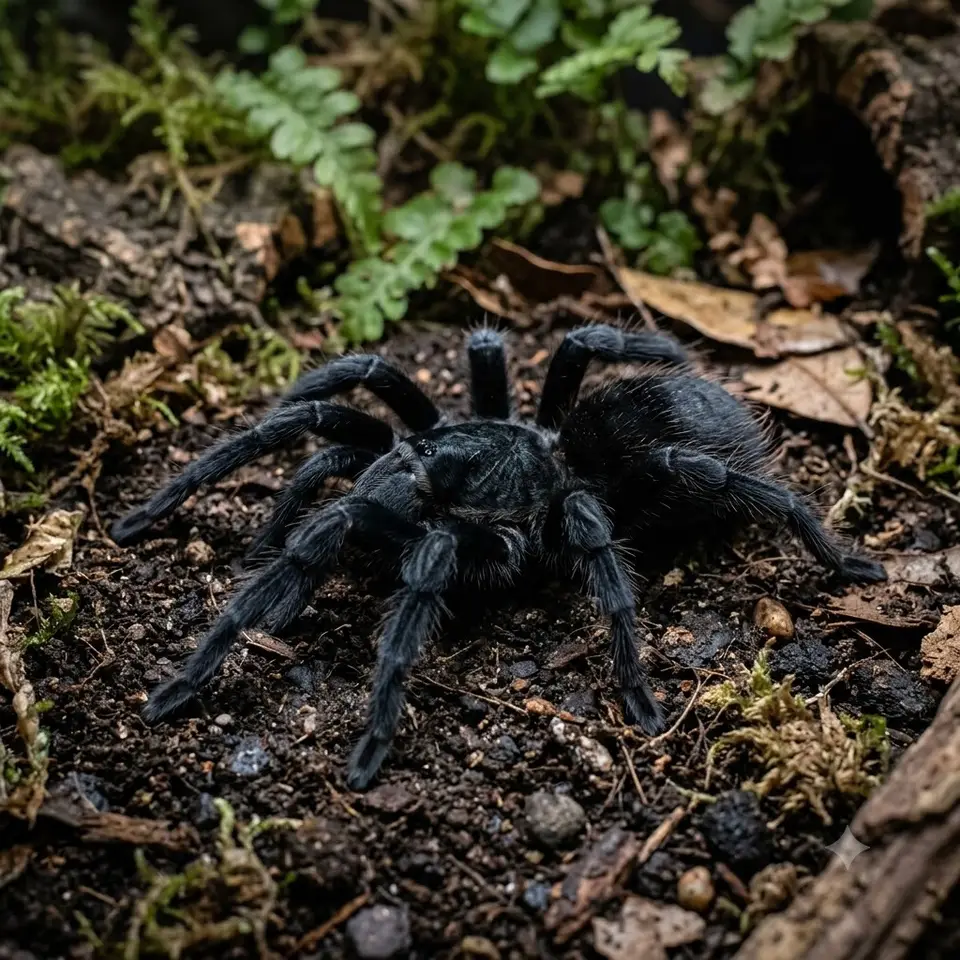 AI illustration
 Overview
The Brazilian Black Tarantula is a velvet-black, exceptionally calm giant that many keepers rate among the best tarantulas to keep. Average lifespan for females is 20-30 years, and its patience is legendary. (Grammostola pulchra.)
Origin & Habitat
Grasslands of southern Brazil and Uruguay, where it burrows in damp pampas soil.
Appearance
Legspan 15-18 cm at maturity. Uniform jet black from toe to toe after each fresh molt - a heavy-bodied spider with a matte velvet finish.
Temperament & Handling
The gold standard of docility: slow, deliberate and nearly impossible to provoke. Even so, the modern no-handling ethic applies - its value is watching a huge, confident black spider own its enclosure.
Enclosure
Standard terrestrial: 35 × 35 cm floor, 10 cm substrate (it may excavate), cork hide, water dish. Adults often abandon the hide and sit in the open.
Heating, Humidity, Lighting
20-26°C, humidity 55-65% - keep the substrate mostly dry with a lightly moistened corner. Cooler-tolerant than most, matching its southern grassland origins.
Diet
Roaches and crickets weekly for growing spiders; adults every 10-14 days. Slow metabolism means a slow-growing spider - and pre-molt fasts measured in months.
Health & Lifespan
Iron constitution; the only real complaints are its price and its glacial growth (4-6 years to adult size from a spiderling). Females live 20-30 years, males 6-8.
Pros & Cons
Pros
- Best-in-hobby temperament
- Striking velvet-black adult look
- 30-year companion potential
Cons
- Expensive spiderlings, slow growth
- Long fasts test patience
- High demand: often sold out
Everyday gear for exotic pets
Links go to Amazon or a partner brand's own store and may earn us a commission at no extra cost to you. As an Amazon Associate we earn from qualifying purchases. An Amazon link leads to a type of gear and you choose the exact product; a card that names a store leads to that partner's own shop.
Brazilian Black Tarantula - frequently asked questions
Is it worth the higher price?
For a keeper wanting one calm, beautiful, decades-long spider - almost universally yes. It holds value and temperament like nothing else.
How fast does it grow?
Slowly: expect 4-6 years from spiderling to a large adult. Buying a juvenile female shortcuts the wait at a higher price.
Why is mine brown, not black?
Pre-molt fading. The velvet black returns, deepest in the weeks right after each molt.
Test yourself: guess the exotic pet
Three clues from our quiz bank, each about another of our exotic pets. Can you name them?
Clue 1.This twig-mimicking insect is a master of camouflage and can sometimes regrow a lost leg when it molts.
It's the Stick Insect (Phasmid) - read the full profile →
Clue 2.New World species of this arachnid defend themselves by kicking urticating hairs, while Old World species rely on faster, more potent bites.
It's the Tarantula - read the full profile →
Clue 3.Sold cheaply at beach shops, this pet has one oversized claw used to seal the entrance of its home.
It's the Hermit Crab - read the full profile →