Roller Pigeon
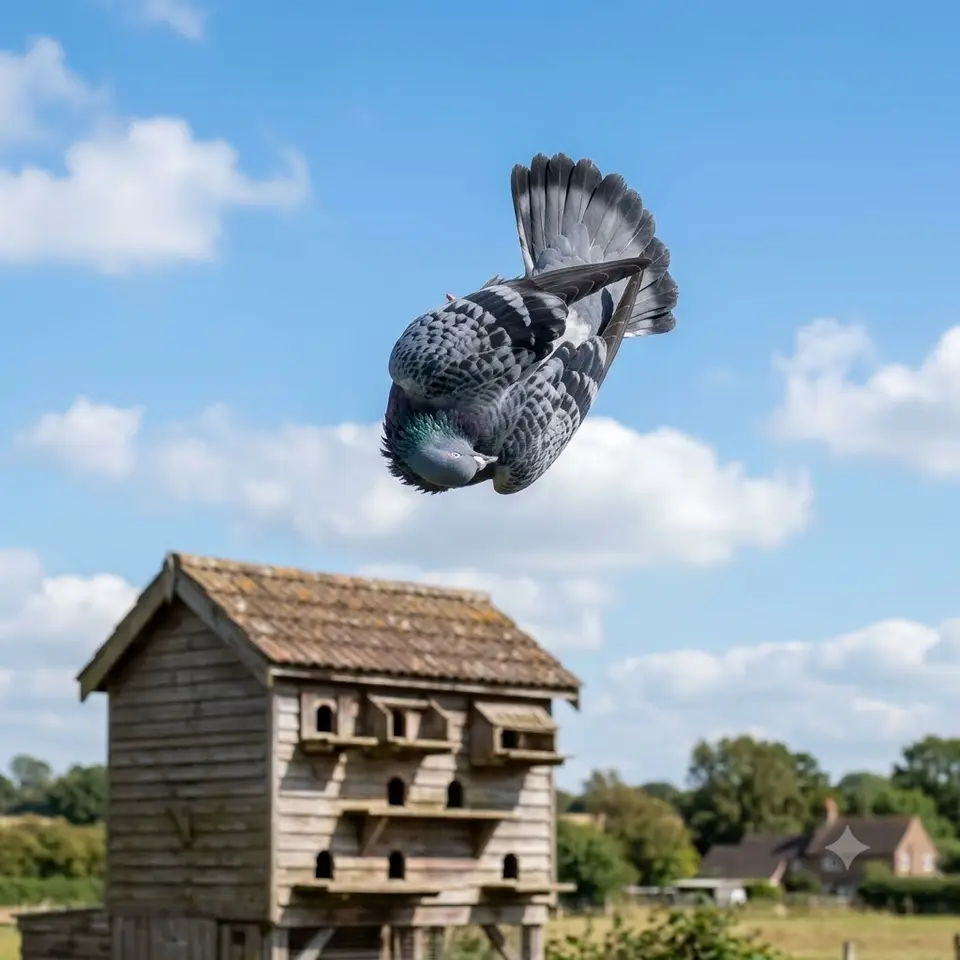
Roller pigeons are bred for an inherited tumbling reflex that sends them backward-somersaulting through the air (or, in Parlor Rollers, rolling along the ground).
Last reviewed: October 2026
 AI illustration
 Overview
Roller pigeons are bred for an inherited tumbling reflex that sends them backward-somersaulting through the air (or, in Parlor Rollers, rolling along the ground). Kept for the spectacular aerial displays of a spinning 'kit' and as hardy, engaging loft birds, they're a hobbyist's delight.
Natural History & Origin
Breeds (Birmingham Roller, Parlor Roller and others) developed for an inherited tumbling behaviour; kept for flying displays and as loft pets.
Appearance
Small-to-medium (300-400 g), neat and athletic in countless colours; unremarkable at rest, extraordinary in flight.
Temperament & Noise
Active, hardy and reasonably tame when loft-raised; kept for behaviour and flock flying rather than individual cuddling. Quiet cooing, low noise.
Housing & Flight
A dry predator-proof loft with a trap, as for homers - fly-breeds are released as a 'kit' to perform and return. Parlor Rollers, which cannot fly (they roll on the ground), need a safe ground enclosure instead. Standard perches and nest boxes.
Diet
A quality pigeon grain mix, grit, minerals, greens and fresh water; balanced energy for the flying workload.
Health & Lifespan
Average lifespan is 10-15 years. Hardy 10-15 year birds; flying kits face predator and collision risk, and the usual canker/worms/respiratory care. Over-'spinning' individuals ('rolldowns') can injure themselves - responsible breeders manage this.
Training & Enrichment
The tumbling is inherited, not taught, but birds are conditioned to fly as a coordinated kit and trap home. Flying is the enrichment; ground Parlor Rollers are kept for close-up rolling.
Pros & Cons
Pros
- Spectacular inherited aerial acrobatics
- Hardy, active and long-lived
- Engaging flock-flying hobby
- Wide range of colours and types
Cons
- Fly-breeds need a loft and free-flight (risks)
- Behaviour is instinctive, not trainable
- Excessive rollers can injure themselves
- Group/flock hobby, not a single pet
Best Suited For
- Pigeon-flying hobbyists
- People wanting a display flock
- Loft keepers with space
- Enthusiasts of unusual bird behaviour
Everyday gear for birds
Links go to Amazon or a partner brand's own store and may earn us a commission at no extra cost to you. As an Amazon Associate we earn from qualifying purchases. An Amazon link leads to a type of gear and you choose the exact product; a card that names a store leads to that partner's own shop.
Roller Pigeon - frequently asked questions
Why do roller pigeons somersault?
It's an inherited neurological quirk selectively bred over generations - they tumble backward through the air (or roll on the ground in Parlor Rollers) as a reflex, not a trained trick.
Can Parlor Rollers fly?
No - Parlor Rollers roll backward along the ground and cannot fly, so they're kept in a safe ground enclosure rather than free-flown like aerial Birmingham Rollers.
Is the rolling harmful to the bird?
Well-bred rollers tumble safely; over-selected 'rolldown' birds that spin excessively can hurt themselves, so responsible breeding manages the intensity.
Test yourself: guess the bird
Three clues from our quiz bank, each about another of our birds. Can you name them?
Clue 1.Wild flocks of this slender, long-tailed parrot are grey, but pet breeding created lutino, pied, and pearl color mutations.
It's the Cockatiel - read the full profile →
Clue 2.Native to American rainforests, this brilliantly colored bird can live 50 years or more in captivity.
It's the Macaw - read the full profile →
Clue 3.Spanish monks once monopolized the trade in this melodious island finch by selling only males abroad.
It's the Canary - read the full profile →
Social Needs
Flock birds bred to fly in a coordinated kit; they're social and bond to the loft. Keep as a group for the display to work.