Ringneck Dove
The Ringneck dove is the classic gentle pet dove - a small, soft-cooing, utterly peaceful bird that has been a companion animal for millennia.
Last reviewed: July 2026
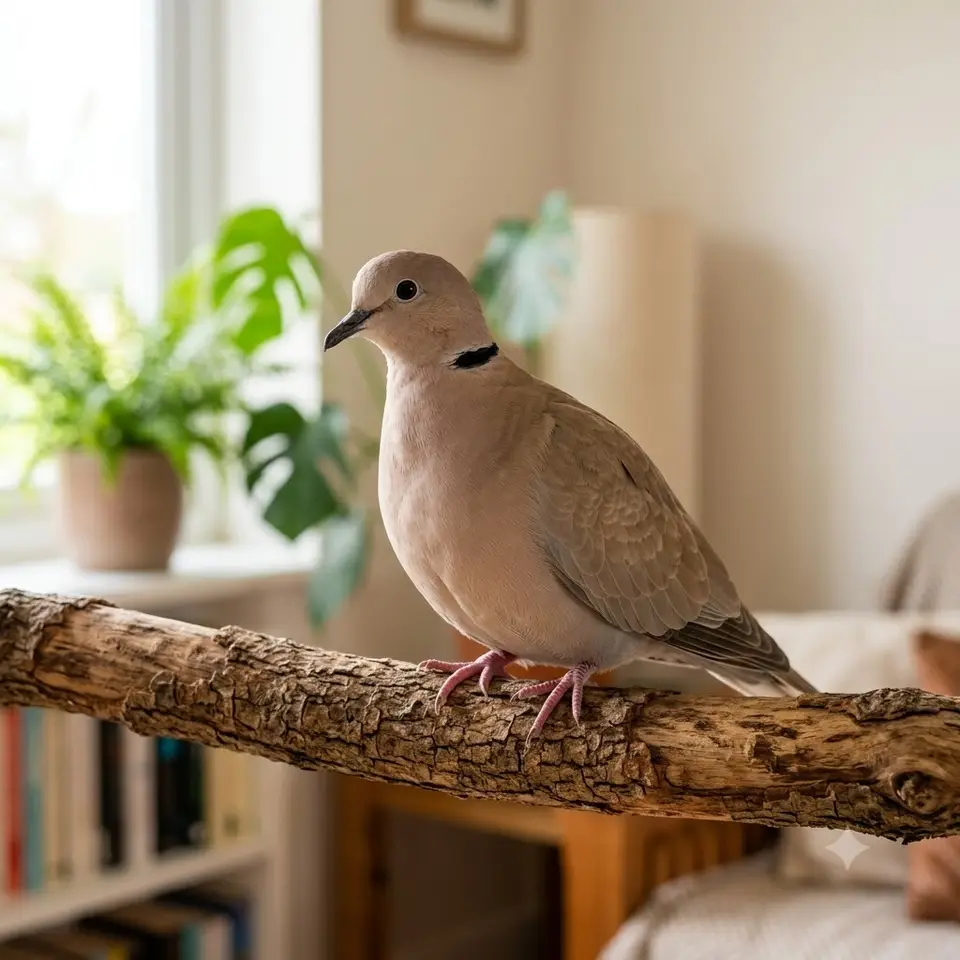 AI illustration
 Overview
The Ringneck dove is the classic gentle pet dove - a small, soft-cooing, utterly peaceful bird that has been a companion animal for millennia. Undemanding, quiet and long-lived, it's one of the best 'starter' pet birds there is: no screaming, no biting, just a mellow laughing coo and calm company.
Natural History & Origin
A fully domesticated dove (Streptopelia risoria) descended from African collared doves; kept as a pet for thousands of years and no longer found wild.
Appearance
Small and slender (150-200 g) with a thin black half-collar on the nape; the classic soft fawn ('blond') is commonest, alongside white, pied and many pastel mutations.
Temperament & Noise
Famously docile and gentle - they rarely bite, tame easily, and coo a soft rolling laugh rather than a loud call. Perfect for apartments and households wanting a calm, quiet bird.
Housing & Flight
A roomy cage (wider than tall - doves fly horizontally and don't climb) with low perches; daily out-of-cage time or a flight aviary is ideal. Provide a flat platform for nesting and a bath dish. They can free-range a bird-safe room with a diaper.
Diet
A finch/dove or pigeon seed mix, dove pellets, grit, chopped greens and a calcium source; fresh water for drinking and bathing. Simple and inexpensive to feed.
Health & Lifespan
Average lifespan is 12-15 years. Hardy and long-lived (12-15 years, sometimes 20). Watch for canker, egg-binding in over-laying hens (limit nesting), and drafts. A very low-maintenance bird healthwise.
Training & Enrichment
Gentle recall and hand-taming come readily; they're not trick birds but enjoy sitting with people. Enrichment is a mate, a mirror (with care), gentle handling and bathing.
Pros & Cons
Pros
- Extremely gentle and quiet - apartment-friendly
- Easy first bird, rarely bites
- Long-lived and low-maintenance
- Cheap to keep, small footprint
Cons
- Not a talker or trick bird
- Hens over-lay if allowed to nest constantly
- Needs horizontal space, not a tall cage
- Coos at dawn (softly)
Best Suited For
- First-time and apartment bird keepers
- People wanting a calm, quiet companion
- Children's family pet (supervised)
- Anyone put off by loud parrots
Everyday gear for birds
Links go to Amazon or a partner brand's own store and may earn us a commission at no extra cost to you. As an Amazon Associate we earn from qualifying purchases. An Amazon link leads to a type of gear and you choose the exact product; a card that names a store leads to that partner's own shop.
Ringneck Dove - frequently asked questions
Are Ringneck doves loud?
No - among the quietest pet birds. Their call is a soft rolling coo and a gentle 'laugh', easily apartment-friendly, though they do coo at dawn.
Do they need a companion?
They're happiest paired, but a single hand-raised dove bonds closely with people and does well as a solo pet given daily attention.
How do I stop constant egg-laying?
Remove nests and eggs sparingly, limit nesting material and daylight hours, and ensure good calcium - constant laying drains a lone hen.
Test yourself: guess the bird
Three clues from our quiz bank, each about another of our birds. Can you name them?
Clue 1.Playful and clownish, these long-tailed Central and South American parrots love to cuddle and may sleep on their backs.
It's the Conure - read the full profile →
Clue 2.Bred for centuries into 'song', 'color', and 'type' varieties, this seed-eater can be yellow, orange, white, or even reddish.
It's the Canary - read the full profile →
Clue 3.Demanding loud companions, the scarlet and blue-and-gold kinds of this bird need very large cages and space.
It's the Macaw - read the full profile →
Social Needs
Social and best in pairs, but a single hand-raised dove bonds sweetly to its keeper and coos for attention. Two males may squabble; a bonded pair is serene.