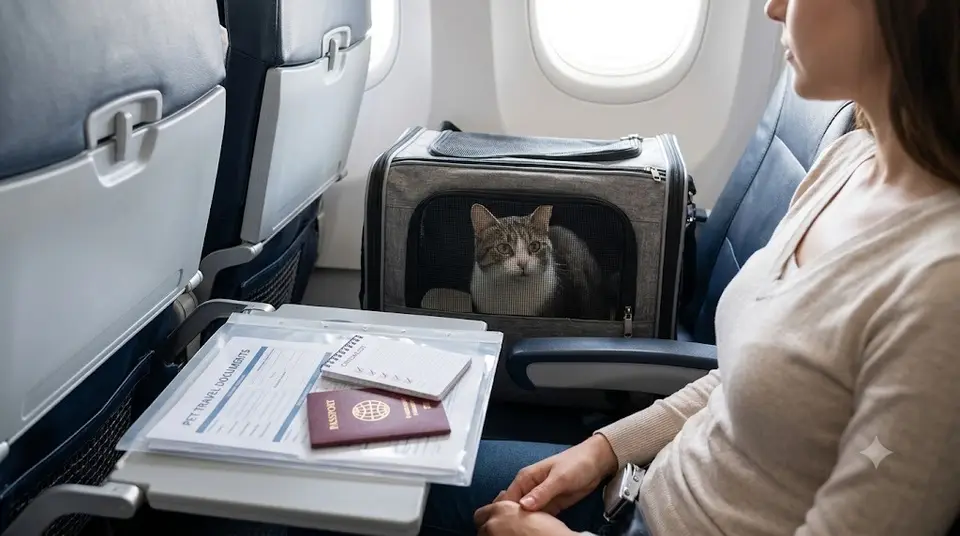
Flying With Your Dog
Cabin, checked, or cargo: how dogs actually fly, how carrier size limits work, an 8-week preparation plan, and the honest risks for snub-nosed breeds.
For airline-by-airline carrier rules and fees, start with our pet airline travel guide - this article covers the practical preparation.
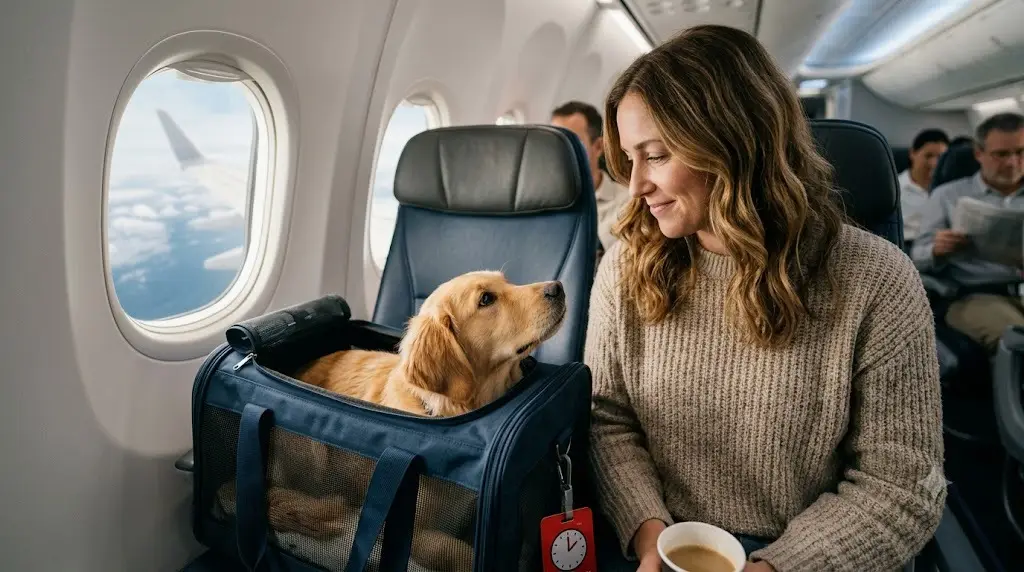
Whether your dog can fly, and how, comes down to size: dogs small enough to fit, in a carrier, under the seat in front of you ride in the cabin (each airline sets its own size and weight limits); larger dogs fly as manifest cargo in the pressurized, temperature-controlled hold - and a shrinking number of airlines still offer checked-baggage pet transport in between. Cabin travel is mostly a matter of preparation; cargo is a routine way for a healthy dog to travel but is a genuine logistics project - and for flat-faced breeds, flying anywhere but the cabin ranges from restricted to outright banned, for good reason. Here is the honest map, plus the 8-week preparation plan that makes the difference.
One rule stands above everything in this guide: airline rules differ, change often, and win every argument. Treat every number below as typical, then verify with your specific airline and, for international trips, the destination country - months ahead, not weeks.
The Three Ways Dogs Fly
In the cabin
The gold standard, available only to small dogs. Typical shape of the rules:
- Weight limit: some airlines set a combined weight for dog and carrier; others set no weight number and only enforce carrier dimensions. Read your airline’s pet page.
- Carrier size: must fit under the seat in front, within the maximum dimensions your airline publishes; a soft-sided carrier is usually the smarter choice because it compresses an inch where it counts. Exact under-seat space varies by aircraft and by seat - bulkhead and some window seats can be smaller.
- The real rule: the dog must be able to stand up and turn around inside the carrier, and must stay inside it for the whole flight.
- Booking: cabin pet spots are limited and sell out. Book the pet spot at the same time as your ticket, by phone if needed. There is a fee each way; the airline’s pet page states it.
As checked baggage
You check the dog like special luggage; it travels in the pressurized hold on your own flight. Honest status: it depends entirely on the airline. United’s pet page says it no longer checks pets and carries them in cargo only for certain active-duty military or State Department employees, while Alaska Airlines’ page says pets can travel in its climate-controlled baggage compartment. Read your own airline’s pet page before you plan around this option. If available, it is cheaper than cargo and your dog flies on your plane; the crate rules below apply.
As manifest cargo
For medium and large dogs, this is usually the only option. The dog flies in the pressurized, climate-controlled cargo hold - sometimes on your flight, sometimes on a different one - booked through the airline’s cargo division or a pet shipping agent (for a complex international move, the member directory of the trade association IPATA is a place to start looking). Costs depend on the dog’s size and the route - get a written quote.
Is cargo safe? For a healthy, non-brachycephalic dog in a correctly sized crate it is a routine way to travel. The genuine risk factors are heat (an airline can embargo pet cargo in summer months or on hot routes), extreme cold, connections (each transfer is exposure - book direct, always), and pre-existing health issues. A vet check specifically discussing fitness-to-fly is a prerequisite, not a formality.
Brachycephalic Breeds: The Honest Warning
Pugs, French Bulldogs, English Bulldogs, Boston Terriers, boxers, Shih Tzus, Pekingese, and other snub-nosed breeds (plus their mixes, and flat-faced cats for that matter) are at meaningfully elevated risk in flight. Their compromised airways handle heat and stress poorly. The airline industry’s own guidance, from IATA, says transport of snub-nosed dogs in the hot season is not recommended and calls for a larger container for them - and many airlines restrict or refuse these breeds in the hold altogether.
What this means in practice: a flat-faced dog small enough for the cabin can usually fly there; a large brachycephalic dog may effectively be unable to fly at all on many carriers, leaving ground transport or specialist animal charters as the real options. If you own a flat-faced breed and a flight is unavoidable, this is a named conversation with your vet - about your individual dog’s airway, heat tolerance, and fitness to fly - before any booking. Not a formality, and not a decision to make from a forum thread.
The 8-Week Preparation Plan
- Weeks 8-7: Book and verify. Confirm the airline’s current pet policy in writing, book the pet spot with your ticket, and choose a direct flight - in hot months, an early morning or late evening one. For international trips, look up the destination country’s import rules now: microchip standards, rabies vaccination timing, possible blood tests and waiting periods. Some destinations (island nations especially) have requirements that take months; started late, they are unfixable.
- Weeks 7-6: Buy the carrier or crate and make it furniture. Cabin: soft-sided, within your airline’s dimensions. Cargo/checked: a rigid crate meeting IATA standards - big enough for the dog to stand with head clear, turn, and lie down, with food/water cups fixed to the door and LIVE ANIMAL labeling. Then leave it open in the living room with bedding and treats inside. A dog that already treats the carrier as a den travels more calmly, and that takes weeks, not days.
- Weeks 6-3: Crate training proper. Meals inside the carrier. Door closed for minutes, then longer. Carry the carrier around; take short car rides in it. Add the mild chaos of travel: rolling suitcase sounds, doorways, being set down in new rooms. Keep sessions short and treat-heavy - you are building an association, not testing endurance.
- Weeks 3-2: Vet visit. Health check with the trip discussed openly: fitness to fly, any breed concerns, parasite treatments or paperwork the destination requires. If a health certificate is required, it has to be issued within a set window before travel - the airline and the destination set it - so schedule the certificate appointment for the correct window. For travel abroad, USDA APHIS advises contacting a USDA-accredited veterinarian as soon as you decide to travel, because meeting a country’s requirements takes time. Coming back counts too: since August 1, 2024 the CDC has its own entry requirements for every dog entering the United States, stricter for dogs that have been in a country at high risk for dog rabies. Ask about food timing. And on sedation the industry position is blunt: IATA endorses recommendations not to sedate or tranquilize pets in transit; if sedation is medically necessary, a vet must direct it and record it on the health certificate. If your vet judges your dog needs calming support, they will choose it and trial it in advance; nothing goes in your dog on flight day that was not tested before.
- Week 1: Logistics. Print everything (certificates, vaccination records, booking confirmations for the pet). Attach ID to both dog and carrier; a photo of the dog on your phone and one taped to the crate. Trim nails (they snag in carrier mesh). Trial-pack the carrier: absorbent pad on the bottom, a worn t-shirt of yours, one familiar soft toy. Confirm the pet booking with the airline again.
- Flight day. A long walk before leaving home. On food, IATA’s guidance for animals handed over to the carrier is less food the day before, enough water, and a light meal about two hours beforehand; for a dog in the cabin, ask your vet about timing. Water stays available until security, and offer it again at the gate. Line the carrier with a fresh pee pad and carry spares plus wipes. Arrive early; pets add time at check-in and security (at a US checkpoint the TSA’s instruction is to take the pet out of the carrier, send the empty carrier through the X-ray machine, keep control of the pet with a leash, and remove the leash when you carry it through the metal detector - a snug harness gives you something to hold if the dog startles). In the air: carrier stays under the seat, fully zipped, your fingers at the mesh when needed. A well-prepared dog often simply sleeps.
For toilet logistics: pads inside the carrier cover accidents without drama. Many larger airports have post-security pet relief areas - locate them on the terminal map in advance for connections.
The Bigger Question: Should This Dog Fly?
A fair pre-booking test: is the trip long enough, and the alternative bad enough, to justify the stress? For a two-week vacation, a good sitter or boarding is often kinder than two flights - our problem solver covers separation and boarding anxiety honestly. For relocation, flying is usually the right call and preparation makes it routine. Size, temperament, and breed all weigh in; our dog breed guides flag breed-specific travel considerations, and the checklists in our tools section include a printable version of this timeline.
The Short Version
- Dogs that fit under the seat in a carrier fly cabin (limits are the airline’s); large dogs fly cargo; checked baggage depends on the airline.
- Direct flights, mild hours, and a correctly sized, long-familiar carrier are the core safety levers.
- Flat-faced breeds face restrictions in the hold and real risk - vet conversation before any booking.
- Health certificates run on tight timing windows; international rules take months - start at booking, not at packing.
- A light meal well before the flight, water as long as possible, pads in the carrier.
- Sedation in transit is not recommended (IATA); anything calming goes through your vet and is trialed in advance.
Recommended Gear on Amazon
- Airline-approved crate - browse current options and reviews on Amazon.
- Collapsible travel bowl - browse current options and reviews on Amazon.
- ID tag - browse current options and reviews on Amazon.
As an Amazon Associate, we earn from qualifying purchases - at no extra cost to you. This helps us keep producing free, in-depth guides.