Flying With Your Cat
How cats fly in the cabin: carrier sizing, a realistic training timeline, the documents question in plain terms, and why sedation is a vet-only decision.
For airline-by-airline carrier rules and fees, start with our pet airline travel guide - this article covers the practical preparation.
Cats usually fly in the cabin: they are small enough for the under-seat carrier, which makes cat air travel primarily a preparation problem rather than a logistics one. The three things that decide how the day goes are booked early or not at all (the pet spot on your flight), trained over weeks or not at all (the carrier), and decided only by a professional (anything calming - through your vet, never over the counter). Get those three right and the flight is far more likely to be uneventful; skip them and it will be memorable for the wrong reasons.
The standing rule for everything below: airline and country requirements vary and change - verify every specific with your airline and, for international travel, the destination country’s official rules, well in advance. What follows is the reliable general shape.
The Cabin Setup
- The pet spot. Airlines cap the number of animals in the cabin, charge a fee each way, and allocate spots first-come; the numbers are on each airline’s pet page. Book the pet at the same moment you book your own ticket - by phone if the website will not do it. The cat counts as your carry-on item on most carriers.
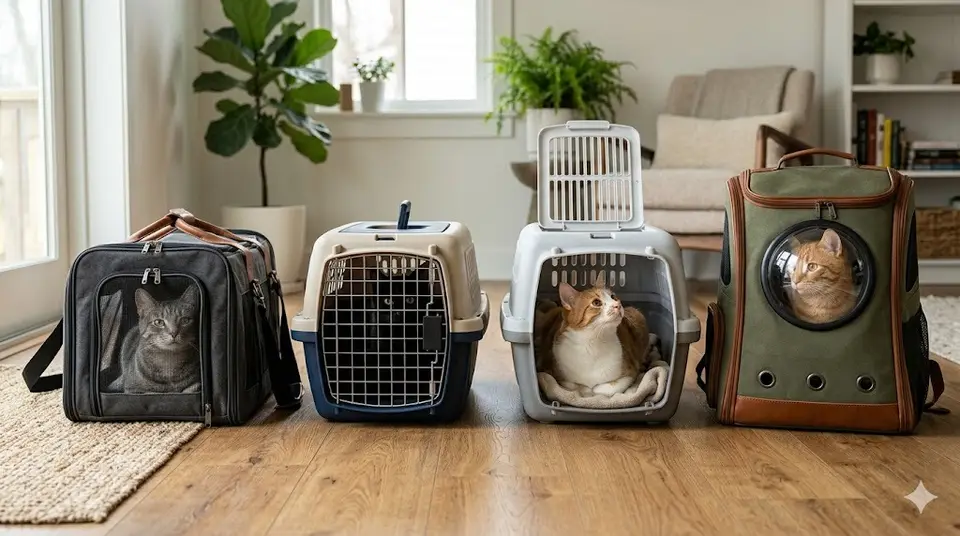
- The carrier. Must fit under the seat in front of you, within the maximum dimensions your airline publishes for the aircraft. Soft-sided carriers are the right call for cabins - they flex the crucial inch. The functional rule airlines apply: the cat must be able to stand and turn around inside. Look for sturdy mesh on at least two sides, a top-loading option (invaluable for extracting a reluctant cat at security), a waterproof base, and zippers that lock or clip - a security-checkpoint escape is the nightmare scenario, and hardware prevents it.
- The seat. Not bulkhead (no under-seat space), not exit row (pets prohibited). A window seat gives the carrier a calmer corner and keeps aisle-cart noise away.
- Cargo, for completeness: rarely relevant for cats, occasionally unavoidable (some airlines or routes). It is a much bigger production - rigid IATA-style crate, cargo booking, heat embargoes - and if your itinerary forces it, plan with the airline’s cargo division months ahead and discuss fitness-to-fly with your vet. Flat-faced cats (Persians, Exotics, Himalayans) face the same airway-related cargo restrictions and elevated risk as flat-faced dogs; for them especially, cabin or not at all.
Carrier Training: The Whole Game
Most cats hate the carrier because it appears twice a year and predicts the vet. You are going to break that association, and it takes weeks of low-effort work, not talent.
- Weeks 6-4: The carrier becomes furniture. Leave it out and open in a room the cat likes, soft bedding inside, top off if it detaches. Toss treats in daily; serve meals progressively closer, then inside. No door-closing yet. You will know this stage worked when you find the cat napping in it voluntarily.
- Weeks 4-2: Motion and doors. Close the door for seconds, then minutes, treats through the mesh. Lift and carry the carrier gently around the house. Then short car rides - around the block, home, treats, done. If your cat pants, drools, or cries persistently, back up a step and shrink the sessions; and mention motion sickness to your vet, because it is manageable but not with guesswork.
- The last two weeks: Dress rehearsal. A worn t-shirt of yours as bedding, a longer car ride, practice extracting and re-inserting the cat calmly through the top - that is exactly what airport security will require of you. Fit a well-adjusted harness and clip on a leash for those practices: at a US checkpoint the TSA’s instruction is to take the pet out of the carrier, send the empty carrier through the X-ray machine, keep control of the pet with a leash, and remove the leash when you carry it through the metal detector. A snug harness is what you hold at that moment, and it is the difference between an anecdote and a lost cat in a terminal. If your cat is a flight risk in both senses, ask the officer whether screening in a private room is possible.
Documents, in Plain Terms
The paperwork burden ranges from “almost nothing” to “start six months ago” depending on the route. In general terms:
- Domestic flights typically require little beyond the airline’s own rules - some ask for nothing, some want a recent health certificate from your vet, issued within a window the airline sets. Check your airline’s current policy rather than assuming.
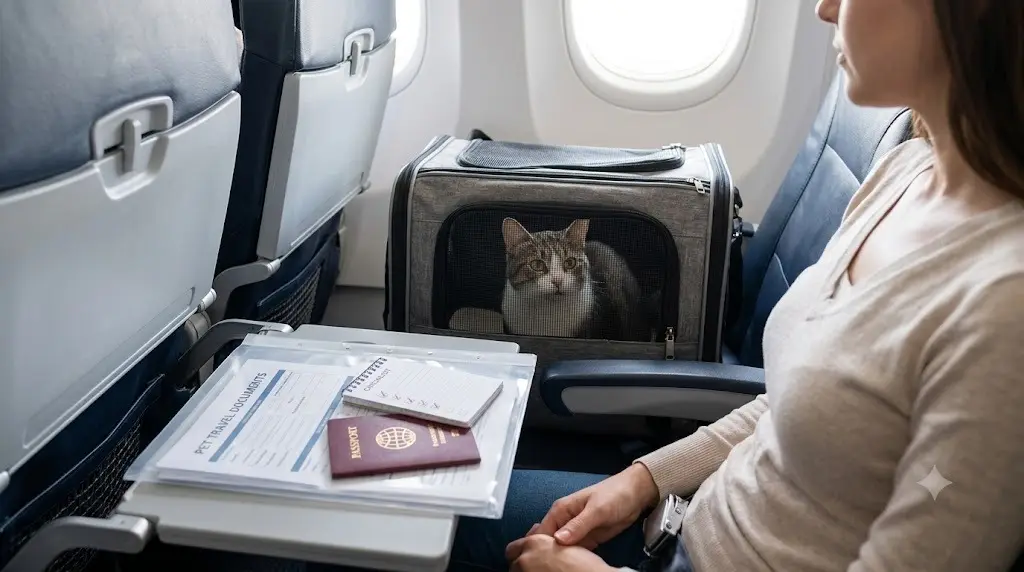
- International flights almost always involve: a microchip (ISO-standard is the international norm), a current rabies vaccination administered after the chip and past a waiting period, a veterinary health certificate in the destination’s required format and timing window, and sometimes country-specific extras - blood titer tests, parasite treatments, import permits, or arrival procedures. Island and rabies-free destinations are the strict end and can require processes measured in months.
- The practical takeaway: the moment an international trip becomes likely, look up the destination country’s official pet import rules and involve your vet - USDA APHIS advises contacting a USDA-accredited veterinarian as soon as you decide to travel, because meeting the requirements takes time. Returning home has rules too; check both directions.
Carry paper copies of everything, plus a photo of your cat on your phone and your vet’s contact details.
Sedation: Vet Only, and Usually Not Sedation
Say it plainly: do not give your cat any calming drug, supplement, or leftover medication for a flight without your vet prescribing it for this purpose. Sedation is discouraged for air travel: IATA, the airlines’ own body, endorses recommendations not to sedate or tranquilize pets in transit, and says that if it is medically necessary a vet must direct it and record it on the health certificate. If your vet judges that your cat needs calming support, the choice of medicine and dose is theirs, with a trial run at home days before the flight to check the response. Some owners also use a feline pheromone spray on the carrier bedding, applied ahead of time as the maker directs; the evidence for it is limited, and the downside is small. The decision tree is simple: anxious cat, vet appointment, trial dose at home, then fly. Never a first dose at 30,000 feet.
Flight Day
- Food and water: a light meal well before the flight rather than a full one just before - ask your vet about timing, especially for a cat that gets motion sick. Water available up to leaving home; offer again at the gate (a silicone travel bowl or even the carrier’s cup).
- Litter logistics: many cats simply wait out an ordinary flight without a box. Line the carrier with an absorbent pad, pack 2-3 spares plus wipes and a zip bag, and change pads in a restroom if needed. For very long itineraries, some travelers carry a tiny foldable litter tray for use in a family restroom; most never open it.
- At home: a play session to tire the cat, harness on under the fluff, pad in the carrier, familiar-smelling bedding, zippers clipped.
- At security: cat out through the top, held firmly by the harness; carrier through the X-ray machine; leash off for the walk through the metal detector, as the TSA instructs; cat back in. Ask about private screening if you have any doubt.
- On board: carrier under the seat, fully zipped, and resist the urge to open it “just to comfort” - fingers against the mesh and a quiet voice do the comforting; an open zipper on a plane does not. Many cats go quiet and still during the flight. Open-mouth breathing, heavy drooling or distress that does not settle is different - tell the crew, and call a vet when you land. A towel draped partly over the carrier during boarding chaos helps noise-sensitive cats.
- On landing: keep the carrier closed until you are in a fully enclosed room at your destination. New-place adrenaline plus an open door is how cats get lost on arrival day. Set up a single quiet room first - litter, water, food, the familiar bedding - and let the cat expand from there over a day or two.
One honest sanity check before any of this: for a one-week trip, a cat sitter visiting the familiar home territory is often kinder than two flights - cats are attached to place as much as people. Flying earns its stress on relocations and long stays. For pre-trip anxiety questions, carrier refusal, and post-move settling, our problem solver has step-by-step guides, breed dispositions live in our cat breed library, and the printable packing and timeline checklist is in tools.
The Short Version
- Cats fly cabin, under the seat: a soft carrier within the airline’s dimensions, booked as early as your own ticket.
- Weeks of carrier training make for a calmer flight; a harness at security is non-negotiable.
- Documents: chip + rabies + certificate in general - but verify airline and country specifics months ahead, both directions.
- Calming medicine only via your vet, trialed at home first; sedation in transit is not recommended (IATA).
- A light meal well ahead, pads not litter, carrier stays zipped until a closed room at the destination.
Recommended Gear on Amazon
- Airline-approved carrier - browse current options and reviews on Amazon.
- Absorbent carrier pads - browse current options and reviews on Amazon.
- Collapsible travel bowl - browse current options and reviews on Amazon.
As an Amazon Associate, we earn from qualifying purchases - at no extra cost to you. This helps us keep producing free, in-depth guides.