Coping With the Loss
Pet grief is real grief. What the first weeks feel like, how to help children and the other animals in the house, gentle ways to remember, and when to reach for support.
If grief ever feels heavier than you can carry - especially if you notice thoughts of not wanting to be here - please talk to someone today: a person you trust, your doctor, or a crisis line in your country. This article is comfort, not care.
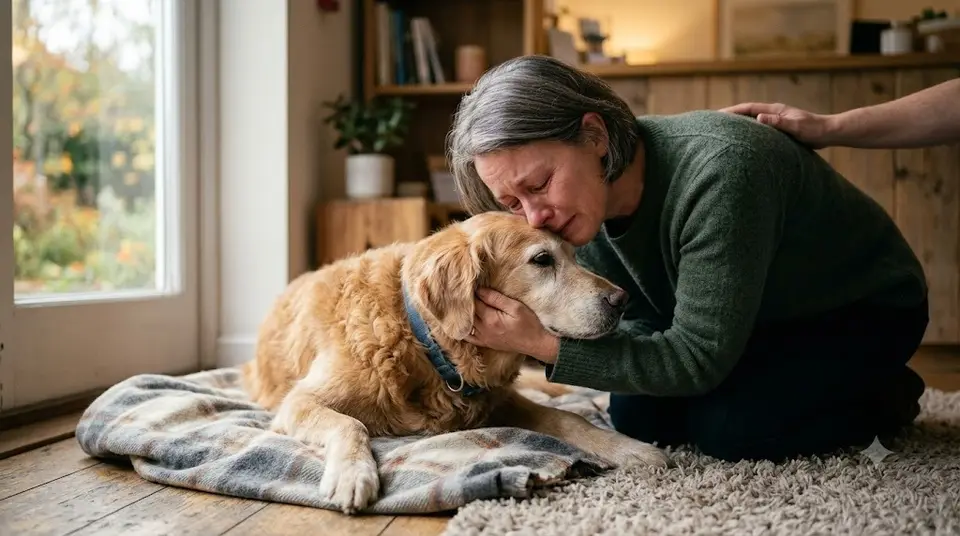
Grief after losing a pet is real grief - not a lesser version of it, not something to apologize for. For many people it hits very hard, and for understandable reasons: a pet is woven into more hours of your day than almost anyone else in your life. If you are here because the house suddenly feels wrong, here is the honest core of it: what you are feeling is normal, it will not always feel this heavy, and there are concrete things that help: for you, for your children, and for the other animals in the home.
Why It Hits So Hard
A pet’s presence is structural. They are in the wake-up, the coming-home, the evenings on the couch, the last trip outside at night. When they die, you lose them at every one of those moments, daily, for a while. Add the purity of the relationship (no arguments, no history, no conditions) and often the weight of having made the final decision yourself, and it is no mystery that this grief has teeth.
What makes it harder still is that it is often what grief counselors call disenfranchised grief - a loss the world does not fully license you to mourn. There is no bereavement leave for a cat. Some people around you will genuinely understand; a few will say “it was just a dog.” Prepare for that second group by deciding in advance that their understanding is not required. Yours is.
What Grief Actually Looks Like
You may have heard of the five stages - denial, anger, bargaining, depression, acceptance. They are a useful vocabulary, but here is the honest version: grief researchers have warned against treating the stages as a path people must follow. Real grief is more like weather. It comes in waves, doubles back, ambushes you on a fine day, and slowly, unevenly, thins out.
In practice, the first weeks commonly include:
- Physical symptoms: exhaustion, poor sleep, appetite changes, a literal heaviness in the chest. Grief is a bodily state as well as an emotion.
- Phantom habits: hearing the collar, reaching to fill the bowl, stepping over a dog who is not there. These moments sting sharply and are completely normal: your brain unlearns routines slowly.
- Guilt loops: replaying the final decision, the missed sign, the day at work. Nearly everyone who loved a pet runs these loops. Making decisions out of love, with the information you had at the time, is the only fair standard: and by it, you did right.
- Relief, especially after a long illness: followed sometimes by guilt about the relief. Relief means the suffering ended. It is compassion, not disloyalty.
The acute weight lifts with time (weeks for some people, months for others), while missing the animal, occasionally sharply, continues far longer. Both timelines are normal. So is grieving one pet harder than you grieved another; bonds differ, circumstances differ, and comparison helps no one.
What helps, concretely
- Keep your machinery running. Sleep, meals, a daily walk: grief is physical, and a depleted body grieves worse.
- Do not race to erase. You do not have to put away the bed and bowls today. Move things when moving them feels right, not to prove recovery.
- Say it somewhere. Talk to the people who get it, write it down, or say it out loud on a walk. Grief that gets expressed moves; grief that gets swallowed tends to sit.
- Expect ambush days - the first birthday, the vet’s sympathy card, a dog of the same breed on the street. Waves are the shape of this; they are not setbacks.
Children and Pet Loss
For many children, a pet’s death is their first real encounter with death, and how it is handled genuinely matters. The usual advice is simple: honesty, in age-sized portions.
- Use real words. “Died” and “death,” gently delivered, are better than euphemisms. “Put to sleep” and “went away” confuse young children specifically: some become afraid of bedtime, or wait for the pet to come back. You do not need clinical detail; you need truth: “Her body was very old and sick, and it stopped working. She died. That means we won’t see her again, and it’s okay to be very sad.”
- Answer what is asked. Children signal what they can handle by their questions. Answer plainly, and do not volunteer more than they asked for.
- Let them see you sad. Hiding your own grief teaches children to hide theirs. “I’m crying because I miss him too” is one of the most valuable sentences a child can hear.
- Offer participation, not obligation. Drawing a picture, choosing a photo, helping plant something, saying a few words at a small goodbye: rituals give children a handle on something too big for words. Never force attendance at anything.
- Expect sideways grief. Children often grieve in bursts between play, or via stomachaches, clinginess, or regression rather than tears. That is how children do it; it does not mean they are unaffected or over it.
The Other Animals in the House
Yes, surviving pets often grieve - or at minimum are visibly disrupted by both the absence and your distress. In a survey of 426 owners whose dog had lost a canine companion, owners described the surviving dog as changed in its playing, sleeping and eating and as more fearful, and the changes tracked how close the two dogs had been, and the owner’s own grief.
What helps them is mostly what helps you: keep routines rigid - same meal times, same walks, same rituals. Give attention when it is sought, without forcing it. Expect the household dynamic to reshuffle in multi-pet homes, especially in cats, as territory and hierarchy resettle. How long that takes differs from animal to animal. If a surviving pet stops eating, that is a vet call - especially in cats, where not eating is quickly dangerous. For behavior wobbles beyond that, our problem solver covers the common patterns step by step.
Should the surviving pet see the body? Where circumstances allow it, some owners find the survivor sniffs briefly and moves on, and some believe it reduces searching behavior. Honest answer: evidence is thin either way. If it is easy to allow, there is no harm in it; if it is not possible, do not carry guilt about it.
Remembering, and What Comes After
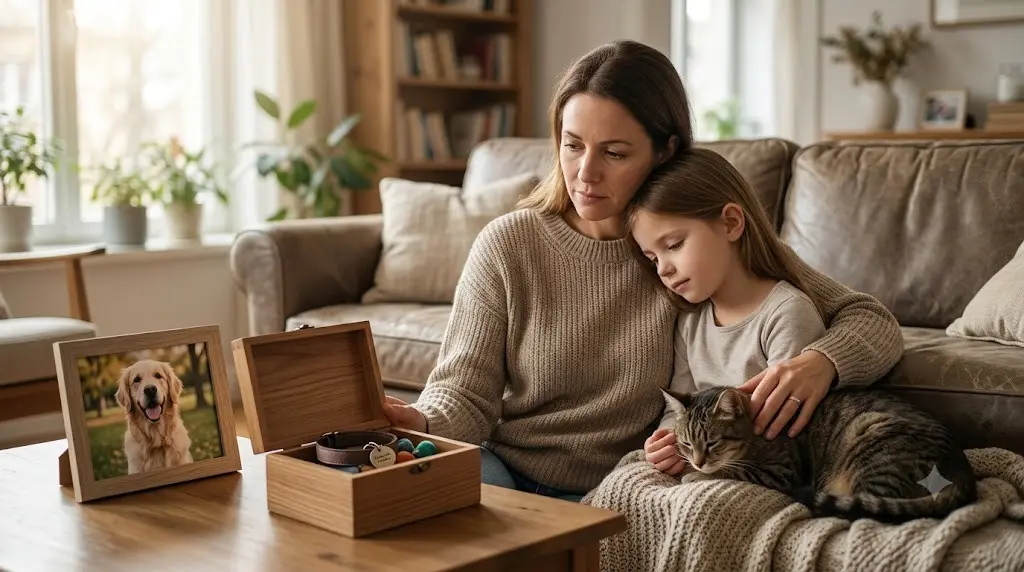
Memorializing helps because it converts a raw absence into something you can visit on your own terms - a framed photo, a paw print, a tree planted over the ashes, a donation to the shelter in their name. We have a full guide of memorial ideas when you feel ready. There is no obligation to do any of it, and no deadline.
The other inevitable question: when, if ever, a next pet? The honest answer is that there is no correct interval - only a correct reason. A new animal adopted to replace the old one is set up to fail an unfair comparison; a new animal welcomed when you find yourself with love and room to give again arrives on fair terms. For some people that is months; for others, years; for some, the answer is a quiet no, and that is legitimate too. When the question ever becomes real, resources like our dog breed guides and match-finding tools will be there: with no timeline attached.
When to Reach for Support
Most pet grief, however heavy, gradually softens on its own. Reach for structured help if, after several weeks, things are not softening at all - or sooner if you recognize yourself here:
- Grief is interfering with work, eating, or sleeping in a sustained way
- You feel stuck in guilt or replaying the end on a loop you cannot exit
- You have withdrawn from people and activities and are not coming back
- The loss has knocked loose older griefs, or you have thoughts of not wanting to be here: that last one is a reason to seek professional support now, not later
Support exists and is not excessive to use: pet loss support groups (many veterinary schools and humane organizations run free hotlines and online groups), grief counselors (many of whom explicitly work with pet loss), and your own doctor as a starting point. Needing help with grief takes the same good sense that took your pet to the vet.
The Short Version
- Pet grief is real, physical, and often unfairly discounted. Yours needs no one’s approval.
- Waves, guilt loops, phantom habits, and relief are all normal. The acute weight usually eases over weeks; missing them lasts longer, and that is fine.
- With children: real words, honest answers, visible feelings, optional rituals.
- Surviving pets grieve too: hold routines steady, and call the vet if one stops eating.
- A next pet needs no schedule. Support (hotlines, groups, counselors) is there if the weight will not lift.