Spiny Flower Mantis
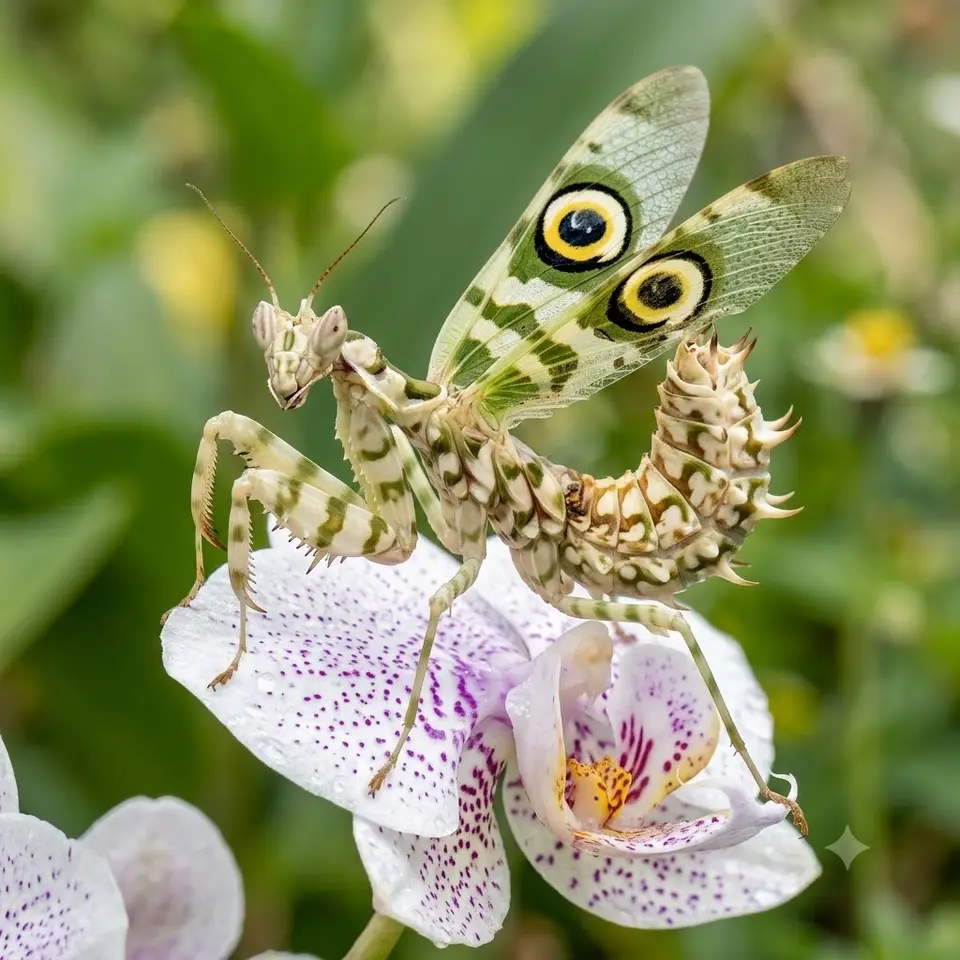
The Spiny Flower Mantis packs the hobby's boldest artwork onto 4 centimeters of insect: cream and green swirls, spiny abdomen flanges, and a startling eye-spot spiral on each wing it flashes at threats.
Last reviewed: July 2026
 AI illustration
 Overview
The Spiny Flower Mantis packs the hobby's boldest artwork onto 4 centimeters of insect: cream and green swirls, spiny abdomen flanges, and a startling eye-spot spiral on each wing it flashes at threats. Average lifespan is 8-12 months. (Pseudocreobotra wahlbergii.)
Origin & Habitat
Flowering scrub of eastern and southern Africa, ambushing pollinators from blossoms.
Appearance
3.5-4.5 cm. Cream body swirled with green and pink, a spiked abdomen held curled upward, and adult forewings painted with a black-and-yellow '9' spiral eye-spot.
Temperament & Handling
An alert little flower ambusher; when threatened it rears and flashes the wing eye-spots - a 'deimatic display' that is pure theatre in miniature. Fine for brief, careful handling.
Enclosure
15 × 15 × 25 cm is ample - small mantis, but the 3× height rule for molting still applies. Flower-like perches and a mesh ceiling complete it.
Heating, Humidity, Lighting
24-28°C days, 60-70% humidity with light daily misting and real airflow. Standard flower-mantis housekeeping: droplets to drink, never stale air.
Diet
Flying prey preferred: fruit flies through blue bottles as it grows, every 1-2 days. The pounce from a flower perch is textbook ambush hunting.
Health & Lifespan
Reasonably hardy by ornate-mantis standards; molt clearance and humidity discipline decide success. Females near a year, males less.
Pros & Cons
Pros
- Spectacular eye-spot threat display
- Gorgeous pattern in a tiny package
- Modest space and food needs
Cons
- Short lifespan, tiny size
- Prefers cultured flying prey
- Spines look fierce, need gentle handling
Everyday gear for exotic pets
Links go to Amazon or a partner brand's own store and may earn us a commission at no extra cost to you. As an Amazon Associate we earn from qualifying purchases. An Amazon link leads to a type of gear and you choose the exact product; a card that names a store leads to that partner's own shop.
Spiny Flower Mantis - frequently asked questions
What is the spiral 'eye' for?
It's a deimatic display: flashed suddenly at predators to buy escape time. Captive mantids aim it at anything that startles them, including keepers.
Why does it hold its abdomen curled up?
The raised, spiny abdomen is normal posture for the species - part camouflage, part display, not a sign of illness.
Can nymphs be kept together?
Very young nymphs sometimes are, with heavy feeding, but cannibalism rises with every molt - separate them early.
Test yourself: guess the exotic pet
Three clues from our quiz bank, each about another of our exotic pets. Can you name them?
Clue 1.From a single island nation, this glossy brown roach gives live birth and males sport bumpy 'horns.'
It's the Madagascar Hissing Cockroach - read the full profile →
Clue 2.Sold cheaply at beach shops, this pet has one oversized claw used to seal the entrance of its home.
It's the Hermit Crab - read the full profile →
Clue 3.One of the world's largest land mollusks, this shelled creature can grow as long as an adult's hand and is a serious invasive pest.
It's the Giant African Land Snail - read the full profile →