Rubber Ducky Isopod
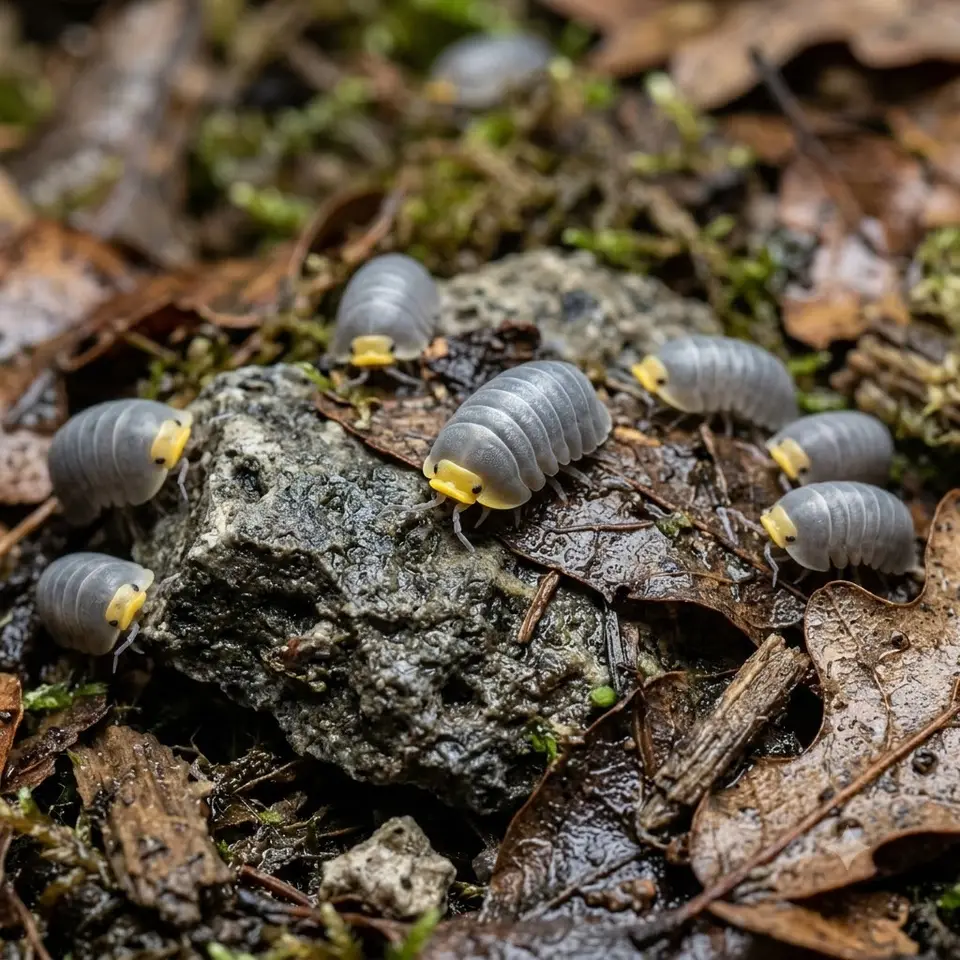
The Rubber Ducky Isopod is a round little cave crustacean whose yellow face and gray back resemble a rubber duck; it once traded for very high prices.
Last reviewed: October 2026
Group guide: Isopods
 AI illustration
 Overview
The Rubber Ducky Isopod is a round little cave crustacean whose yellow face and gray back resemble a rubber duck; it once traded for very high prices. Average lifespan is 2-3 years. (Cubaris sp. 'Rubber Ducky'.)
Origin & Habitat
Limestone karst caves of Thailand - discovered by the hobby in the 2010s and still bred from those cave-adapted lines.
Appearance
About 1 cm, deeply domed and smooth. Slate-gray shell with a butter-yellow 'face' and skirt - the duck resemblance is real and disarming.
Temperament & Handling
Shy and slow - a treasure you check on under the bark rather than watch parade. Rolls into a perfect ball when disturbed (it's a true 'roly-poly').
Enclosure
A small, stable tub (3-6 L) with limited ventilation to hold humidity, deep substrate mixed with crushed limestone, abundant leaf litter and cork slabs to hide beneath.
Heating, Humidity, Lighting
The cave formula: cool-to-mild 20-24°C, humidity high (80%+), substrate evenly moist but never swampy, air changes gentle. Stability beats perfection.
Diet
Leaf litter and rotting wood, dusted with occasional vegetables, fish flakes and calcium/limestone. Light feeding - this is a slow-metabolism cave animal.
Health & Lifespan
Hardy once established but slow: broods are small and months apart, which is why colonies stay precious. Avoid boom-bust moisture swings and it will quietly thrive.
Pros & Cons
Pros
- The cutest invertebrate in the hobby, full stop
- Small, silent, low-care colony
- No longer bank-breaking: prices have fallen
Cons
- Slow breeder: colonies build over a year
- Shy; you'll lift bark to visit them
- Less forgiving of dryness than Porcellio
Everyday gear for exotic pets
Links go to Amazon or a partner brand's own store and may earn us a commission at no extra cost to you. As an Amazon Associate we earn from qualifying purchases. An Amazon link leads to a type of gear and you choose the exact product; a card that names a store leads to that partner's own shop.
Rubber Ducky Isopod - frequently asked questions
Why were they so expensive?
New discovery + slow breeding + viral cuteness. As captive colonies multiplied, prices fell from hundreds per head to pocket-money levels.
Do they need limestone?
They come from limestone karst and use calcium heavily - mix crushed limestone or cuttlebone into the substrate and they'll graze it.
Can they share a bioactive tank?
They prefer cooler, stabler, damper conditions than most reptile tanks provide - a dedicated tub is where they shine.
Test yourself: guess the exotic pet
Three clues from our quiz bank, each about another of our exotic pets. Can you name them?
Clue 1.This twig-mimicking insect is a master of camouflage and can sometimes regrow a lost leg when it molts.
It's the Stick Insect (Phasmid) - read the full profile →
Clue 2.This ambush hunter has a single ear on its underside, tuned to detect the echolocation of hunting bats.
It's the Praying Mantis - read the full profile →
Clue 3.This hermaphrodite gastropod has both sexes in one body and can lay over a thousand eggs a year.
It's the Giant African Land Snail - read the full profile →