Desert Hairy Scorpion
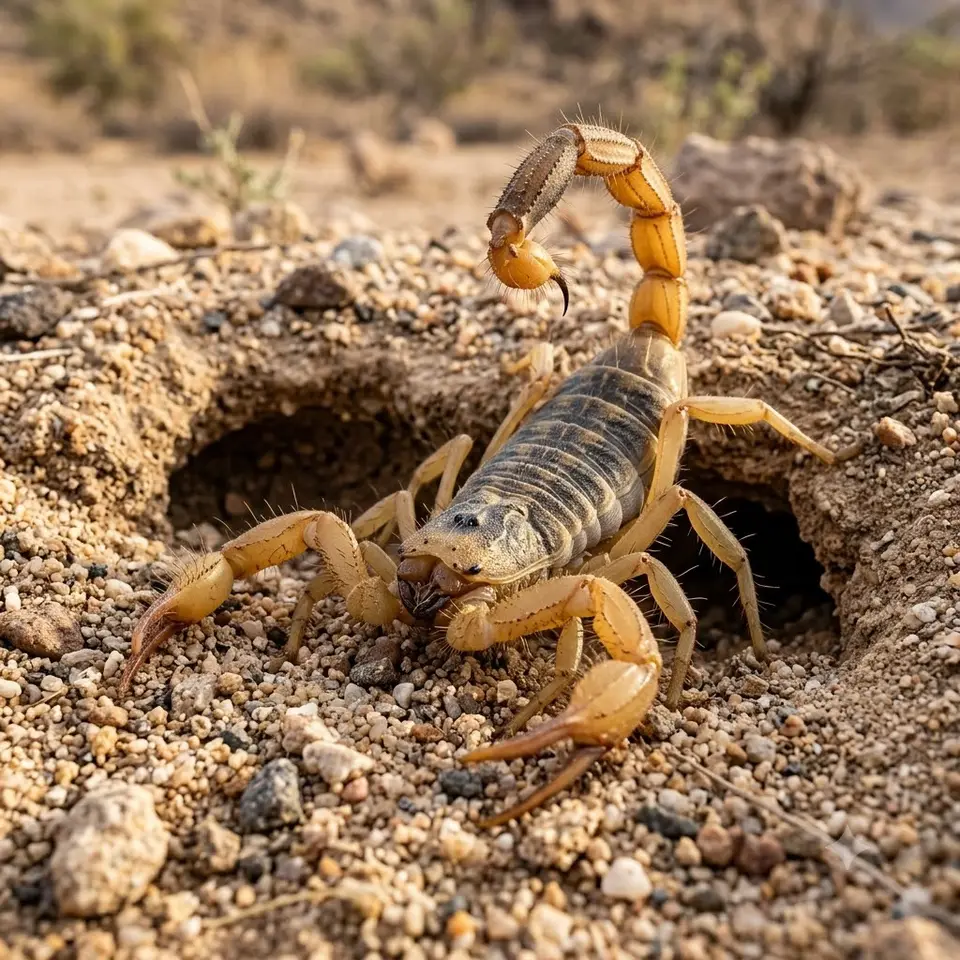
The Desert Hairy Scorpion is North America's giant - a sand-yellow, dark-backed burrower up to 14 cm long, bristling with sensory hairs and pure desert attitude.
Last reviewed: October 2026
 AI illustration
 Overview
The Desert Hairy Scorpion is North America's giant - a sand-yellow, dark-backed burrower up to 14 cm long, bristling with sensory hairs and pure desert attitude. Average lifespan is 7-10 years, and it's the definitive arid-setup showpiece. (Hadrurus arizonensis.)
Origin & Habitat
The Sonoran and Mojave deserts of the southwestern USA and Mexico, digging deep burrows in sandy washes.
Appearance
Up to 14 cm - the largest scorpion in North America. Sandy yellow legs and tail with an olive-dark back, covered in the erect brown hairs that name it.
Temperament & Handling
Feisty: it postures readily, sting raised, and digs constantly. The sting is mild (honeybee-level for most people) but it will use it more willingly than the tropical giants - strictly tongs-and-tank.
Enclosure
A 40+ cm tank with 12-15 cm of packable sand-loam mix for serious burrowing (the defining behavior) plus flat stones and a tiny dish or moist corner.
Heating, Humidity, Lighting
Hot and dry: 26-32°C daytime, humidity low (30-40%). The cardinal sin is damp substrate - desert scorpions develop fatal mycosis in wet setups. A weekly-refreshed moist corner covers drinking.
Diet
Crickets and roaches weekly, ambushed at the burrow mouth at night. Long fasts (especially in winter cooling) are normal for a desert metabolism.
Health & Lifespan
Iron-clad when dry and warm; moisture is the only common killer. Slow-growing and long-lived - a decade of quiet desert theatre under red night-light.
Pros & Cons
Pros
- Biggest scorpion on the continent
- Spectacular natural burrowing behavior
- Very long-lived, ultra-low upkeep
Cons
- Grumpy: postures and stings if provoked
- Spends daytime underground
- Bone-dry needs unlike tropical species
Everyday gear for exotic pets
Links go to Amazon or a partner brand's own store and may earn us a commission at no extra cost to you. As an Amazon Associate we earn from qualifying purchases. An Amazon link leads to a type of gear and you choose the exact product; a card that names a store leads to that partner's own shop.
Desert Hairy Scorpion - frequently asked questions
Is the sting dangerous?
For most people it's comparable to a bee sting, though 'hairys' sting more readily than Emperors. Anyone with venom allergies should treat all scorpions with extra caution - and nobody should handle them.
Why can't I see it during the day?
It's a nocturnal deep-burrower; that's the species being healthy. Watch after dark - a red lamp or brief UV torch reveals the evening ambush routine.
Does it need water?
It derives most moisture from prey; a small dish or a lightly moistened corner once a week is plenty. Never mist the whole enclosure.
Test yourself: guess the exotic pet
Three clues from our quiz bank, each about another of our exotic pets. Can you name them?
Clue 1.This large wingless insect, popular as a hardy pet, forces air through breathing holes to make a loud hiss.
It's the Madagascar Hissing Cockroach - read the full profile →
Clue 2.This crustacean has a soft, spiraled abdomen and must borrow an empty snail shell to protect its body.
It's the Hermit Crab - read the full profile →
Clue 3.This ambush hunter has a single ear on its underside, tuned to detect the echolocation of hunting bats.
It's the Praying Mantis - read the full profile →