Dairy Cow Isopod
The Dairy Cow Isopod is a large, fast-breeding woodlouse in Holstein-cow black-and-white that doubles as a pet, a bioactive clean-up crew and a lesson in tiny ecosystems.
Last reviewed: October 2026
Group guide: Isopods
 AI illustration
 Overview
The Dairy Cow Isopod is a large, fast-breeding woodlouse in Holstein-cow black-and-white that doubles as a pet, a bioactive clean-up crew and a lesson in tiny ecosystems. Average lifespan is 2-3 years. (Porcellio laevis 'Dairy Cow'.)
Origin & Habitat
A captive-bred color form of a cosmopolitan species originally from the Mediterranean, now a hobby staple worldwide.
Appearance
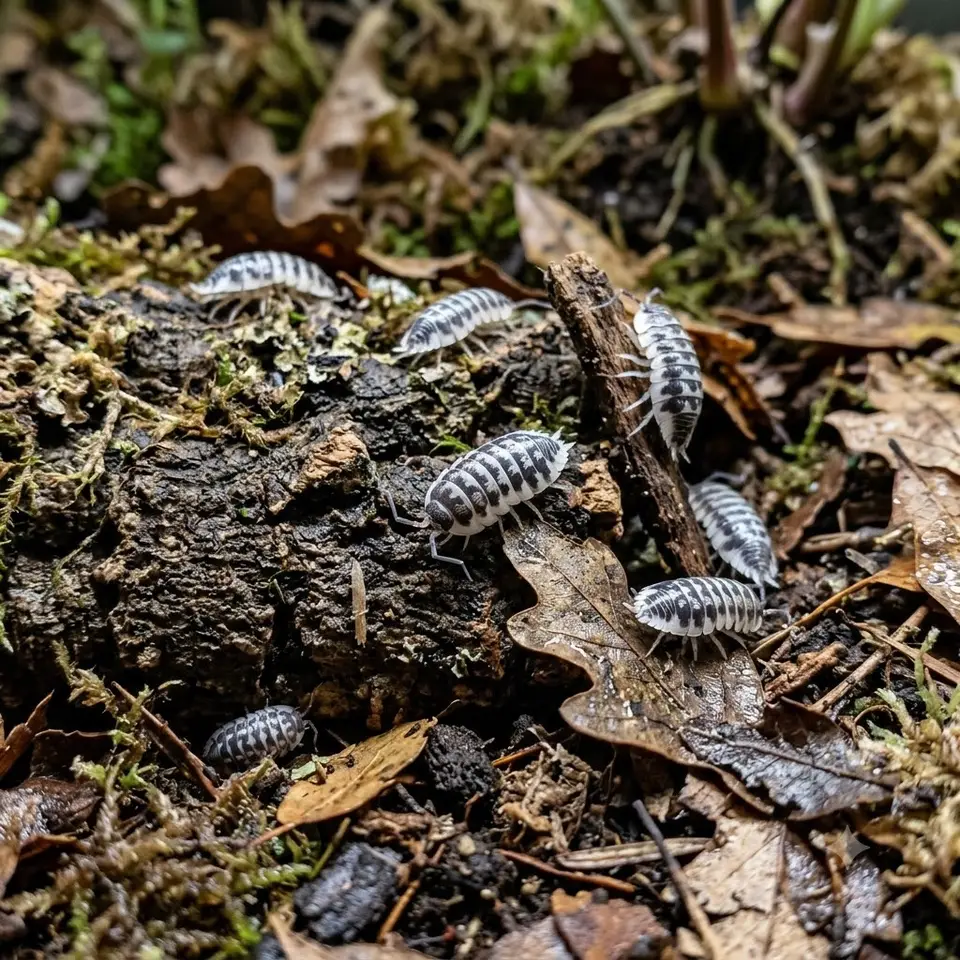
Up to 2 cm (big for an isopod) with a glossy white base blotched in black, every individual patterned differently, herd after miniature herd.
Temperament & Handling
Active and visible for an isopod, foraging openly at dusk. Completely harmless; a colony is handled by the scoop, not the individual.
Enclosure
A 6-15 L plastic tub with cross-ventilation, 5-8 cm of substrate (coco fibre + leaf litter), cork bark hides, and a moisture gradient - one end misted, one end dry.
Heating, Humidity, Lighting
Room temperature 20-26°C. The moisture gradient IS the climate control: isopods self-regulate by moving between damp and dry ends. Always keep dead leaves available.
Diet
Decaying leaves and wood as the staple, plus vegetable scraps, fish flakes and a calcium source (cuttlebone). A protein-hungry species - underfed colonies nibble molting colony-mates.
Health & Lifespan
Essentially disease-proof; colonies fail only from drying out, flooding or protein starvation. Breeding is automatic - females carry broods in a belly pouch, and a starter dozen becomes hundreds within months.
Pros & Cons
Pros
- Fast, visible, prolific: instant success
- Doubles as bioactive terrarium crew
- Endlessly variable cow-print patterns
Cons
- Too prolific for some setups
- Needs protein or it turns cannibal
- A tub of woodlice isn't for everyone
Everyday gear for exotic pets
Links go to Amazon or a partner brand's own store and may earn us a commission at no extra cost to you. As an Amazon Associate we earn from qualifying purchases. An Amazon link leads to a type of gear and you choose the exact product; a card that names a store leads to that partner's own shop.
Dairy Cow Isopod - frequently asked questions
Why 'Dairy Cow'?
The hobby names isopod color morphs; this Porcellio laevis form's black-on-white blotches earned the barnyard name.
Can they live in my gecko's tank?
P. laevis is big and protein-hungry - fine with robust reptiles, but they may pester small or molting animals; many keepers choose gentler species for bioactive tanks.
How fast do they breed?
At warm room temperature, expect the first broods within weeks and a boom within months - plan for surplus or trade with other keepers.
Test yourself: guess the exotic pet
Three clues from our quiz bank, each about another of our exotic pets. Can you name them?
Clue 1.Sold cheaply at beach shops, this pet has one oversized claw used to seal the entrance of its home.
It's the Hermit Crab - read the full profile →
Clue 2.Belonging to an order whose name means 'apparition,' this insect includes some of the longest insects on Earth.
It's the Stick Insect (Phasmid) - read the full profile →
Clue 3.Kept as a low-maintenance pet abroad, this slow nocturnal animal needs calcium to build its huge spiral shell.
It's the Giant African Land Snail - read the full profile →