Curly Hair Tarantula
The Curly Hair Tarantula is covered in woolly golden-brown hairs with a distinctive curl; it is cheap to buy, forgiving to keep and calm enough for any beginner.
Updated: October 2026
Group guide: Tarantula
 AI illustration
 Overview
The Curly Hair Tarantula is covered in woolly golden-brown hairs with a distinctive curl; it is cheap to buy, forgiving to keep and calm enough for any beginner. Average lifespan for females is 15-20 years. (Tliltocatl albopilosus.)
Origin & Habitat
Tropical scrub and forest clearings of Nicaragua, Honduras and Costa Rica, burrowing at the base of logs and roots.
Appearance
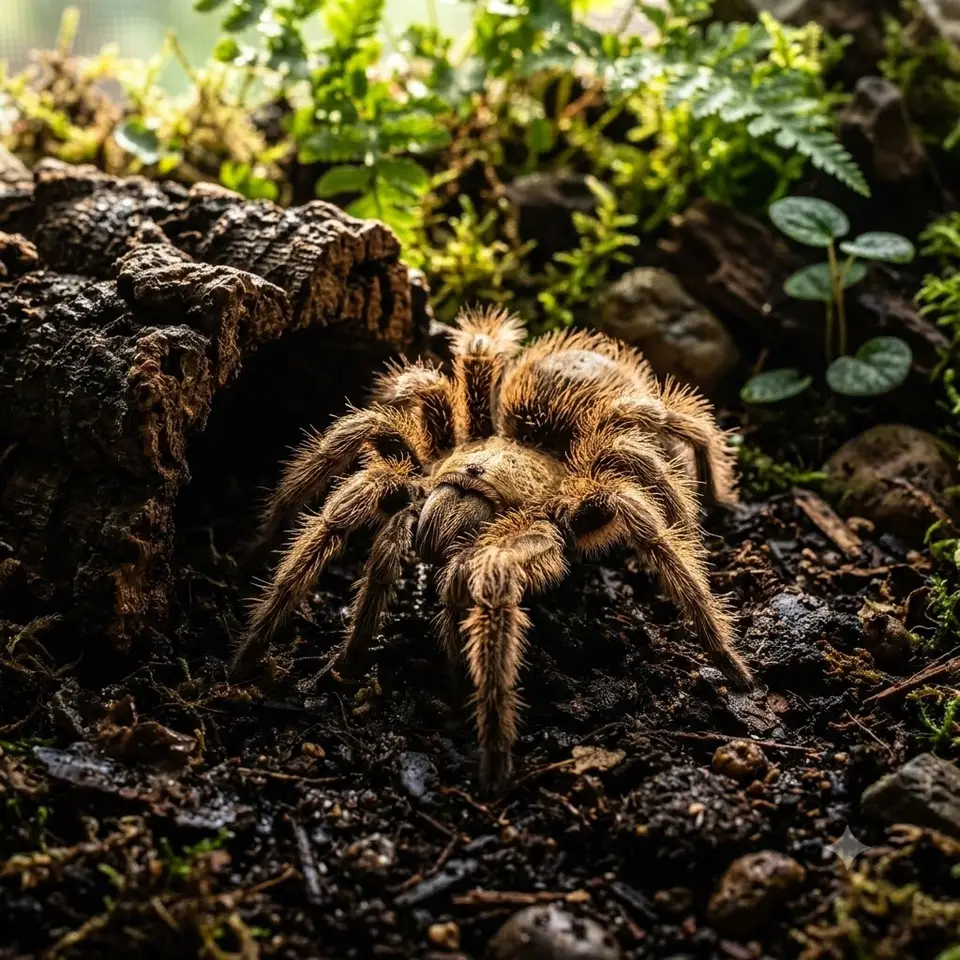
Legspan 12-14 cm. Dark brown base coat overlaid with curly tan and gold 'wool', giving a fuzzy, backlit halo in good light.
Temperament & Handling
Relaxed and predictable - a spider that mostly sits, rarely kicks hairs and tolerates enclosure maintenance without drama. A near-perfect first tarantula alongside the Red Knee.
Enclosure
30 × 30 cm terrestrial with 8-10 cm substrate for optional burrowing, a hide and a water dish. Young ones dig enthusiastically; adults sit out more.
Heating, Humidity, Lighting
22-27°C, humidity 60-70%: keep half the substrate lightly moist, half dry - a touch damper than the desert species but never wet.
Diet
An eager, reliable eater: crickets or roaches weekly, adults every 7-10 days. Its steady appetite makes it a satisfying species for new keepers.
Health & Lifespan
Very hardy; issues are the usual falls and wet-substrate problems. Steady medium growth. Females reach 15-20 years, males 4-5.
Pros & Cons
Pros
- Cheap, calm, forgiving: ideal starter
- Reliable appetite (unlike Rose Hairs)
- Charming woolly appearance
Cons
- Less flashy than blue or red species
- Juveniles hide in burrows for months
- Hair-kicking possible if harassed
Everyday gear for exotic pets
Links go to Amazon or a partner brand's own store and may earn us a commission at no extra cost to you. As an Amazon Associate we earn from qualifying purchases. An Amazon link leads to a type of gear and you choose the exact product; a card that names a store leads to that partner's own shop.
Curly Hair Tarantula - frequently asked questions
Curly Hair or Rose Hair as a first spider?
Curly Hair - same easy care but a dependable appetite and steadier mood, which spares a beginner the fasting anxiety.
Why has my juvenile sealed itself underground?
Pre-molt burrow-sealing is normal. Leave it alone; it reappears bigger and hungrier in a few weeks.
Wet or dry substrate?
Mostly dry with a moist corner. If condensation coats the walls, it's too wet - back off the misting.
Test yourself: guess the exotic pet
Three clues from our quiz bank, each about another of our exotic pets. Can you name them?
Clue 1.Belonging to an order whose name means 'apparition,' this insect includes some of the longest insects on Earth.
It's the Stick Insect (Phasmid) - read the full profile →
Clue 2.Used in classrooms and films, this docile, climbing insect cannot fly and grows several inches long.
It's the Madagascar Hissing Cockroach - read the full profile →
Clue 3.Kept as a low-maintenance pet abroad, this slow nocturnal animal needs calcium to build its huge spiral shell.
It's the Giant African Land Snail - read the full profile →