Chilean Rose Hair Tarantula
The Chilean Rose Hair Tarantula has introduced more people to the hobby than any other spider - an inexpensive, tough-as-nails desert species with a coat of rose-tinted hairs and famously unpredictable eating habits.
Last reviewed: October 2026
Group guide: Tarantula
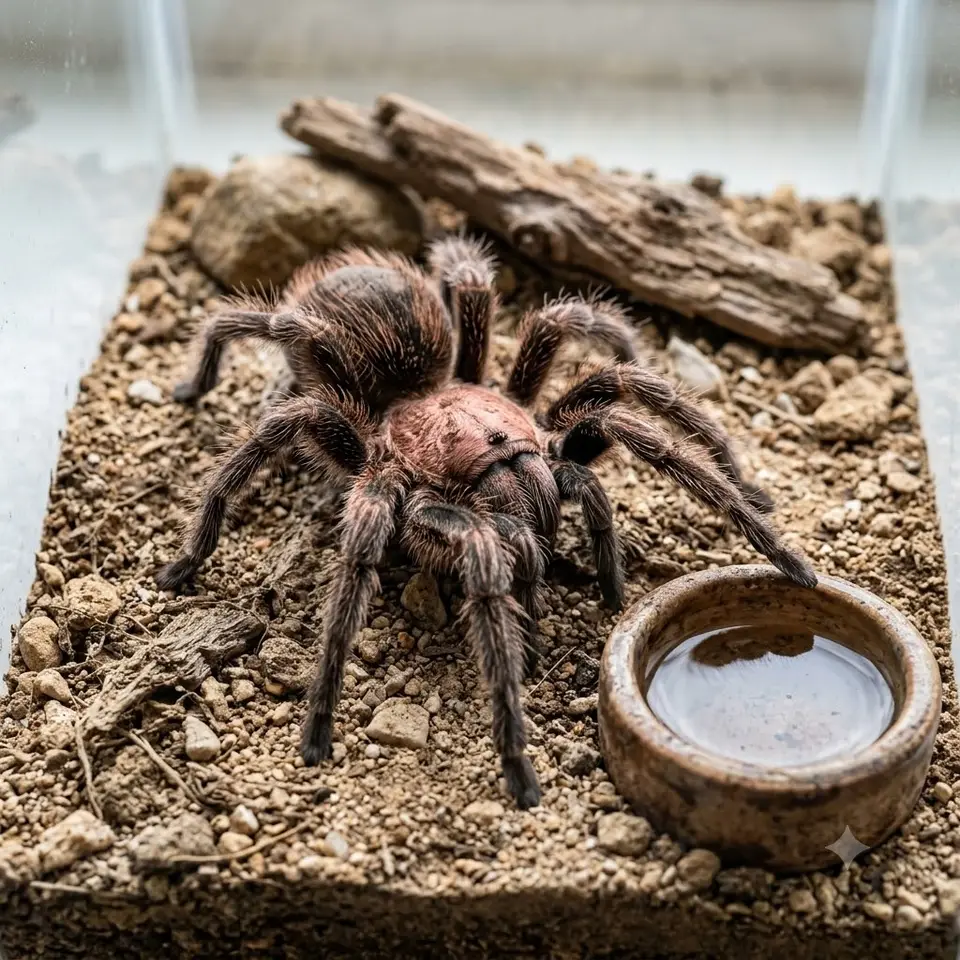 AI illustration
Overview
The Chilean Rose Hair Tarantula has introduced more people to the hobby than any other spider - an inexpensive, tough-as-nails desert species with a coat of rose-tinted hairs and famously unpredictable eating habits. Average lifespan is 15-20 years for females. (Grammostola rosea.)
Origin & Habitat
Deserts and scrublands of Chile, Bolivia and Argentina - one of the most arid habitats of any commonly kept tarantula.
Appearance
Legspan 12-14 cm. Dusty brown body with a metallic rose or coppery sheen on the carapace and hairs, subtler than the Red Knee but handsome in good light.
Temperament & Handling
Usually placid, occasionally moody - a Rose Hair can sit statue-still for weeks, then have a defensive day. It telegraphs its mood clearly; respect a raised-leg posture and leave it be.
Enclosure
Simple terrestrial setup: 30 × 30 cm floor space, dry substrate 8 cm deep, hide and water dish. It often ignores the hide and sits in the open - a gift of a display animal.
Heating, Humidity, Lighting
20-26°C, humidity 40-60% - the driest setup in the hobby. Damp substrate is the number-one husbandry mistake with this species; keep it desert-dry with just a water dish.
Diet
A few crickets weekly - but expect legendary fasting: healthy Rose Hairs routinely refuse food for months, sometimes over a year, with no harm. Feed less in winter; never leave live prey with a fasting spider.
Health & Lifespan
Arguably the hardiest pet spider in existence; most losses come from over-wetting, overfeeding or fall injuries. Females commonly reach 15-20 years, exceptional ones more.
Pros & Cons
Pros
- Cheapest and most widely available tarantula
- Tolerates beginner mistakes better than any species
- Often sits in full view
Cons
- Marathon fasts alarm new keepers
- Mood swings: docile weeks, defensive days
- Slow growth from spiderling
Everyday gear for exotic pets
Links go to Amazon or a partner brand's own store and may earn us a commission at no extra cost to you. As an Amazon Associate we earn from qualifying purchases. An Amazon link leads to a type of gear and you choose the exact product; a card that names a store leads to that partner's own shop.
Chilean Rose Hair Tarantula - frequently asked questions
It hasn't eaten in four months - is it dying?
Almost certainly not. Rose Hairs are famous for long fasts, especially before molts and in winter. If the abdomen isn't shrivelled, all is well.
Does it need a heat mat?
No - normal room temperature is ideal. Heat mats under a tank can actually drive the spider to burrow toward the heat and overheat.
Why is my spider suddenly defensive?
Individual mood variation is normal for the species. Check for pre-molt signs (dark abdomen, refusing food) and reduce disturbance.
Test yourself: guess the exotic pet
Three clues from our quiz bank, each about another of our exotic pets. Can you name them?
Clue 1.This ambush hunter has a single ear on its underside, tuned to detect the echolocation of hunting bats.
It's the Praying Mantis - read the full profile →
Clue 2.A slow-moving herbivore whose elongated body resembles a branch; it may sway gently to imitate a twig in the breeze.
It's the Stick Insect (Phasmid) - read the full profile →
Clue 3.This hermaphrodite gastropod has both sexes in one body and can lay over a thousand eggs a year.
It's the Giant African Land Snail - read the full profile →