Nicobar Pigeon
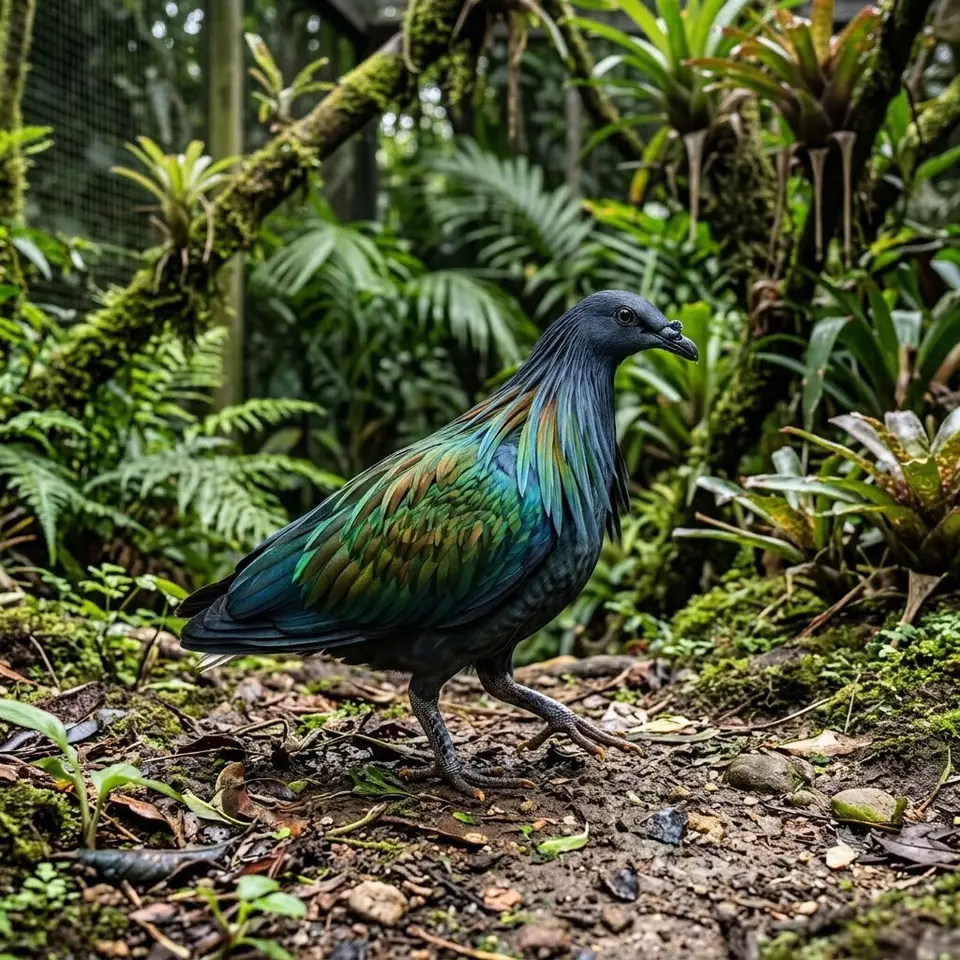
The Nicobar pigeon is a large ground-dwelling species draped in shimmering metallic green, copper and blue hackles, the closest living relative of the extinct dodo.
Last reviewed: October 2026
 AI illustration
 Overview
The Nicobar pigeon is a large ground-dwelling species draped in shimmering metallic green, copper and blue hackles, the closest living relative of the extinct dodo. It is emphatically a specialist, licensed keeper's bird: protected, expensive, and requiring a large heated aviary, listed here for completeness rather than as a pet suggestion.
Natural History & Origin
A spectacular iridescent pigeon (Caloenas nicobarica) of Southeast Asian and Pacific islands; a protected species kept only by licensed, experienced aviculturists.
Appearance
Large (500-600 g) with long iridescent green-copper neck hackles, a slate body and a small white tail; a stocky, ground-walking build.
Temperament & Noise
Shy, calm and ground-dwelling; a display bird kept for its beauty, not for handling. Quiet, with a low pig-like grunt rather than a coo.
Housing & Flight
A large, heated, predator-proof planted aviary with ample ground space and dense cover - they forage on the floor and roost in trees. Warmth is essential; they are tropical and cold-intolerant.
Diet
An omnivorous ground forager: seeds, grains, fruit, and hard nuts and invertebrates their strong gizzards handle; a specialised balanced diet with grit. Fresh water and bathing.
Health & Lifespan
Average lifespan is 12-16 years. Long-lived (12-16 years) but demanding of warmth, space and correct diet; delicate to cold and stress. Only within the reach of experienced keepers with proper facilities and permits.
Training & Enrichment
Not trainable or handleable - kept purely for its extraordinary appearance and conservation interest. Enrichment is space, cover, foraging and flock company.
Pros & Cons
Pros
- Arguably the most beautiful pigeon alive
- Fascinating dodo relative
- Long-lived display centrepiece
- Conservation and educational value
Cons
- Protected: permits/licensing required
- Advanced care: large heated aviary
- Expensive and hard to source
- Not a pet: a specialist display bird
Best Suited For
- Licensed, experienced aviculturists
- Zoo and conservation collections
- Large heated-aviary keepers
- Serious ornamental-bird specialists
Everyday gear for birds
Links go to Amazon or a partner brand's own store and may earn us a commission at no extra cost to you. As an Amazon Associate we earn from qualifying purchases. An Amazon link leads to a type of gear and you choose the exact product; a card that names a store leads to that partner's own shop.
Nicobar Pigeon - frequently asked questions
Can I keep a Nicobar pigeon as a pet?
Realistically no - it's a protected species needing permits, a large heated aviary and expert care, and it doesn't tame to people. It's a licensed specialist's display bird, included here for interest.
Is it really related to the dodo?
Yes - genetic studies make the Nicobar pigeon the closest living relative of the extinct dodo, which adds to its fascination and conservation importance.
Why does it need so much warmth?
It's a tropical island species with no cold tolerance, so it requires a heated, sheltered aviary anywhere outside consistently warm climates.
Test yourself: guess the bird
Three clues from our quiz bank, each about another of our birds. Can you name them?
Clue 1.This is the largest type of parrot kept as a pet, with a long sweeping tail and a huge nut-cracking beak.
It's the Macaw - read the full profile →
Clue 2.This small finch, named for the Atlantic islands it hails from, was famously carried into coal mines to detect deadly gas.
It's the Canary - read the full profile →
Clue 3.Famed for extreme intelligence, loud screams, and intense bonding, members of this group can outlive their owners and pluck feathers when bored.
It's the Cockatoo - read the full profile →
Social Needs
Social flock birds in the wild; kept in pairs or groups in large aviaries. Not a bird that bonds to people - it's a living ornament of the aviary.