King Pigeon
The King pigeon is a big, round, calm bird bred originally for size and kept today as one of the most affectionate and trainable companion pigeons.
Last reviewed: October 2026
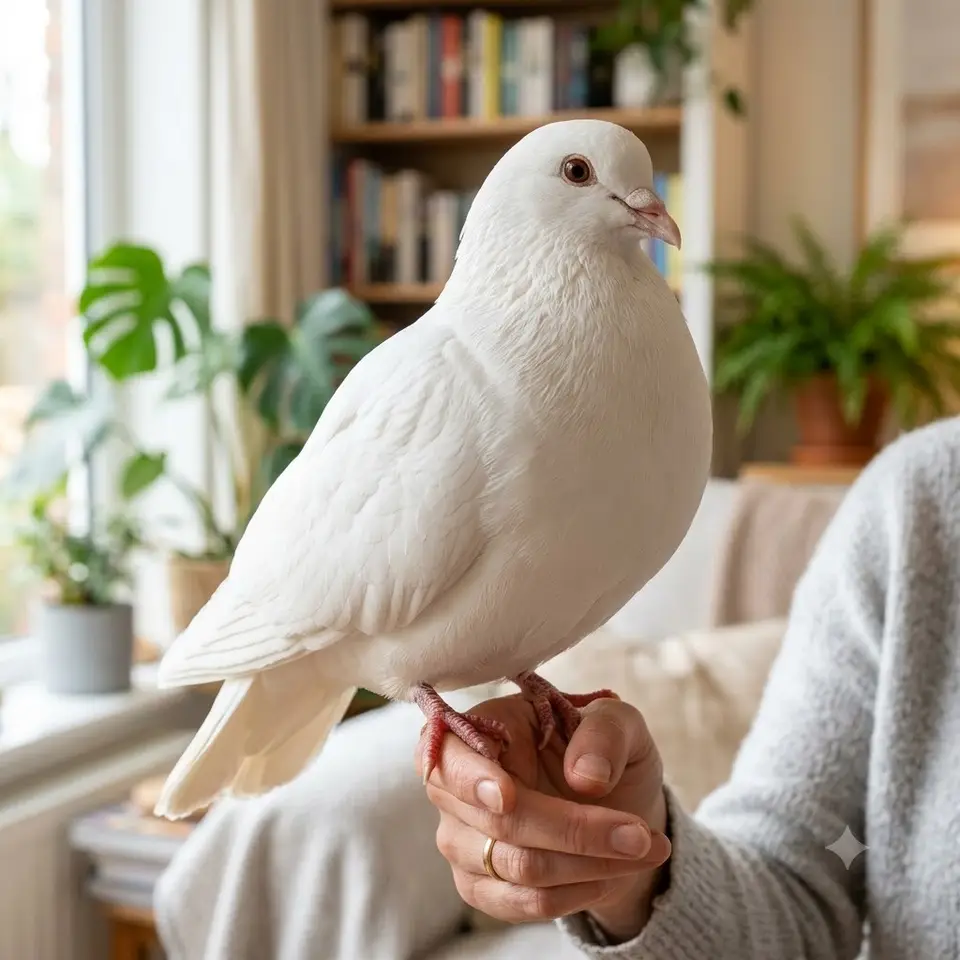 AI illustration
 Overview
The King pigeon is a big, round, calm bird bred originally for size and kept today as one of the most affectionate and trainable companion pigeons. Many are adopted from rescues (white Kings are often misused in ceremony 'dove releases' and cannot survive in the wild), making them a rewarding, low-cost pet with real personality.
Natural History & Origin
A domestic breed developed in the USA from utility stock; now widely kept as a large, calm companion and show pigeon, and commonly adopted from rescues.
Appearance
Large and stocky at 600-900 g, most often pure white but also grey, black and pied; a broad chest, short legs and a placid, unhurried way of moving.
Temperament & Noise
Exceptionally calm and people-oriented - Kings tame readily, enjoy shoulder-sitting and gentle handling, and coo softly rather than screaming. They do not talk or scream like parrots; the noise level is low and pleasant.
Housing & Flight
An indoor pigeon needs a roomy cage or a bird-safe room with daily out-time; aviary birds want a predator-proof loft with a covered section. They fly heavily rather than acrobatically, so floor space and low perches matter more than height. A 'pigeon pant' (washable diaper) lets house pigeons free-roam indoors.
Diet
A quality pigeon/dove seed mix plus pigeon pellets, grit for digestion, fresh greens and a cuttlebone/calcium source. Fresh water daily, and a shallow bath dish a few times a week - pigeons love to bathe.
Health & Lifespan
Average lifespan is 10-15 years. Hardy and long-lived (10-15 years) with good care; watch for canker, worms and the usual pigeon ailments, and provide calcium to laying hens. Rescued ex-'wedding release' Kings often arrive thin and need worming and building up.
Training & Enrichment
Very trainable: recall, target training and gentle harness work all come easily to this calm breed. Foraging trays and a mate are the best enrichment.
Pros & Cons
Pros
- Calm, affectionate and easily tamed
- Quiet: soft cooing, no screaming
- Long-lived and hardy
- Widely available from rescues, cheap to keep
Cons
- Large: needs real space and floor room
- Poops often; indoors needs a pigeon pant
- Not a talker or trick-parrot
- Best kept in pairs
Best Suited For
- First-time bird keepers wanting a calm pet
- People who want a quiet companion bird
- Adopters giving ex-release doves a home
- Aviary keepers wanting a placid centrepiece
Everyday gear for birds
Links go to Amazon or a partner brand's own store and may earn us a commission at no extra cost to you. As an Amazon Associate we earn from qualifying purchases. An Amazon link leads to a type of gear and you choose the exact product; a card that names a store leads to that partner's own shop.
King Pigeon - frequently asked questions
Are King pigeons the 'white doves' from weddings?
Sometimes - professional release 'doves' are usually white homing pigeons that fly home, but white King pigeons are often released too, and as domestic birds they cannot survive in the wild. Rescues are full of them, and they make wonderful, grateful pets.
Can a pigeon really live indoors?
Yes - with a washable pigeon pant and a cage or perch base, house pigeons free-roam happily and bond closely with their family.
Do they need a friend?
Ideally. Pigeons are deeply social; a bonded pair is content, while a lone bird needs abundant human company to stay happy.
Test yourself: guess the bird
Three clues from our quiz bank, each about another of our birds. Can you name them?
Clue 1.This small, stocky African parrot is named for the strong pair bond mates form, sitting closely side by side.
It's the Lovebird - read the full profile →
Clue 2.Spanish monks once monopolized the trade in this melodious island finch by selling only males abroad.
It's the Canary - read the full profile →
Clue 3.This green-and-gray parrot is the only one that builds large communal stick nests instead of nesting in tree holes.
It's the Quaker (Monk) Parakeet - read the full profile →
Social Needs
Highly social - happiest with a bonded mate or flock, but a single hand-raised King bonds intensely to its people. A lone pigeon needs lots of human company or, better, a companion bird.