Jambu Fruit Dove
The Jambu fruit dove is a living jewel - a small, delicate dove with a rose-pink face and soft green body that feels more like a tropical songbird than a pigeon.
Last reviewed: October 2026
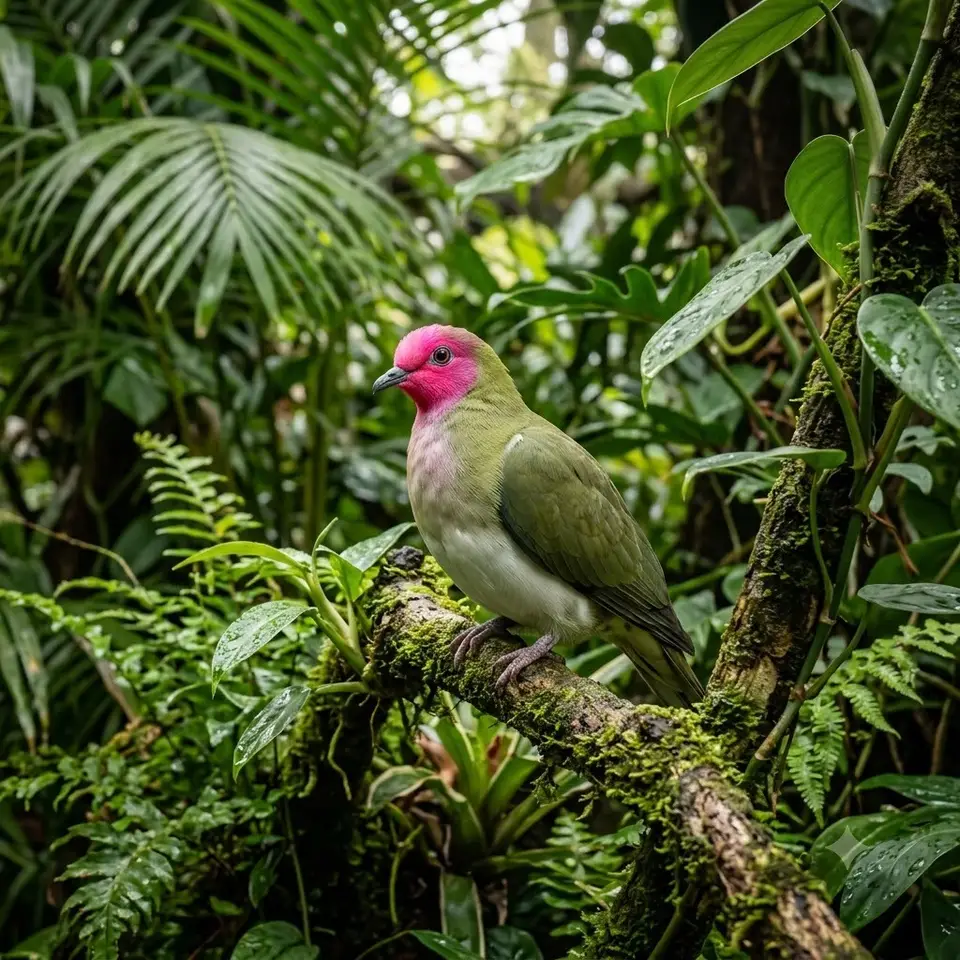 AI illustration
 Overview
The Jambu fruit dove is a living jewel - a small, delicate dove with a rose-pink face and soft green body that feels more like a tropical songbird than a pigeon. It is a specialist's aviary bird: stunning, gentle and quiet, but requiring a warm, planted, fruit-based setup that puts it beyond casual keeping.
Natural History & Origin
A jewel-like fruit dove (Ptilinopus jambu) of Southeast Asian rainforests, kept by experienced softbill aviculturists.
Appearance
Small (about 40-100 g), soft green above and white below; males wear a glowing crimson-pink face, females a duller maroon. Slim, elegant and quiet.
Temperament & Noise
Shy, gentle and peaceful - a watch-don't-touch bird that thrives in a calm planted aviary and dislikes disturbance. Very quiet, with a soft low coo.
Housing & Flight
A warm, humid, densely planted aviary (heated in cool climates) with dense foliage to shelter in - they are delicate, shy and cold-sensitive. Peaceful enough for a mixed softbill aviary of similar calm species.
Diet
A frugivore: chopped soft fruits (papaya, melon, berries), softbill pellets and some insects - NOT a seed-eater. Their specialised fruit diet is a big part of why they're an advanced keeper's bird. Fresh water and misting for humidity.
Health & Lifespan
Average lifespan is 8-10 years. Delicate (8-10 years) and demanding of warmth, humidity and a correct fruit diet; prone to chilling and dietary problems if kept like a seed-dove. Strictly for experienced softbill keepers.
Training & Enrichment
Not a hands-on or trainable bird - kept purely for its beauty and serene presence in a planted aviary. Enrichment is foliage, a mate and varied fruit.
Pros & Cons
Pros
- Breathtakingly beautiful
- Gentle, quiet and peaceful
- Fine mixed softbill-aviary bird
- A prized display species
Cons
- Advanced care: fruit diet, heat, humidity
- Delicate and cold-sensitive
- Not handleable or tame
- Costlier and harder to source
Best Suited For
- Experienced softbill aviculturists
- Heated planted-aviary keepers
- Collectors of ornamental doves
- Watchers wanting a living jewel
Everyday gear for birds
Links go to Amazon or a partner brand's own store and may earn us a commission at no extra cost to you. As an Amazon Associate we earn from qualifying purchases. An Amazon link leads to a type of gear and you choose the exact product; a card that names a store leads to that partner's own shop.
Jambu Fruit Dove - frequently asked questions
Why is the Jambu dove for experienced keepers only?
It needs a warm, humid, planted aviary and a specialised fresh-fruit diet - it's a frugivore, not a seed bird, and chills and sickens easily under casual care.
Does it eat seed like other doves?
No - it eats soft fruit and some insects. Feeding it a seed-dove diet will make it ill; correct frugivore feeding is central to keeping it.
Can it live in a mixed aviary?
Yes, with other calm, warm-climate softbills - it's peaceful and shy, but all tankmates must share its heat, humidity and fruit-based needs.
Test yourself: guess the bird
Three clues from our quiz bank, each about another of our birds. Can you name them?
Clue 1.These small seed-eating songbirds, such as the zebra and society varieties, are kept for their cheerful chirping rather than handling.
It's the Finch (Zebra & Society) - read the full profile →
Clue 2.Named for its trembling, bobbing courtship motions, this gray-breasted parrot is a gifted talker for its small size.
It's the Quaker (Monk) Parakeet - read the full profile →
Clue 3.Native to Australasia, this crested parrot may be salmon-crested, sulphur-crested, or even smoky-black, and uses powder down to clean its plumage.
It's the Cockatoo - read the full profile →
Social Needs
Peaceful pair or mixed-aviary birds; they don't bond to people but display gently to a mate. Keep with other calm, warm-climate softbills only.