Homing Pigeon
The Homing pigeon is bred to find its way home over hundreds of miles and is kept both for racing and as an intelligent, engaging loft pet.
Last reviewed: October 2026
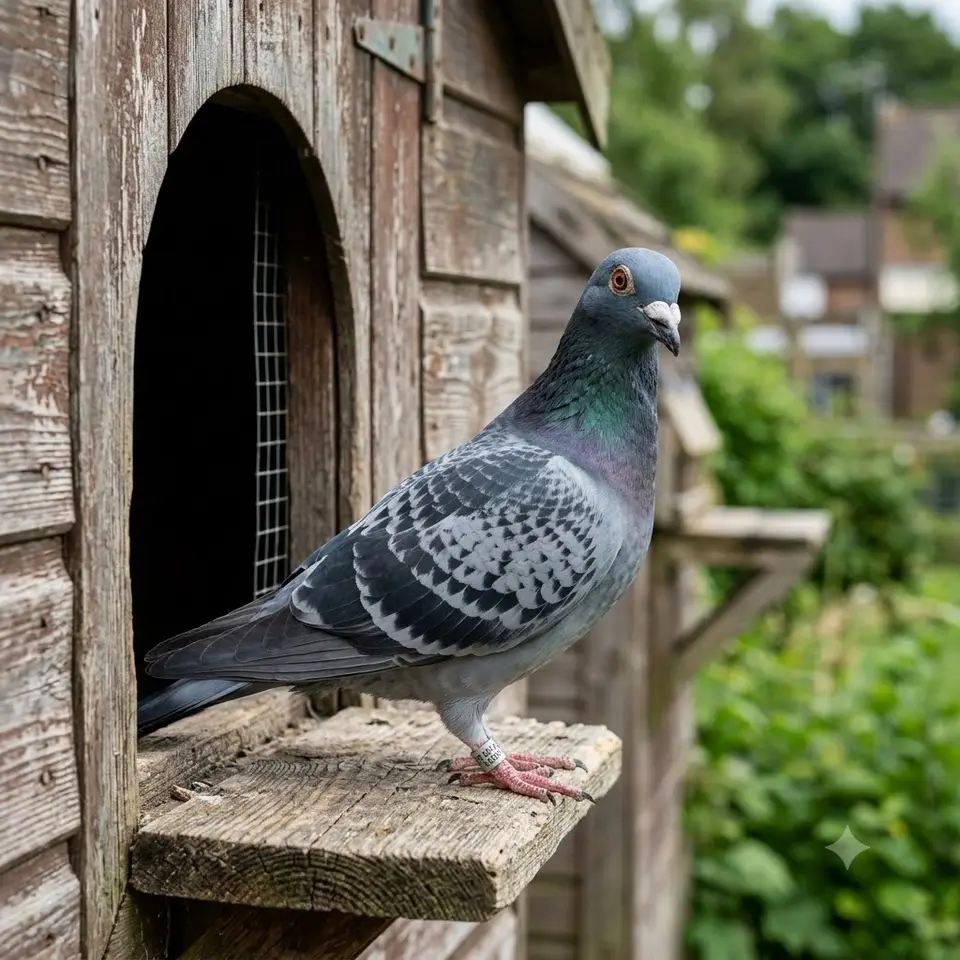 AI illustration
 Overview
The Homing pigeon is bred to find its way home over hundreds of miles and is kept both for racing and as an intelligent, engaging loft pet. For someone wanting a bird they can free-fly and train, few animals are as rewarding.
Natural History & Origin
Selectively bred from rock doves over centuries for navigation; kept for racing, sport and as loft companions worldwide.
Appearance
Medium, streamlined and muscular (350-500 g) in blues, chequers, reds and whites; bright-eyed and alert, built for powerful sustained flight.
Temperament & Noise
Intelligent, active and trainable - homers bond to their loft and keeper, tolerate handling well when raised young, and thrive on the routine of flying. Low-noise, soft cooing.
Housing & Flight
A dry, airy, predator-proof loft with an entry trap is essential - homing pigeons are kept to FLY, released daily to exercise and return home. They need perches, nest boxes and a settled loft they've 'homed' to before any free-flying.
Diet
A quality racing/pigeon grain mix balanced for the workload, plus grit, minerals, greens and abundant fresh water; feed more energy during heavy flying and breeding.
Health & Lifespan
Average lifespan is 10-15 years. Hardy 10-15 year birds; flying ones need vigilant care for canker, respiratory infection, worms and the losses of free-flight (predators, wires). Vaccination (e.g. PMV) is standard for kept flocks in many areas.
Training & Enrichment
Highly trainable: they home from progressively longer releases, learn loft routines, and can be taught to trap in on cue - the most trainable of pigeons. Flying itself is the enrichment.
Pros & Cons
Pros
- Trainable and free-flyable
- Intelligent and engaging
- Long-lived and hardy
- Rewarding sport and hobby
Cons
- Requires a proper loft and daily flying
- Free-flight risks (predators, wires, loss)
- Ongoing health/vaccine management
- Not an indoor pet
Best Suited For
- Hobbyists wanting to fly and train birds
- Pigeon-racing enthusiasts
- People with space for a loft
- Keepers who enjoy daily routine
Everyday gear for birds
Links go to Amazon or a partner brand's own store and may earn us a commission at no extra cost to you. As an Amazon Associate we earn from qualifying purchases. An Amazon link leads to a type of gear and you choose the exact product; a card that names a store leads to that partner's own shop.
Homing Pigeon - frequently asked questions
How do homing pigeons find their way home?
Through a remarkable mix of the sun, the earth's magnetic field and learned landmarks - bred and trained over generations, they return to their home loft from great distances.
Do I need to race them to keep them?
No - many keep homers purely as free-flying loft pets, releasing them for daily exercise and enjoying their return without competing.
Can I free-fly one straight away?
No - a pigeon must first 'settle' and home to its new loft over weeks before any free-flying, or it will simply fly to its previous home or be lost.
Test yourself: guess the bird
Three clues from our quiz bank, each about another of our birds. Can you name them?
Clue 1.Selective breeding turned this little parrot into blues, whites, and a larger 'English' show type, though wild ones are always green.
It's the Budgerigar (Budgie) - read the full profile →
Clue 2.These small seed-eating songbirds, such as the zebra and society varieties, are kept for their cheerful chirping rather than handling.
It's the Finch (Zebra & Society) - read the full profile →
Clue 3.Hailing from the rainforests of central Africa, this ash-colored parrot can mimic human speech and household sounds with uncanny accuracy.
It's the African Grey Parrot - read the full profile →
Social Needs
Flock and pair birds - they live communally in the loft and bond to mates and to home. A settled, sociable loft is key to their homing drive.