Why Cats Lick Plastic
The short answer: plastic bags carry fats, scents and textures cats find weirdly appealing - and for a few cats it signals stress or a compulsive habit. Here is what is normal, what is not, and when to call the vet.
 AI illustration
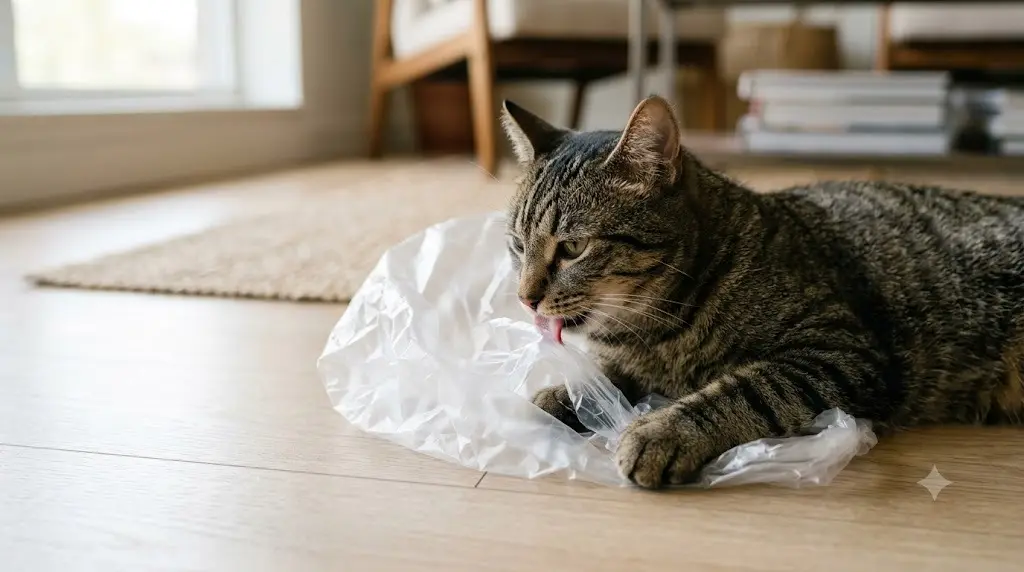
 The short answer: most cats lick plastic because it genuinely tastes and feels interesting - some bags are made with animal-fat-based slip agents, many carry food smells, and have a texture some cats simply enjoy. An occasional lick is odd but normal. Licking that turns into chewing and swallowing, or that ramps up when your cat is stressed, is the version worth taking seriously.
The innocent reasons
Plastic is more appealing to a cat than it looks from human height.
- It can literally taste of something. Some plastic bags are made with slip agents derived from animal fat (stearates), and some biodegradable bags contain corn starch. To a cat’s nose and tongue, that faint residue is worth investigating.
- It smells of what it touched. A grocery bag that carried chicken keeps smelling of chicken long after you’ve unpacked it. Your cat isn’t licking the bag: it’s licking last Tuesday’s shopping.
- The texture is interesting. Smooth, cool and crinkly is a novel mouthfeel. Some cats like the sound as much as the taste: the crinkle is part of the fun.
- It gets your attention. If licking a bag reliably makes you appear and interact, some cats file that away and use it.
If your cat gives a bag a few licks and moves on, this is the category you’re in. Put the bags away and nothing more is needed.
When it means something more
A smaller group of cats take it further, and the pattern matters more than the act:
- Stress licking. Repetitive licking of non-food objects can be a self-soothing behaviour. If it spikes after a move, a new pet, a schedule change or boredom, treat the stress, not the bag.
- Pica: actually eating it. Chewing off and swallowing pieces of plastic is called pica, and it is a real problem: swallowed plastic can cause intestinal blockage, which is a surgical emergency. Oriental breeds like Siamese seem more prone to fabric-and-plastic eating, and pica can also accompany anaemia, gut disease or dietary deficiency.
- Dental discomfort. Some cats chew odd materials when their mouth hurts: worth ruling out if the habit appears suddenly in a cat that never did it before.
What to do about it
- Remove the temptation. The boring answer works best: bags in a cupboard, bin liners under a lid. You cannot train a cat out of a habit it can rehearse daily.
- Feed the mouth something better. Puzzle feeders, a bit of cat grass, safe chew toys and scheduled play give the urge a legal outlet. A bored mouth finds its own hobbies.
- Watch for swallowing. Licking is one thing; if you see pieces missing from bags, or your cat gagging, vomiting, off food or straining without producing stool, call your vet promptly: those are blockage warning signs.
- Sudden change = vet check. A new, intense licking habit in an adult cat deserves a check-up to rule out dental pain, gut trouble or anaemia before you label it a quirk.
In short
An occasional plastic-licker is a normal cat doing normal weird cat things. A cat that seeks plastic out obsessively, eats it, or started suddenly is telling you something (stress, boredom or a medical issue), and that version deserves a vet conversation rather than a shrug. This is general information, not veterinary advice; when in doubt, ask your vet.
Curious about more odd habits? Our cat behavior guides cover the rest of the mysteries, and the Can They Eat It? checker answers the food-safety half of “my cat licked something strange”.
Recommended Gear on Amazon
- Puzzle feeder - browse current options and reviews on Amazon.
- Cat grass kit - browse current options and reviews on Amazon.
- Lidded storage bins - browse current options and reviews on Amazon.
As an Amazon Associate, we earn from qualifying purchases - at no extra cost to you. This helps us keep producing free, in-depth guides.